
Mapping Remote Coastlines with Mini 5 Pro
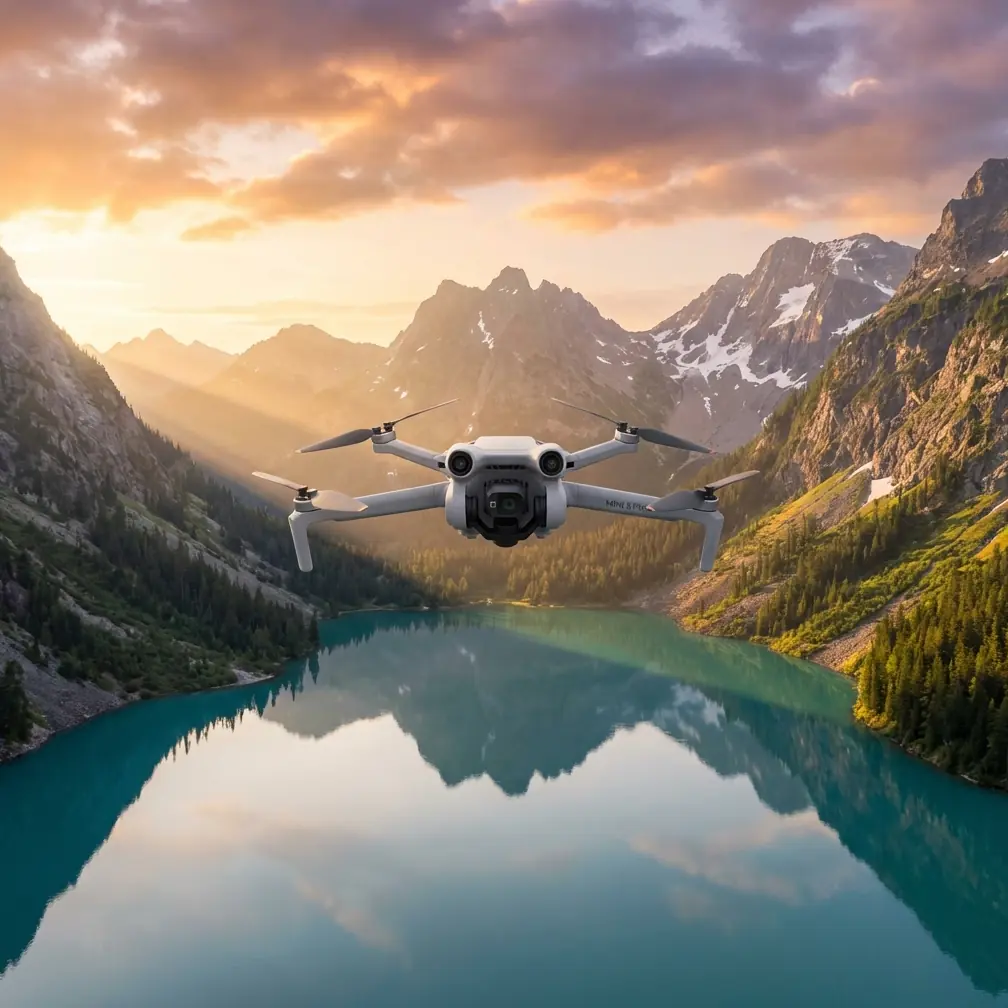
Mapping Remote Coastlines with Mini 5 Pro: A Field Report on Range, Workflow, and What Hybrid Power News Changes
META: A field report on using Mini 5 Pro for remote coastline mapping, with practical workflow notes, obstacle avoidance insights, D-Log capture strategy, and why new hybrid drone power developments matter for longer-field operations.
The first coastline survey I ever botched was not because of wind, tide, or bad light. It was power planning.
We had a clean route on paper: cliffs to the north, a broken run of tidal pools to the south, and a stretch of inaccessible shoreline in between that was perfect for aerial mapping. The problem was simple and familiar to anyone who has worked away from roads and charging points. Every decision was shaped by battery math. Not image quality. Not coverage pattern. Not whether the rock formations needed a lower oblique angle for erosion assessment. Just battery math.
That is why the current conversation around the Mini 5 Pro is more interesting than a typical “small drone for travel” story. For remote coastline work, this aircraft sits in a very specific place. It is light enough to carry across uneven ground, quick enough to deploy when weather windows open, and smart enough to reduce the workload when you are trying to fly safely over cliffs, sea spray, and changing terrain. At the same time, bigger industry shifts in power systems are starting to matter even to operators flying compact platforms.
A recent 2026 update from ePropelled is a good example. The company expanded its Hercules starter generator line for hybrid propulsion and power systems across uncrewed aerial, ground, and marine platforms. The range now spans roughly 500 watts to 12 kilowatts. That is not a Mini 5 Pro component story. No one is bolting a 12-kilowatt starter generator onto a folding camera drone and heading for the beach. But it does tell us something useful about where field operations are heading: endurance is becoming a system-level conversation, not just a battery-capacity conversation.
For someone mapping remote coastlines, that matters more than it first appears.
Why the Mini 5 Pro format works on the coast
Remote shoreline work punishes complexity. Long hikes. Salt-heavy air. Shifting sun. Gusts that wrap around cliff faces and create odd pockets of turbulence. Sometimes you need to launch from a narrow path with one safe standing position and no second chance if the tide comes in.
This is where the Mini 5 Pro concept earns its place. A compact aircraft changes the whole rhythm of fieldwork. You move faster between launch points. You can carry extra batteries, filters, and a landing pad without turning the day into an expedition. If cloud cover opens for twelve minutes, the drone can be airborne quickly enough to actually use that window.
That sounds mundane until you compare it with the reality of coastal survey days. The challenge is not only flying. It is walking, repositioning, waiting, scouting, and making dozens of small decisions under time pressure. A portable aircraft with reliable obstacle avoidance and subject-aware automation reduces friction in all of those moments.
On cliffs, obstacle avoidance is not just there to save a drone from a tree branch. It helps when the terrain itself is deceptive. Coastal rock shelves, protruding edges, and rising faces can distort depth judgment, especially when you are shooting oblique passes for visual documentation. A drone that can better interpret its surroundings gives you more margin during low-altitude transitions and side-on inspection-style runs.
I have also found ActiveTrack and subject tracking features surprisingly useful in non-cinematic fieldwork. Not for chasing people down a beach, but for maintaining framing consistency when documenting a moving surveyor, small utility vehicle, or shoreline access path as part of a broader site record. In practical terms, that means fewer manual corrections during a pass and cleaner supporting footage for project reports.
The hidden difficulty of coastline mapping
People often think coastline mapping is about distance. It is really about interruption.
You stop for wind. You stop for birds. You stop because the glare off wet sand destroys your view. You stop because a section of cliff that looked open from the trail is not open from the launch point. You stop because the safest route home is no longer the shortest route home.
A compact aircraft like the Mini 5 Pro becomes valuable because it lets you restart quickly. QuickShots and Hyperlapse are usually discussed as creative tools, but there is a practical side to them in reconnaissance. A short automated orbit or pull-back can help confirm topography, identify access lines, and reveal how wave action is interacting with man-made structures or natural formations. Hyperlapse sequences can also be useful for showing temporal changes in surf movement, cloud shadow travel, or crowd patterns around access areas when you need context beyond a still map.
That does not replace a structured mapping mission, of course. But in the field, context flights save time. They help you decide where the true survey value is before committing battery cycles to full coverage.
And battery cycles are exactly why the broader power-system story matters.
What the ePropelled hybrid news means to a Mini 5 Pro operator
The Hercules starter generator expansion is aimed at hybrid propulsion for uncrewed platforms, including aerial ones. Its operating range, from about 500 W to 12 kW, tells you this is a scalable industrial power play, not a lifestyle accessory announcement. Operationally, that means manufacturers and enterprise operators are pushing harder into aircraft that can stay useful longer, carry more system load, and support missions where charging infrastructure is limited or nonexistent.
For remote coastline teams, that trend matters in two ways.
First, it raises expectations around mission architecture. Even if your primary aircraft is a Mini 5 Pro, the rest of your workflow may soon be influenced by hybrid support systems in adjacent equipment. Ground power stations, mobile charging setups, remote deployment vehicles, and multi-platform survey kits all benefit from more flexible energy ecosystems. If a support platform can generate or manage power more efficiently in the field, your small drone operation becomes less isolated. You spend less time treating each battery as a precious one-off event.
Second, it sharpens the role of compact drones. As larger hybrid-capable platforms take on endurance-heavy corridor work or persistent industrial missions, small aircraft like the Mini 5 Pro become even more valuable for rapid visual verification, close-range documentation, and access to awkward terrain. In other words, hybrid power does not make compact drones less relevant. It makes their role more specialized and, in many cases, more productive.
That is the real operational significance here. The 2026 Hercules expansion is a signal that uncrewed aviation is investing in endurance at scale. The Mini 5 Pro remains useful not by competing with that, but by excelling where speed, portability, and low-friction deployment matter more than brute-duration performance.
A field workflow that actually works
When I am documenting a remote coastline with a compact drone, I split the session into three layers.
1. Reconnaissance layer
This is the fast pass. I use a short route to understand wind direction near the cliff face, identify unexpected updrafts, and check whether sea spray is drifting higher than it seemed from the ground. This is where automated tools can help. A QuickShot-style movement can reveal terrain geometry quickly, and a short ActiveTrack sequence can be useful if a teammate is walking an access route I want to document from above.
The goal is not beauty. It is confidence.
2. Mapping and documentation layer
Once the conditions are understood, the more deliberate capture begins. For shoreline work, consistency matters. Stable altitude relative to terrain, repeatable speed, and overlap discipline all have a direct effect on what you can do later with the imagery. This is also the point where obstacle avoidance becomes operationally meaningful. Coastal features are irregular. A neat route on your tablet can become a risk if a rock outcrop or rising edge interrupts the line.
If I know the light will be harsh, I prefer to capture with as much grading flexibility as possible. D-Log is useful here, especially when bright sky and dark cliff texture sit in the same frame. You are trying to preserve information, not chase a finished look in the air. That matters for erosion records, habitat-edge documentation, and visual comparisons over time.
3. Context and storytelling layer
This is where photographers and survey teams often part ways, and they should not. A project record is stronger when it includes material that explains the site, not just measures it. Hyperlapse clips showing tide movement, broad reveal shots of the coastline, and carefully tracked shoreline passes create a more understandable archive. If the work is being shared with landowners, environmental teams, planners, or clients who were not on site, that context reduces confusion.
The Mini 5 Pro is well suited to this third layer because it can shift from structured capture to flexible visual documentation without forcing a full platform change.
The past challenge this model solves
Years ago, on that failed coastline day, I was carrying too much and capturing too little. Every launch felt expensive in terms of energy and setup time. I skipped useful angle changes because I did not want to burn power. I avoided a second access point because packing and redeploying felt like a penalty. The final data was adequate, but the field process was brittle.
What changes with a drone in the Mini 5 Pro class is not just convenience. It is decision quality.
You are more willing to relocate fifty meters for a safer launch. More willing to run a short test pass before the main line. More willing to gather extra context footage that later saves you from a return trip. More willing to work methodically because the aircraft does not make every adjustment feel costly.
That is a big deal on coastlines, where the best result usually comes from a series of small corrections rather than one perfect flight.
Practical notes for remote operators
A few habits have made the biggest difference for me:
- Treat obstacle avoidance as a safety layer, not a substitute for route judgment. Cliff geometry can still surprise you.
- Use ActiveTrack selectively. It is excellent for maintaining visual consistency on moving subjects, but coastline mapping still depends on deliberate, repeatable coverage.
- Capture some sequences in D-Log when light is contrast-heavy. Wet rock and bright sea can produce extreme tonal separation.
- Use Hyperlapse sparingly but intentionally. It adds value when you need to show environmental change over time, not just because it looks polished.
- Plan your field power as carefully as your flight path. The larger industry shift toward scalable hybrid systems, like ePropelled’s 500 W to 12 kW Hercules range, is a reminder that endurance planning is becoming a bigger strategic issue across drone operations.
If your work involves remote sites and you are trying to build a more practical field kit around the Mini 5 Pro, I’d suggest starting a conversation here: message our flight team directly.
Where this leaves the Mini 5 Pro
The most useful drones are not always the most powerful ones. Sometimes they are the ones that let you keep working when the path is narrow, the tide is turning, and the weather has given you a gap instead of a day.
The Mini 5 Pro sits in that category for coastline work. It is the aircraft you can carry without resentment, launch without ceremony, and trust to handle the awkward edges of real terrain with more grace than older compact platforms managed. Obstacle avoidance, ActiveTrack, QuickShots, Hyperlapse, and D-Log are not separate bullet points in that context. They are parts of a field workflow that reduces missed opportunities and improves the final record.
And while the headline about ePropelled’s expanded Hercules line may sound distant from a small coastal mapping drone, it points to a future every operator should be watching. Power flexibility is moving up the stack. As hybrid systems scale across uncrewed platforms from 500 watts to 12 kilowatts, compact drones will be judged less by whether they can do everything and more by how well they fit into smarter, longer-lasting mission ecosystems.
That is exactly why the Mini 5 Pro matters. Not because it replaces larger systems. Because in remote coastal work, it often removes the friction that keeps good field plans from becoming clean, usable results.
Ready for your own Mini 5 Pro? Contact our team for expert consultation.