
Mini 5 Pro in the Vineyard: A Field Report on Flying Smart
Mini 5 Pro in the Vineyard: A Field Report on Flying Smart When the Wind Picks Up
META: A practical field report on using the Mini 5 Pro for vineyard inspection in windy conditions, with tips on obstacle avoidance, ActiveTrack, D-Log workflows, Hyperlapse planning, and antenna positioning for better range.
I spend a lot of time around landscapes that look gentle from a distance and turn complicated the moment you put a drone in the air. Vineyards are like that. Ordered rows, narrow corridors, reflective leaves, uneven terrain, utility lines at the perimeter, and often a breeze that strengthens just when the light gets good. If your goal is inspection rather than pure cinematics, those details stop being background texture and start shaping every decision in the field.
That is exactly where the Mini 5 Pro makes sense.
Not because a sub-250-class aircraft magically ignores weather or replaces larger enterprise tools. It does not. What it does offer is a combination of portability, intelligent flight support, and image flexibility that fits vineyard work unusually well when the wind is present but still manageable. For growers, consultants, media teams, and property managers who need frequent visual checks without turning every visit into a major operation, this kind of aircraft earns its place quickly.
My own perspective comes from photography first, but vineyards force you to think like an inspector. You are not just chasing a beautiful reveal over rolling rows. You are looking for missed irrigation patterns, gaps in canopy vigor, storm damage on outer lines, standing water, broken trellis sections, access issues after weather, and how the whole parcel is behaving from edge to edge. In windy conditions, the challenge is getting that information consistently without burning too much battery fighting the air.
Why vineyard inspection is harder than it looks
A vineyard presents two opposite visual problems at once. The geometry is regular, which is helpful for pattern recognition. Yet the crop itself is alive and moving. Leaves flicker, canes sway, shadows stripe the ground, and wind changes the scene second by second. That movement can confuse less disciplined flying and make it harder to capture repeatable inspection passes.
This is where obstacle avoidance and subject tracking features matter in practical terms. In a vineyard, obstacle avoidance is not just about dramatic last-second saves near trees. It helps when flying low along row edges, crossing between blocks, and navigating around posts, isolated equipment, and perimeter vegetation. If you are conducting a visual pass close to a trellis line, a drone that can sense and react to surrounding structure reduces the risk of losing concentration while you are focused on image composition or anomaly spotting.
ActiveTrack has a place too, though maybe not in the way many people assume. In a vineyard setting, I am less interested in tracking a runner or vehicle for flashy footage and more interested in using intelligent tracking to maintain a smooth relationship with a moving utility cart, field worker, or inspection path. When the wind pushes at the aircraft, having the drone maintain framing without constant stick correction preserves both image quality and pilot attention. That operational significance gets overlooked. The feature is not just convenience. It reduces workload at the exact moment the environment is asking more from the pilot.
Wind changes the mission before takeoff
Most people think of wind as an in-flight problem. In vineyard work, it starts earlier.
Before launching the Mini 5 Pro, I look at four things: row direction, slope, surrounding wind breaks, and where I will turn. The turns are often the issue. Flying with or against the rows can feel stable, then the aircraft reaches the open end of a block and suddenly takes a crosswind hit. If you planned your route only for the straight portions, your footage may stay smooth until the moment you need the most control.
A better workflow is to build inspection passes around shorter segments. Fly one block, reassess, then continue. That gives you cleaner data and a safer margin. In gusty conditions, the vineyard often contains its own microclimates. One section can be relatively calm while another near a hill break or road opening becomes turbulent. The Mini 5 Pro’s size is an advantage when hiking between these launch points because you can relocate quickly and keep the aircraft close to the area you actually need to inspect.
That matters for signal quality too.
Antenna positioning advice that actually helps range
Pilots talk about range as if it were only a product specification. In the field, especially around agricultural property, your signal is heavily influenced by how you hold the controller and where you stand.
The simplest advice is still the most useful: point the broad face of the controller antennas toward the aircraft, not the tips directly at it. Many pilots do the opposite. They instinctively aim the antenna ends like flashlights. That usually gives you a weaker link. Think of the signal pattern as radiating outward from the sides, not shooting from the point.
In vineyards, I also avoid standing downhill behind dense rows or parked machinery if I can help it. Raise your own position a little when possible. A few feet of elevation from a terrace edge, access road crown, or slope shoulder can improve line-of-sight more than people expect. Grapevines are not steel walls, but row after row of vegetation, stakes, wires, and terrain undulations can still degrade consistency.
If you are trying to maximize stable control link in a windy vineyard, this is the sequence I recommend:
- Choose a launch point with the clearest view over the target block.
- Orient yourself so your body is not shielding the controller from the drone.
- Keep the aircraft more in front of you than off to the extreme side.
- Rotate the antenna faces toward the drone as it changes position.
- Do not chase absolute distance. Chase signal stability and visual clarity.
That last point is the one that saves missions. Inspection work is not a contest to see how far the Mini 5 Pro can go. It is about getting readable, repeatable imagery and bringing the aircraft home with a calm reserve.
D-Log is not just for pretty color grades
One feature I consistently appreciate in agricultural scenes is D-Log capture. A vineyard in mixed light can be punishing. Bright sky. Dark row shadows. Dusty roads. Reflective leaf surfaces. If you are documenting conditions for owners, managers, or clients, you need latitude in post, not just a finished-looking file straight from the aircraft.
D-Log gives you more flexibility to hold highlight detail and recover tonal nuance across uneven scenes. The operational significance is simple: you can inspect both exposed upper canopy and shaded understory more effectively in the same clip. That becomes especially useful after a windy morning when cloud movement and sun angle keep changing. I would rather spend a little time normalizing footage later than discover that a standard profile clipped the brightest areas or buried useful texture in shadow.
For photography-focused inspections, I often capture a mix of normal profile references and D-Log video passes. The normal clips are easy to review quickly on site. The D-Log material becomes the archive I can return to when subtle differences matter.
QuickShots and Hyperlapse are more useful than they sound
The words QuickShots and Hyperlapse make some serious operators dismiss them as social-first features. That is a mistake.
QuickShots can serve as repeatable orientation captures at the beginning or end of an inspection. A consistent automated movement from the same launch area helps document the overall condition of a block over time. If a team compares those clips monthly, changes in access conditions, vegetation density, or surrounding land use become easier to spot.
Hyperlapse has even more value in vineyards than many people expect. Wind-driven movement across rows can reveal patterns you may miss in isolated stills. Cloud shadow progression, traffic around loading areas, worker movement through blocks, or irrigation-related changes in surface moisture can all become more legible in compressed time. You are not using Hyperlapse as a novelty. You are using it to make slow environmental shifts visible.
I would not run a Hyperlapse casually in stronger wind, but in moderate and steady conditions it can produce some of the most informative context footage of the day.
How I fly inspection passes in windy vineyard blocks
My preferred method with the Mini 5 Pro is conservative and boring in the best possible way.
I start with a high-level pass to identify movement patterns. Which rows are taking the strongest gusts? Are there gaps where wind spills through? Is there dust indicating stronger flow near access roads? Then I come lower only where the mission requires detail.
For visual inspection of canopy condition, I avoid very low flight unless the rows are wide and the signal path is clean. Flying a little higher often gives a better read on variation across multiple rows while preserving a margin for unexpected gusts. Obstacle avoidance is useful here, but it should support judgment, not replace it.
If I need detailed tracking footage along a row, ActiveTrack can help maintain a steady relationship with a moving point of interest, but I still watch how the wind affects lateral drift. Automated intelligence is valuable; vineyard geometry and wind still win if you stop supervising.
Battery strategy also changes in these conditions. I do not wait until the final third to think about return. Headwinds on the way back can turn a comfortable reserve into a rushed landing. In agricultural environments, where alternate landing zones may be uneven or dusty, preserving return margin is part of flight discipline.
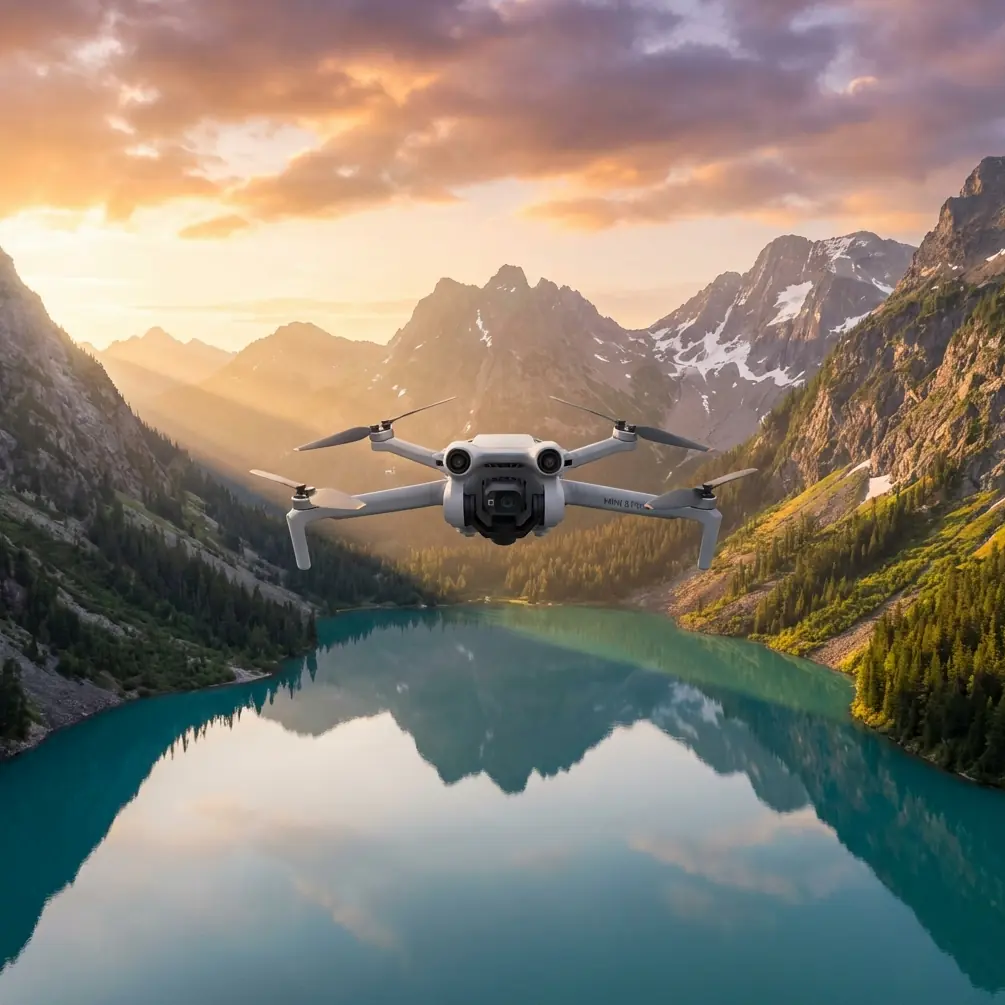
The image tells the story, but consistency closes the loop
What makes the Mini 5 Pro effective for vineyard inspection is not one headline feature. It is the way several capabilities stack together.
Obstacle avoidance reduces stress in structurally repetitive spaces. ActiveTrack lowers control workload during motion-based observation. D-Log keeps your footage useful after lighting shifts. QuickShots and Hyperlapse help standardize context capture across repeated visits. And because the aircraft is compact, it is realistic to carry it between blocks rather than force every mission from a single poor launch point.
That portability is worth more than most spec sheets suggest. In vineyard work, a drone that is easy to redeploy gets used more intelligently. You stop trying to solve the entire property from one distant position. You move. You adapt. The data gets better.
For operators building a repeatable workflow, I suggest creating a simple field template:
- Establish wind direction and row orientation.
- Choose a launch point with the best line-of-sight.
- Capture one high overview.
- Run targeted passes on the most exposed rows.
- Log any problem areas with stills and short video clips.
- Finish with one repeatable context move, either a controlled QuickShot or manual orbit.
- Review signal performance and note where antenna orientation helped or where terrain interfered.
That last note becomes surprisingly valuable over time. The best vineyard drone operators are not the ones who fly furthest. They are the ones who learn where each property distorts wind and signal, then build that knowledge into every mission.
A photographer’s final take from the field
The Mini 5 Pro feels most convincing in vineyards when you stop treating it as a miniature version of a larger platform and start using it for what it does best: fast deployment, intelligent support, strong visual output, and repeatable documentation in places where walking every row is inefficient.
In windy conditions, restraint matters more than bravado. Fly shorter patterns. Keep line-of-sight clean. Use the antenna faces correctly. Let obstacle sensing and tracking features reduce workload, not invite risk. Record in D-Log when the light is unpredictable. And if you want one clip that helps everyone from owners to field crews understand the site at a glance, a carefully planned Hyperlapse can reveal more than a stack of disconnected stills.
If you are refining a vineyard inspection workflow and want to compare notes on setup, flight planning, or controller positioning, you can reach me here via field WhatsApp contact.
That is really the story with the Mini 5 Pro in this environment. It is not about dramatic promises. It is about getting reliable eyes over the vines when the breeze is up and the work still needs to be done.
Ready for your own Mini 5 Pro? Contact our team for expert consultation.