
How to Inspect Mountain Venues with Mini 5 Pro
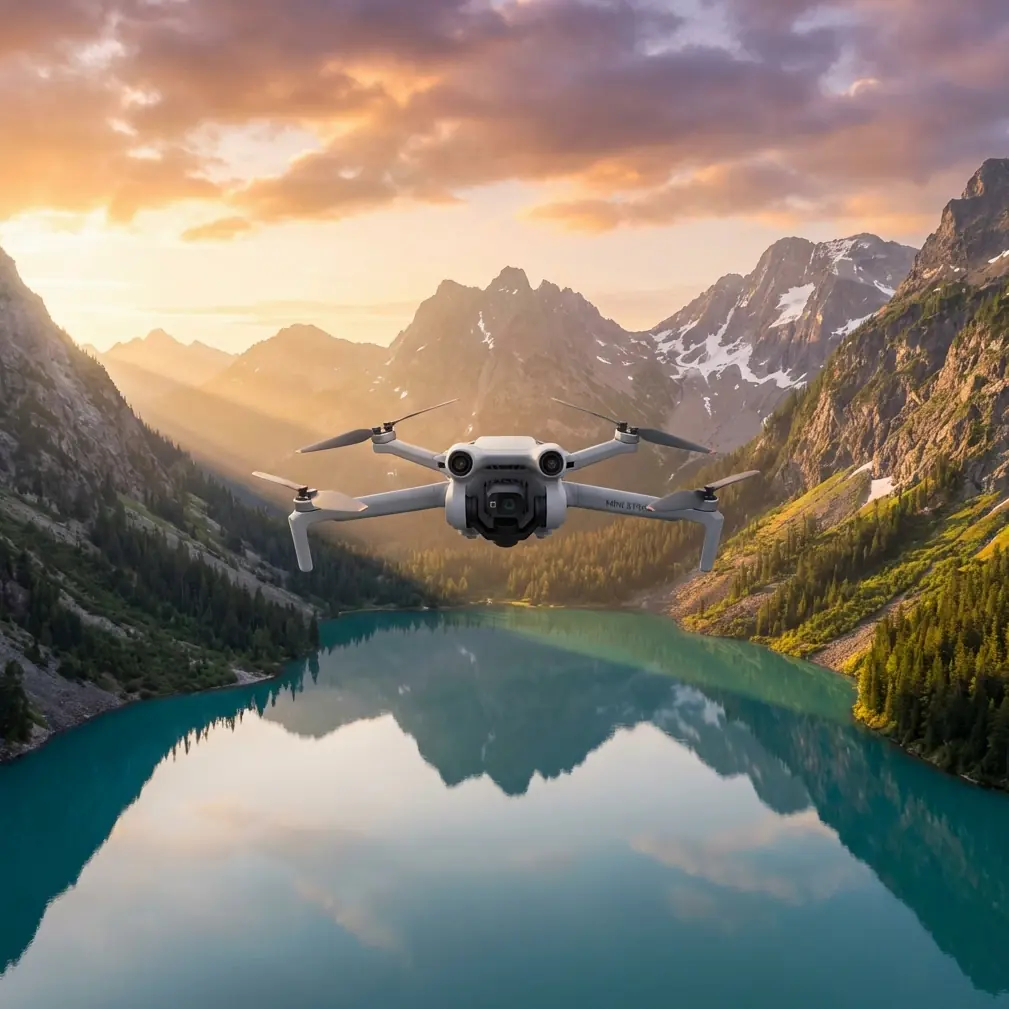
How to Inspect Mountain Venues with Mini 5 Pro
META: Master mountain venue inspections using Mini 5 Pro's advanced features. Learn expert techniques for obstacle avoidance, tracking, and D-Log capture in challenging terrain.
TL;DR
- Obstacle avoidance sensors enable safe navigation through complex mountain terrain with trees, cables, and uneven structures
- D-Log color profile captures maximum dynamic range for detailed post-inspection analysis of venue conditions
- ActiveTrack 5.0 maintains consistent framing while circling large outdoor amphitheaters and event spaces
- Third-party ND filter sets prove essential for controlling exposure during bright alpine conditions
Mountain venue inspections present unique challenges that ground-based assessments simply cannot address. The Mini 5 Pro transforms how event planners, safety inspectors, and venue managers evaluate outdoor spaces at elevation—delivering comprehensive aerial data while navigating treacherous terrain that would otherwise require expensive helicopter surveys or dangerous manual climbs.
This guide breaks down the exact workflow I use when inspecting mountain amphitheaters, ski resort event areas, and alpine wedding venues across challenging high-altitude environments.
Why the Mini 5 Pro Excels at Mountain Venue Work
The sub-249-gram weight class opens doors that heavier drones cannot enter. Many mountain venues fall within restricted airspace near national parks or wilderness areas where lighter aircraft face fewer regulatory hurdles.
Beyond regulations, the compact form factor matters when hiking to remote inspection sites. I've carried the Mini 5 Pro on three-hour climbs to reach venues inaccessible by vehicle—something impractical with larger platforms.
Key Specifications for Mountain Operations
| Feature | Mini 5 Pro Capability | Mountain Inspection Benefit |
|---|---|---|
| Weight | 249g | Reduced regulatory restrictions |
| Wind Resistance | Level 5 (10.7 m/s) | Stable footage in alpine gusts |
| Max Altitude | 4000m above sea level | Full functionality at elevation |
| Obstacle Sensing | Omnidirectional | Safe navigation near structures |
| Video Resolution | 4K/60fps HDR | Detailed condition documentation |
| Flight Time | Up to 34 minutes | Complete venue coverage per battery |
The omnidirectional obstacle avoidance system deserves special attention. Mountain venues feature unpredictable hazards—guy wires, temporary staging, tree branches, and communication towers that appear suddenly when navigating complex terrain.
Expert Insight: Always perform a manual visual scan of the venue perimeter before launching. Obstacle avoidance sensors struggle with thin cables and transparent materials common at outdoor event spaces. Map these hazards mentally before your first flight.
Pre-Flight Preparation for Mountain Inspections
Successful mountain venue inspections begin hours before takeoff. Altitude affects battery performance, temperature impacts sensor accuracy, and rapidly changing weather demands flexible planning.
Equipment Checklist
- Four fully charged batteries (cold temperatures reduce capacity by up to 30%)
- Polar Pro or Freewell ND filter set (ND8, ND16, ND32 minimum)
- Insulated battery case with hand warmers
- Portable landing pad for uneven terrain
- Backup mobile device with offline maps loaded
- Wind meter for real-time gust measurement
The third-party ND filter investment changed my mountain inspection workflow entirely. Bright snow, reflective venue surfaces, and intense high-altitude sunlight create exposure challenges the camera's native settings cannot fully address.
I use the Freewell Variable ND filter specifically because it allows real-time adjustment without landing to swap filters. When clouds roll across the sun—common in mountain environments—quick exposure compensation keeps footage usable.
Calibrating for Altitude
The Mini 5 Pro's compass and IMU require recalibration when operating significantly above your home location's elevation. I recalibrate whenever inspecting venues more than 1000 meters above my typical flying altitude.
Failure to recalibrate introduces drift that becomes dangerous near structures. The aircraft may not hold position accurately, creating collision risks during close-proximity inspection passes.
Executing the Inspection Flight
Mountain venue inspections follow a systematic pattern that maximizes data collection while minimizing battery consumption and risk exposure.
Phase 1: Perimeter Survey
Begin with a high-altitude orbit around the entire venue. Set altitude to approximately 40 meters above the highest structure and engage a slow Hyperlapse circle mode.
This initial pass accomplishes three objectives:
- Documents overall venue layout and surrounding terrain
- Identifies potential hazards for closer inspection passes
- Creates establishing footage useful for client presentations
The Hyperlapse function compresses a five-minute orbit into compelling 15-second footage that immediately communicates venue scale and setting.
Phase 2: Structure Documentation
Lower to 15-20 meters and begin systematic passes along structures requiring inspection. For mountain venues, priority areas typically include:
- Stage and platform foundations
- Tent and canopy anchor points
- Electrical distribution infrastructure
- Access roads and emergency vehicle paths
- Spectator seating stability
- Drainage patterns and erosion concerns
Activate D-Log color profile during this phase. The flat color profile preserves shadow and highlight detail that reveals structural issues invisible in standard footage.
Pro Tip: Record at 4K/30fps rather than 60fps during detailed inspection passes. The higher bitrate per frame captures finer detail in structural elements, and you'll rarely need slow-motion capability for documentation purposes.
Phase 3: Dynamic Tracking Shots
For venues hosting performances or sporting events, document sightlines and audience perspectives using ActiveTrack and QuickShots modes.
Subject tracking proves invaluable when a colleague walks through the venue simulating audience movement. The Mini 5 Pro maintains consistent framing while you focus on identifying obstructed views, safety hazards, and accessibility concerns.
QuickShots presets—particularly Dronie and Circle—create professional presentation footage without requiring advanced piloting skills. These automated sequences free mental bandwidth for observation rather than stick control.
Common Mistakes to Avoid
Years of mountain venue inspections have revealed consistent errors that compromise results or create safety hazards.
Flying in Marginal Weather
Mountain weather shifts rapidly. A calm morning becomes dangerous by afternoon as thermal activity increases. Schedule inspections for early morning when conditions remain stable.
Wind at launch altitude often differs dramatically from conditions 50 meters higher. The Mini 5 Pro handles Level 5 winds, but turbulence near ridgelines and structures creates unpredictable gusts exceeding rated limits.
Neglecting Battery Temperature
Cold batteries deliver reduced capacity and may trigger automatic landing at inconvenient moments. Keep batteries warm in insulated cases until immediately before use.
I've witnessed inspectors lose aircraft to unexpected low-battery landings in inaccessible terrain—entirely preventable with proper thermal management.
Insufficient Overlap in Documentation
Inspection footage requires complete coverage without gaps. Fly systematic grid patterns with 30% visual overlap between passes. Missing a critical area means returning to the site—often impractical for remote mountain venues.
Ignoring Return-to-Home Altitude
Default RTH altitude may be insufficient for mountain terrain. Set RTH height to at least 20 meters above the highest obstacle within your flight area. Failure to adjust this setting has caused countless collisions during emergency returns.
Over-Relying on Obstacle Avoidance
The omnidirectional sensing system provides excellent protection but cannot detect all hazards. Thin wires, transparent surfaces, and fast-moving objects may not trigger avoidance responses. Maintain visual awareness regardless of sensor capability.
Advanced Techniques for Professional Results
Combining Automated and Manual Flight
Begin inspection sequences with QuickShots for consistent establishing footage, then transition to manual control for detailed investigation of specific concerns.
This hybrid approach balances efficiency with thoroughness. Automated modes cover ground quickly while manual flight allows responsive investigation when issues appear.
Leveraging Hyperlapse for Change Documentation
For venues requiring periodic re-inspection, Hyperlapse sequences from identical positions create compelling before-and-after comparisons. Document camera position, altitude, and settings to ensure repeatable results.
Color Grading D-Log for Maximum Detail
D-Log footage appears flat and desaturated directly from the camera. Apply a base correction LUT during editing, then adjust shadows and highlights to reveal structural details invisible in standard footage.
The additional dynamic range captured in D-Log often reveals water damage, structural stress, and surface deterioration that properly exposed standard footage would miss entirely.
Frequently Asked Questions
Can the Mini 5 Pro operate reliably at high mountain elevations?
The Mini 5 Pro maintains full functionality up to 4000 meters above sea level. Reduced air density at altitude slightly decreases lift efficiency, resulting in approximately 10-15% reduced flight time compared to sea-level operations. Plan battery usage accordingly and carry additional cells for comprehensive inspections.
How does obstacle avoidance perform in complex mountain environments?
Omnidirectional sensors detect most solid obstacles effectively, including trees, structures, and terrain features. Performance decreases with thin objects like cables and wires, transparent materials, and in low-light conditions. Always supplement sensor protection with visual awareness and pre-flight hazard mapping.
What ND filter strength works best for mountain venue inspections?
Bright alpine conditions typically require ND16 or ND32 filters to maintain proper exposure with cinematic shutter speeds. Variable ND filters offer flexibility when lighting changes rapidly due to cloud movement. Invest in quality glass—cheap filters introduce color casts and reduce sharpness in detailed inspection footage.
Mountain venue inspections demand equipment that balances portability with professional capability. The Mini 5 Pro delivers both, enabling comprehensive aerial documentation of spaces that would otherwise require expensive alternatives or remain uninspected entirely.
The techniques outlined here represent hundreds of hours of real-world mountain inspection experience. Apply them systematically, respect the unique challenges of high-altitude operations, and your inspection results will reflect professional-grade thoroughness.
Ready for your own Mini 5 Pro? Contact our team for expert consultation.