
Mini 5 Pro for Remote Power Line Inspection
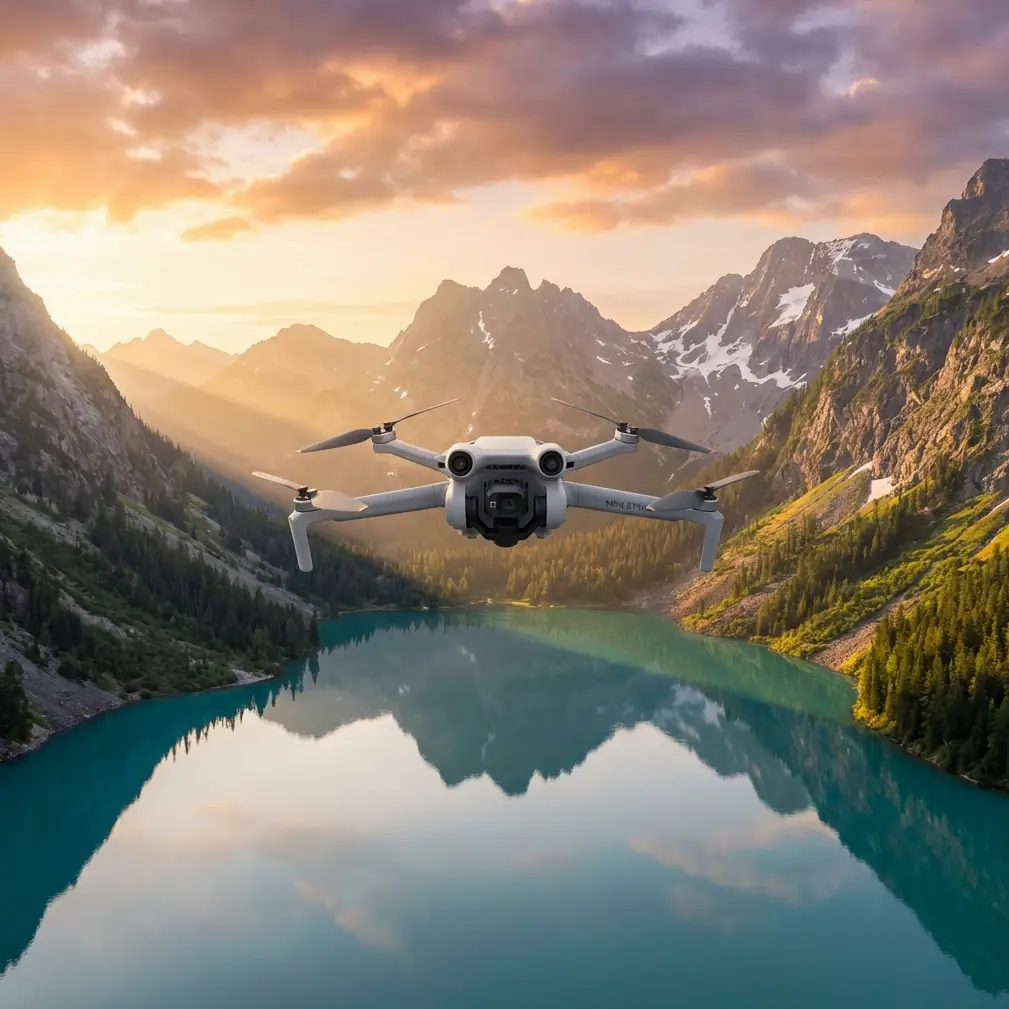
Mini 5 Pro for Remote Power Line Inspection: What Sensor Drift Teaches You in the Field
META: Learn how Mini 5 Pro operators can improve remote power line inspection flights by understanding barometric drift, accelerometer bias, antenna positioning, obstacle avoidance, ActiveTrack, D-Log, and safer low-altitude workflow.
Power line inspection looks simple from the roadside. Get the aircraft up, move along the corridor, capture poles, insulators, conductor spacing, and hardware condition. In remote terrain, though, the work becomes less forgiving. Elevation changes, shifting weather, signal blockage, and repeated altitude corrections all start to stack up. That is where a small aircraft like the Mini 5 Pro can either feel precise and confidence-inspiring or strangely inconsistent.
The difference is often not pilot talent. It is sensor behavior.
One of the more useful technical clues comes from research on multirotor altitude estimation, where a fused system using an accelerometer and a barometric altimeter showed two things that matter a great deal for inspection flights. First, measured pressure drift during testing reached about +190 Pa per hour, which translated to roughly -16 m per hour in apparent height. Second, the study identified accelerometer bias as the most critical factor in achieving good vertical accuracy. Those are not abstract lab notes. They describe exactly why a drone can seem steady on one pass and subtly unreliable on the next, especially during long corridor work in changing weather.
If you inspect power lines in remote areas with a Mini 5 Pro, understanding those two details changes how you fly.
Why altitude drift matters more around power lines than in open landscape work
A cinematic landscape flight can tolerate small height error. A power line inspection usually cannot.
When you are documenting crossarms, insulator strings, spacers, clamps, and vegetation encroachment, you are often repeating a very similar lateral pass from a deliberate offset. You may want one run slightly below conductor level, another above hardware elevation, and a third orbit around a specific pole or tower component. If the aircraft’s vertical estimate slowly shifts because pressure is changing, your camera framing changes with it. On screen, that can look like a pilot issue. In reality, the drone may be reacting to a drifting barometric reference.
That +190 Pa/hr figure is especially useful because it puts scale on the problem. A lot of operators think weather-related pressure effects only matter during major storms. Not true. The source text ties that drift to a transition between stable and less stable weather, not some extreme event. In practical terms, a remote inspection crew can begin a route in seemingly decent conditions and still experience enough pressure movement over time to alter height interpretation.
For Mini 5 Pro users, the lesson is straightforward: do not assume your altitude behavior at minute 2 will be identical at minute 22.
The hidden culprit: accelerometer bias
The same reference highlighted something even more operationally significant: accelerometer bias was the most critical factor for good vertical accuracy.
That matters because many pilots instinctively blame the barometer first. The barometer does drift, yes. But in actual fused estimation, the accelerometer can be the bigger spoiler if its bias is not handled well. Why? Because vertical motion estimation depends on integrating acceleration data. Tiny errors do not stay tiny for long.
For remote power line inspection, this has three consequences:
Hover confidence can be misleading
A drone may appear visually stable while still building small vertical estimation errors in the background.Repeated micro-adjustments may not solve the real problem
If you keep nudging throttle to maintain what looks like a fixed standoff, you can end up chasing sensor interpretation instead of true position.Preflight discipline matters more than most creators realize
Letting the aircraft initialize properly on a stable surface and avoiding rushed launches after transport can help the onboard system establish a cleaner starting point.
The source also noted that orientation error had a relatively minor effect on height accuracy as long as the orientation error was not too large and movements did not contain significant dynamics. For inspection pilots, that is encouraging. Gentle, deliberate flight technique is not just safer near infrastructure; it also supports the conditions in which the height solution is more trustworthy.
A better Mini 5 Pro workflow for remote line inspection
The smartest way to use a compact drone around power infrastructure is to build the mission around sensor limits instead of pretending they do not exist.
1. Start with a short stabilization hover
After takeoff, give the Mini 5 Pro a brief low-risk hover in a clear area before heading toward the line. Watch for unexpected vertical creeping. This is not wasted time. It is your early warning system.
If the aircraft feels oddly “floaty” in altitude hold before the mission begins, that is a clue to slow down and reassess conditions. In the reference material, pressure drift and accelerometer bias were directly linked to vertical accuracy. A calm 30-second check can save an entire inspection pass.
2. Break long corridors into shorter segments
Remote line work tempts pilots to keep flying because access is difficult and battery logistics are inconvenient. But long uninterrupted runs make it harder to notice gradual drift.
Instead, segment the route by structure groups or terrain transitions. Land or pause between sections when practical. That gives you a chance to compare image consistency, check aircraft behavior, and reset your mental baseline for altitude and standoff distance.
3. Use terrain and structure references, not the altitude number alone
The on-screen altitude figure is useful, but around power lines it should not be your only anchor. Judge your vertical position relative to visible hardware: crossarm level, conductor sag reference, insulator attachment height, and pole-top geometry.
This is where a photographer’s eye helps. I prefer to build repeatability around what the frame tells me. If the top conductor sits at the same proportion of the image during each pass, that visual consistency can be more reliable than trusting a single telemetry field in changeable weather.
4. Keep flight inputs smooth
Because the reference found orientation error less damaging when motion was not aggressive, smooth control technique has technical value beyond aesthetics. Avoid abrupt pitch pumps, harsh braking, and unnecessary climb-descend corrections when inspecting close visual details.
The Mini 5 Pro’s compact form makes it tempting to fly casually. Resist that urge around infrastructure. Measured, even inputs improve reviewable footage and reduce the conditions that can magnify vertical uncertainty.
Obstacle avoidance is useful, but not a substitute for line discipline
A lot of readers searching for Mini 5 Pro guidance want to know how much they can rely on obstacle avoidance near power lines. The honest answer: use it as a support layer, not as your primary protection.
Thin wires are among the hardest hazards for any compact aircraft to interpret reliably in every light condition and background. Vegetation, slope, and glare can further complicate sensor confidence. Around remote distribution corridors, obstacle avoidance helps most when managing larger nearby structures such as poles, trees, and terrain edges. It should never encourage a sloppy offset from conductors.
My rule is simple: fly as if the aircraft has no right to save you from a bad line approach.
This is also why a barometric or vertical estimation issue matters. If your height awareness degrades while you are operating near multiple conductor levels, your safety margin shrinks fast. A drone that drifts only modestly in altitude can still move from a comfortable inspection lane into a poor one.
Antenna positioning advice for maximum range in remote inspection
In remote power line work, signal management is often more practical than raw range claims. Valleys, trees, steel structures, and your own body position can all weaken link quality before distance becomes the main limit.
Here is the antenna habit I teach most often: aim the flat faces of the controller antennas toward the aircraft’s flight path zone, not the antenna tips directly at the drone. Many pilots instinctively “point” the antennas like arrows. That usually gives poorer performance than presenting the broadside orientation that best supports the link.
A few more habits help:
- Keep the controller above waist level when possible.
- Do not let your body block the line between controller and aircraft.
- If inspecting along a slope, reposition yourself before signal quality degrades rather than after.
- When the line turns, turn with it. Do not stand rooted while the drone disappears behind terrain or vegetation.
On remote utility routes, the best range strategy is often relocation, not stubbornness. If your site demands a more tailored setup discussion, you can message our inspection support team here and describe the terrain, structure type, and expected stand-off distance.
When ActiveTrack and automated modes help — and when they don’t
Power line inspection is not the place to over-romanticize automation. ActiveTrack can be useful in support scenarios, especially when following an access road, documenting approach paths, or maintaining framing on a ground vehicle moving between structures. It is less appropriate as a default method near conductors and hardware where you need deliberate path control.
The same goes for QuickShots. They can produce attractive overview content for project documentation, stakeholder updates, or site context, but they are not the backbone of technical inspection. A reveal around a remote tower line may look polished, yet it does little for close assessment of insulators or fittings unless planned carefully and flown with generous clearance.
Hyperlapse has a niche role too. For corridor progress documentation, it can compress a long approach or vegetation-change sequence into something reviewable. Just keep it outside the critical close-inspection phase.
The Mini 5 Pro becomes much more valuable when you separate creative tools from inspection tools. Use each for the job it actually serves.
Why D-Log can make your inspection footage more useful
A lot of line inspections happen under ugly light. Bright sky above, dark vegetation below, reflective hardware in the middle. Standard color profiles can clip highlights on metal fittings or bury detail in shaded structures.
D-Log helps preserve more tonal information for later review. That matters less for social posting and more for practical analysis. If you need to examine the condition of connectors, brackets, or insulator surfaces after the flight, recovering highlight and shadow detail can be the difference between “looks acceptable” and “needs a second visit.”
For operators who hand footage to engineering, maintenance, or vegetation teams, consistent D-Log capture can also standardize post-processing across sites and dates. Just make sure your team has a simple grading workflow. Flat footage is only useful if someone knows how to interpret or convert it properly.
A field mindset that suits the Mini 5 Pro
The Mini 5 Pro is best thought of as a precision observation tool, not just a small camera drone. Around remote power lines, that mindset changes everything.
You stop chasing specs and start managing variables:
- weather trend,
- height interpretation,
- smoothness of control input,
- signal path,
- visual references in the frame,
- and the real limitations of automation around wires.
The reference material on barometric drift and accelerometer bias may have come from a technical design context, but its value in field inspection is immediate. A pressure change of about +190 Pa/hr is enough to remind any operator that “hold altitude” is not magic. And the finding that accelerometer bias is the most critical factor for vertical accuracy should push pilots toward better preflight habits and gentler flight profiles.
That is the kind of knowledge that quietly improves results. Fewer inconsistent passes. Better repeatability across poles. More confidence when reviewing footage back at base. Less time wondering whether the aircraft drifted or whether you did.
For remote power line inspection, that is the difference between flying a Mini 5 Pro and actually operating it well.
Ready for your own Mini 5 Pro? Contact our team for expert consultation.