
Mini 5 Pro in Complex Terrain: A Field Report from Highway
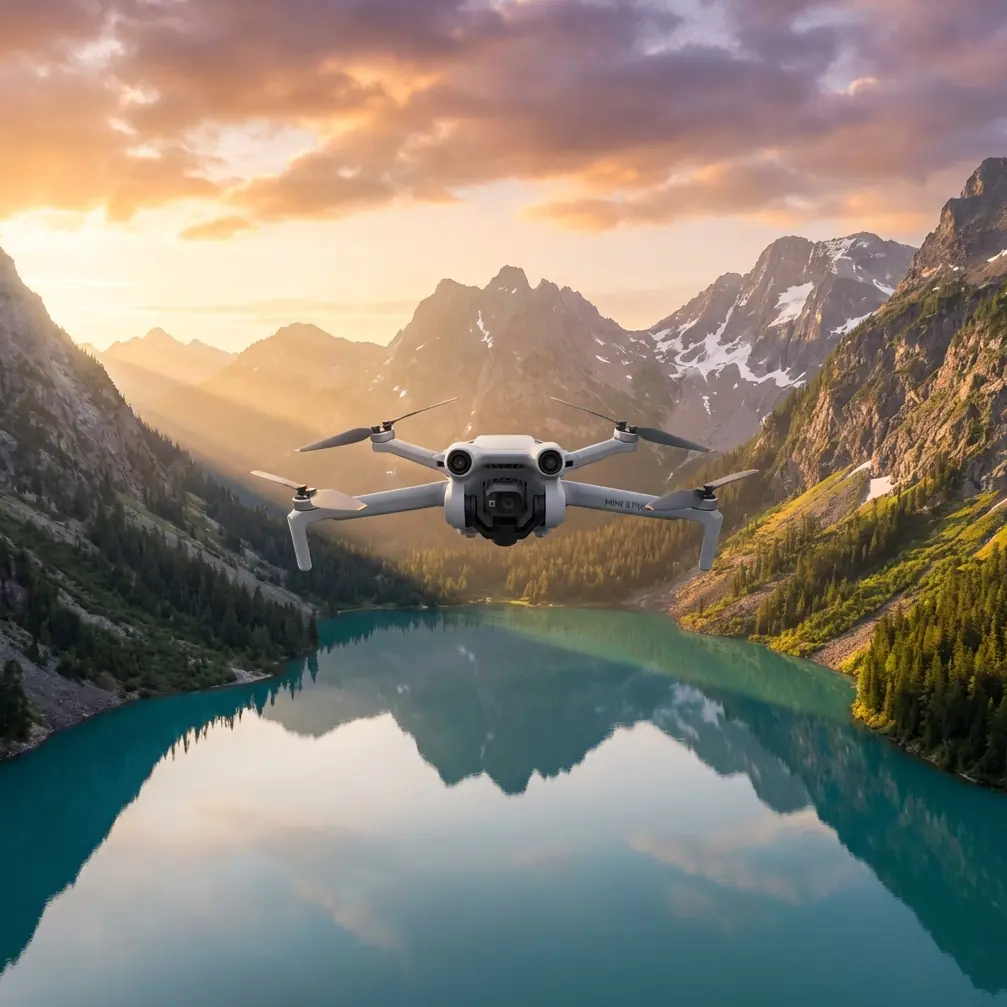
Mini 5 Pro in Complex Terrain: A Field Report from Highway Inspection Work
META: Field-tested insights on using Mini 5 Pro for highway inspection in difficult terrain, with practical notes on obstacle avoidance, ActiveTrack, D-Log, Hyperlapse, and managing electromagnetic interference.
Highway inspection looks simple on a route map and messy in the air.
On paper, you are following a linear asset: pavement, guardrails, retaining walls, drainage channels, bridge approaches, slope protection, signage, and cut sections. In the field, that same corridor turns into a technical puzzle. Elevation changes quickly. Wind behaves differently from one bend to the next. Vehicles create pressure and visual distraction. Utility lines, steel structures, and communications equipment can interfere with signal quality right when you need clean control the most.
That is where the Mini 5 Pro discussion gets interesting.
This is not a generic “small drone for everything” story. For highway inspection in complex terrain, a compact platform only earns its place if it can do three things reliably: maintain situational awareness, capture usable evidence without slowing the team, and stay controllable when the environment becomes electrically noisy or physically cluttered. The Mini 5 Pro, especially when approached as a field tool rather than a content toy, fits that profile better than many crews expect.
Why highway corridors are harder than they seem
A highway in mountainous or cut-and-fill terrain rarely gives a pilot a clean operating box. One moment the aircraft is moving along an open embankment. Seconds later it is crossing near sign gantries, descending beside a concrete retaining wall, or flying parallel to a slope armored with mesh and anchors. Every one of those surfaces changes depth perception. Some create difficult lighting. Others complicate obstacle sensing because the aircraft is seeing repeating patterns, thin lines, or sharp vertical transitions.
This matters for inspection because the mission is not just to “get footage.” The mission is to collect evidence that engineers or maintenance teams can trust. Hairline cracking on drainage outlets, erosion at the toe of a slope, joint separation near bridge transitions, vegetation encroachment near shoulders, and loose rock zones above the roadway all need stable, repeatable visuals. If the drone is drifting, hesitating, or forcing the pilot to spend too much attention on basic aircraft management, the quality of the inspection drops.
That is why obstacle avoidance and subject tracking are not lifestyle features here. They are workload-management tools.
Obstacle avoidance is not about bravery
In this kind of work, obstacle avoidance earns its value before the aircraft gets close to anything. A pilot inspecting highway assets is often balancing multiple priorities at once: keeping line of sight, watching traffic patterns below, checking the live feed for defects, and planning the next reposition point. In complex terrain, obstacle sensing gives you another layer of information when moving near walls, cut slopes, and roadside structures.
The operational significance is straightforward. If the aircraft can identify potential conflicts while you are performing a low-speed lateral pass near a retaining face or drainage culvert, the pilot is freed up to focus on inspection quality instead of micro-corrections every second. That changes the whole rhythm of the job. You can hold a cleaner line. You can inspect longer without fatigue building as quickly. You can make better decisions about whether a second pass is necessary.
On a highway corridor, that often means fewer repositionings on foot and less time spent setting up again at the next safe launch point.
ActiveTrack and subject tracking have a place in inspection
There is a temptation to dismiss ActiveTrack and subject tracking as creator-focused tools. That is a mistake.
On a highway inspection route, these functions can help maintain framing on moving or elongated subjects when the goal is to document condition over distance rather than isolate a single defect. Think of a follow-along pass beside a drainage ditch, barrier line, shoulder edge, or slope transition where the aircraft needs to preserve a consistent relation to the target while the pilot manages terrain awareness and changing elevation. Used carefully, tracking functions reduce the amount of manual framing correction required.
That does not mean you hand over the mission and hope automation gets everything right. It means you let the aircraft assist with repeatable camera relationship so the pilot can better monitor the environment and verify image quality. For long inspection days, that reduction in cognitive load is significant.
In practice, I have found that tracking tools are most useful when they are treated as temporary helpers, not full autopilot substitutes. Activate them for the section that benefits from consistent framing, then disengage when visual clutter increases or when roadside obstacles start stacking up in depth. Highway work rewards pilots who know when to use automation and when to take all of it back.
The real value of D-Log on inspection jobs
D-Log deserves more attention in infrastructure work than it usually gets.
People often talk about flatter color profiles in cinematic terms, but on inspection missions the advantage is more practical. Highway environments routinely contain brutal contrast. You may have bright concrete, dark culverts, reflective metal barriers, tree shadows, and pale dust or exposed aggregate all in the same scene. A standard profile can make those transitions look clean enough on the controller while hiding subtle details that matter later.
D-Log gives more room in post to recover detail in highlights and shadows. That can be the difference between vaguely seeing surface wear and being able to interpret whether a feature deserves follow-up from a ground team. It is especially useful during slope and drainage inspections, where shadowed recesses and sunlit faces often sit in the same frame.
That detail recovery is not just a post-production luxury. It improves traceability. If an engineering team reviews footage later and asks whether a stain indicates moisture movement, whether a crack line continues under a shadow edge, or whether material loss is superficial or progressive, D-Log footage gives the reviewer a better chance of making a defensible assessment.
QuickShots and Hyperlapse are not just for showreels
QuickShots and Hyperlapse may sound irrelevant to serious inspection work until you put them in the context of documentation.
A QuickShot-style move can be useful when you need a fast, structured reveal of a site relationship: for example, showing how a damaged slope section relates spatially to the roadway, drainage path, and nearby protective structures. It creates context quickly. That context is valuable when the inspection record is shared with people who were not on site.
Hyperlapse has a different kind of utility. On long corridors, change over time matters. Traffic flow around a work area, moving shadows on a problematic cut face, water behavior after a light weather event, or visibility patterns at a particular bend can all be captured more efficiently with time-compressed footage. It helps explain environmental conditions without forcing the review team to watch long segments in real time.
The point is not to make the inspection look polished. The point is to make the documentation easier to interpret.
Handling electromagnetic interference in the field
This is the part many pilots only learn after a few uncomfortable flights.
Electromagnetic interference around highways is uneven and often localized. You may have a clean link over open terrain, then a sudden change in signal stability near transmission corridors, communications towers, heavy roadside electrical infrastructure, or steel-dense bridge approaches. The aircraft is not necessarily failing. The radio environment is changing around it.
When that happens, antenna adjustment becomes one of the simplest and most underrated corrective actions.
I have seen pilots respond to interference by moving the aircraft immediately without first fixing the controller geometry. That can make a manageable problem worse. The smarter response is to stop rushing, stabilize the aircraft, assess your orientation, and adjust the controller antennas so the link is better aligned with the aircraft position. Small changes in body position and antenna angle can materially improve the connection, particularly when terrain or structures are already weakening the signal path.
The operational significance here is obvious: better antenna alignment can prevent a minor interference event from turning into a broken inspection sequence or an unnecessary recovery procedure. It also protects data continuity. If you are halfway through documenting a retaining structure and lose confidence in the link, you may have to repeat the entire pass. On an active highway corridor, repeating work is not just inefficient. It can introduce additional traffic management complications and compress the rest of the day’s schedule.
For teams that rotate pilots, this deserves to be taught explicitly. Signal management should be part of the inspection brief, not an improvised lesson.
If your team is refining field procedures for compact drone inspections, this direct line can be useful for operational discussion: https://wa.me/85255379740
Compact size changes field logistics
The Mini 5 Pro form factor matters more in highway work than people sometimes admit.
Inspection crews often launch from imperfect locations: a widened shoulder, a maintenance access point, a lay-by near a culvert, or a narrow clearing above a cut slope. A larger aircraft may offer endurance or payload advantages, but it also increases setup footprint, launch complexity, and visibility to passing traffic. A small platform gets airborne faster and with less disruption.
That speed matters when the team is working through multiple inspection points in one day. You are not dragging the whole operation behind the aircraft. You are using the aircraft as an extension of the inspection team, quickly deployed where needed and packed away just as fast.
Compact size also helps with terrain transitions. If you are climbing to inspect a rockfall barrier above the roadway and then dropping to examine drainage below the shoulder, portability directly affects crew fatigue. After several relocations over rough ground, small operational efficiencies stop being theoretical and start preserving decision quality.
Where the Mini 5 Pro fits best
The Mini 5 Pro is strongest when the assignment values agility, visual intelligence, and repeatable documentation over heavy-payload specialization.
For highway inspection in complex terrain, that usually means:
- routine corridor assessments
- drainage and erosion review
- retaining wall and slope surface documentation
- barrier, sign, and shoulder condition checks
- progress records for maintenance or stabilization work
- rapid visual verification after weather events
It is less about replacing every specialized system and more about covering a large share of inspection needs with a platform that is quick to deploy and capable of producing reviewable evidence. That distinction matters. Too many drone evaluations ask whether a compact aircraft can do everything. The more useful question is whether it can do the most common jobs well enough that the heavy tools are reserved for the missions that truly require them.
On that standard, the Mini 5 Pro makes a lot of sense.
A field mindset beats a feature checklist
What determines success on a highway inspection is rarely one headline feature. It is how the pieces work together in a real corridor.
Obstacle avoidance reduces unnecessary risk and mental load near structures and terrain changes. ActiveTrack and subject tracking help maintain usable framing during linear passes. D-Log preserves detail in punishing light. QuickShots and Hyperlapse add context and time-based understanding when documentation needs more than isolated clips. Antenna adjustment during electromagnetic interference protects control quality and mission continuity.
Those are not disconnected specs. They are parts of a working method.
If I were building a highway inspection workflow around the Mini 5 Pro, I would train pilots to think in layers:
First, secure the link and maintain visual discipline.
Second, use sensing and tracking features to lower workload, not to replace judgment.
Third, capture footage in a profile that leaves room for interpretation later.
Fourth, document not only defects, but also their physical context in the corridor.
That approach turns a compact drone from a convenience item into a reliable inspection instrument.
And that, really, is the right way to judge the Mini 5 Pro for complex terrain. Not by how impressive it sounds in a spec sheet, but by how calmly and consistently it helps a crew come back with usable answers.
Ready for your own Mini 5 Pro? Contact our team for expert consultation.