
Mini 5 Pro for Low-Light Forest Inspection
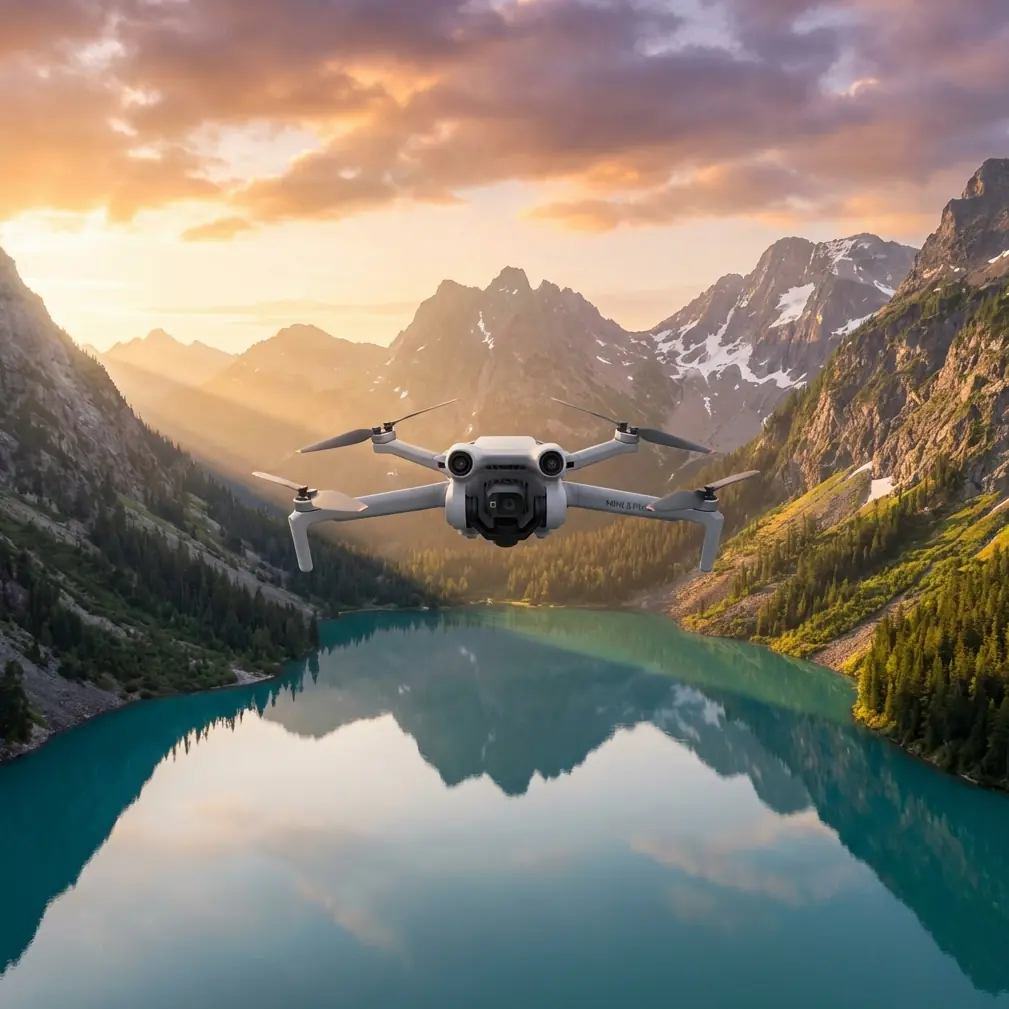
Mini 5 Pro for Low-Light Forest Inspection: What Actually Matters When the Weather Turns
META: A field-focused look at using the Mini 5 Pro for forest inspection in low light, with practical guidance on obstacle avoidance, ActiveTrack, D-Log, and flight decisions when conditions shift mid-mission.
Forest inspection sounds straightforward until you try to do it at dusk, under a canopy, with moisture building in the air and light fading faster than your battery estimate suggests.
That is where the Mini 5 Pro conversation gets real.
For a reader planning to inspect forests in low light, the usual spec-sheet talk is not enough. What matters is whether the aircraft can hold visual reliability under a broken canopy, avoid branches when your depth perception is compromised by dim conditions, and still produce footage you can actually analyze afterward. The Mini 5 Pro sits in that exact discussion because it brings together three capabilities that matter more in the woods than they do in open-country flying: obstacle avoidance, dependable subject tracking, and flexible image capture options like D-Log for recovery in difficult contrast.
I approach this as a photographer first, but forest inspection is not just about getting beautiful footage. It is about reducing uncertainty. You are often checking tree health, storm damage, canopy gaps, water intrusion, access routes, or the condition of marked zones. In low light, every one of those jobs becomes harder. Details flatten. Shadows merge. Dark bark and wet leaves can visually blend into one mass. A small aircraft that behaves predictably in those conditions is not just convenient. It changes what work you can finish before full dark.
The actual problem: forests punish hesitation
A forest is one of the least forgiving places to fly a compact drone. GPS can feel less decisive near dense cover. Narrow clearings remove your margin for error. Visual line-of-sight becomes more difficult as ambient light drops. And the branches you are worried about are not only in front of you. They are above, beside, and sometimes hidden behind foreground leaves that look harmless on a phone screen.
That is why obstacle avoidance is not a luxury feature here. In open fields, it is easy to treat sensing systems as backup. In timber, especially near uneven terrain, it becomes part of your risk management. If the Mini 5 Pro is being used for inspection at the edge of legal shooting light or in heavy shade, obstacle avoidance helps compensate for the simple fact that human depth judgment degrades first. The aircraft may still “see” a problem before the operator’s eyes do on a dim display.
The same logic applies to subject tracking. Many people hear ActiveTrack and think of cyclists or runners. In forest inspection, tracking has a different job. It is not about flashy movement. It can help you maintain a consistent relationship to a moving reference point, a trail line, a vehicle below, or a worker moving through a management area while you concentrate on exposure, branch clearance, and framing. In other words, it reduces cockpit workload.
That reduction matters when the weather shifts.
A real-world turning point: the flight changes when the air changes
The most revealing flights are rarely the calm ones. A drone can look impressive on a still evening in perfect visibility. The more useful test comes when the air becomes unstable and the forest starts changing color in front of you.
Picture a late-day inspection over mixed woodland after a humid afternoon. The mission begins in decent conditions: subdued light, but workable. The Mini 5 Pro lifts cleanly from a logging road, and the first task is simple—track a drainage line cutting through a stand of pines, then circle toward a denser hardwood section where a few trees have shown signs of stress from the ground.
At first, the aircraft has the edge. Under the open gap, you can move steadily and use ActiveTrack to hold a line relative to a marked utility path while checking the canopy edges. D-Log makes sense here because the scene has ugly contrast: pale sky through openings, nearly black undergrowth beneath. If you expose carefully, the flatter profile gives you more room later to recover detail in bark texture and leaf structure without clipping the sky to a white sheet.
Then the weather turns. Not dramatically. That is usually not how it happens. A breeze begins to move across the treetops from one side. A cool shift rolls in, the kind that carries thin moisture and nudges branches into motion. Light drops another step. The same route you just flew now looks busier and narrower because moving foliage creates visual noise everywhere.
This is the point where the Mini 5 Pro’s feature mix has operational significance. Obstacle avoidance becomes more than crash insurance. It helps manage the new variable introduced by branch movement and reduced contrast. ActiveTrack, if used intelligently, keeps the drone from wandering off your intended reference while your attention is split between wind behavior, signal awareness, and the changing look of the canopy.
You do not simply “trust the drone” and keep going. That is not professional judgment. You use the systems to buy time and precision while you shorten your route, lower speed, and reassess the mission. Good inspection flying often means knowing when to reduce ambition. What might have been a full-area pass in stable air becomes a targeted pass over the highest-priority trees.
Why low-light image control matters more than people admit
A lot of pilots talk about low-light performance as if it begins and ends with brightness. That is only part of the story. Forest inspection is often about seeing subtle differences: leaf thinning, crown asymmetry, storm scarring, washout near roots, standing water, broken tops, fungal discoloration. The challenge is not just making the image visible. It is preserving enough tonal separation to interpret what you are seeing.
That is where D-Log earns its place in the conversation. In a forest, especially late in the day, your frame can contain both bright sky holes and near-black vegetation. A standard profile may look punchier on first review, but punch is not the same as usable data. D-Log gives you a flatter capture that can hold more workable information across those extremes. For a photographer, that means better grading latitude. For inspection work, it means a better chance of distinguishing a real canopy issue from a shadow artifact.
There is a tradeoff, of course. D-Log asks more of the operator. Exposure discipline matters. Post-processing matters. If your workflow is rushed and you need quick handoff footage with no grading, a standard profile may still be the better operational choice. But when the mission is low-light forest inspection and the goal is interpretive clarity, the flatter capture option is not just a creative feature. It can help preserve evidence.
That becomes especially useful after weather changes mid-flight. Once moisture thickens and the sky dims, contrast often collapses in unpredictable ways. You may lose highlight detail around open patches while the understory turns muddy. A flexible profile gives you a little more room to recover from that.
QuickShots and Hyperlapse are not just “content creator” tools
This is where many technical discussions go wrong. They dismiss automated modes like QuickShots or Hyperlapse as social-media extras. In inspection work, they can have very practical value when used with discipline.
QuickShots can help standardize repeatable perspectives. If you need a quick orbital view around a damaged cluster of trees, a predefined movement can produce a cleaner comparative angle than hand-flying in gusty, low-light conditions. The key is not creativity for its own sake. The key is repeatability. If you revisit the same site days later, a similar path can help you compare structural changes.
Hyperlapse has a narrower use case, but it is still relevant. In a forest environment, it can reveal movement patterns that are hard to notice in real time—fog drifting through a low corridor, wind behavior across different canopy layers, changing shadow patterns along a wet slope. Those are not everyday inspection tasks, but when they matter, they matter a lot.
The catch is simple: in worsening weather, automation should narrow workload, not expand risk. If branches are moving unpredictably or visibility is deteriorating, manual conservatism beats cinematic ambition every time.
How the Mini 5 Pro fits the forest-inspection role
If someone asked me whether the Mini 5 Pro is suitable for forest inspection in low light, I would not answer with a yes or no. I would answer with conditions.
It fits well when you need a compact aircraft capable of navigating a cluttered environment with help from obstacle avoidance, and when you benefit from subject tracking that reduces control burden while following a route or reference. It fits when your work demands image flexibility, because D-Log gives you more to work with in scenes where the tonal range is uneven. It fits when you occasionally need fast, structured capture methods such as QuickShots for repeatable viewpoints.
It is less about raw hype and more about stacking small advantages. Each one removes friction. In a forest, removing friction is everything.
A drone that makes it easier to hold a line, easier to avoid hidden obstacles, and easier to recover detail from dim footage lets you focus on what you are actually there to inspect. That is the difference between technology that looks impressive in a brochure and technology that carries its weight in the field.
A practical operating approach when conditions start slipping
If I were sending a pilot into a low-light forest inspection with the Mini 5 Pro, I would frame the workflow this way:
Start with your highest-value area first. Light never improves during a dusk mission, and forest complexity tends to feel worse, not better, as the flight progresses. If there is a suspected disease cluster, damaged stand edge, or drainage issue, inspect that before collecting general scenic coverage.
Use obstacle avoidance as a support system, not a substitute for route planning. Dense branches, moving leaves, and low contrast can still create difficult situations. The feature matters most when paired with a slower, more deliberate flight path.
Use ActiveTrack selectively. It is useful when following a trail corridor, vehicle, or person through a management zone, but it should simplify your job, not tempt you into flying deeper into clutter than conditions allow.
Capture in D-Log when the scene has severe contrast and the footage will be reviewed carefully later. If the mission requires immediate handoff with no edit time, simplify your workflow and protect exposure.
Treat QuickShots and Hyperlapse as specialized tools. They can produce useful repeatable views and environmental context, but only when the airspace and branch movement remain manageable.
And when the weather changes mid-flight, believe what the forest is telling you. If wind builds and the canopy starts moving in layers, your margin is shrinking. Shorten the route. Raise your caution threshold. Bring the aircraft home with usable footage rather than forcing a complete mission profile.
The human factor still decides the outcome
This is the part no feature list can solve. Low-light forest inspection rewards restraint. The Mini 5 Pro can help you work smarter through obstacle sensing, ActiveTrack, and image options like D-Log, but it still relies on pilot judgment in the exact moment that matters most: when conditions become “almost still okay.”
That phrase causes more trouble than people admit.
The best drone work I have seen in forests was not aggressive. It was methodical. The pilots knew when to stop chasing one more angle. They knew when a darker frame was still usable and when it had crossed into false confidence. They understood that a compact aircraft in a wooded environment is most effective when it is flown with a clear purpose and a shrinking appetite for unnecessary risk.
If you are mapping your own inspection workflow and want a practical second opinion, you can message the flight planning desk here and compare notes before you head into the trees.
The Mini 5 Pro makes sense for this kind of work because its most relevant tools align with the actual pain points: low light, visual clutter, moving obstacles, and the need to preserve meaningful image data. That is the real story. Not abstract capability. Operational usefulness, especially when the weather shifts and the forest stops being forgiving.
Ready for your own Mini 5 Pro? Contact our team for expert consultation.