
Mini 5 Pro Field Report: Inspecting Windy Fields
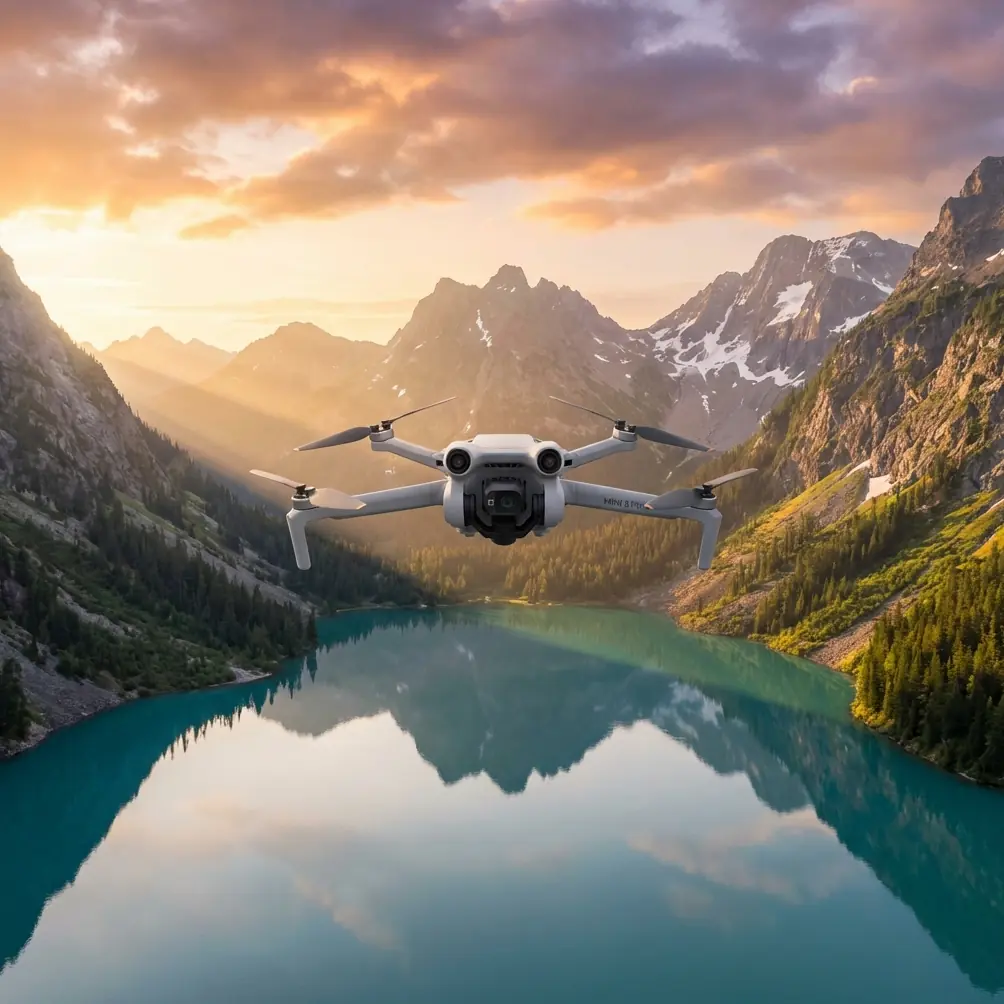
Mini 5 Pro Field Report: Inspecting Windy Fields With the Crew Logic Most Pilots Skip
META: A field-tested Mini 5 Pro article for windy field inspections, explaining crew roles, flight planning, GPS workflow, obstacle avoidance, ActiveTrack, D-Log, and how changing weather affects safe, useful aerial results.
I’ve seen a lot of “field inspection tips” that focus almost entirely on the aircraft. That misses the real point.
When conditions get unstable over open land, especially in agricultural or utility-adjacent field environments, the difference between a productive Mini 5 Pro sortie and a messy one is rarely a single feature. It’s the operating method behind the flight. Wind exposes weak planning fast. A good drone can compensate for a lot, but not for a confused workflow.
That’s why one of the most useful reference points for a Mini 5 Pro field operation doesn’t come from a consumer marketing sheet at all. It comes from a technical inspection guideline built around role separation in drone inspection work. The document describes a minimum three-person flight team: one UAV operator, one ground-station operator, and one gimbal operator. On paper, that may sound oversized for a compact platform. In practice, it explains exactly how to get better inspection output from a small aircraft when weather turns halfway through the job.
For windy field inspections, that structure matters more than people think.
Why a small drone still benefits from a three-role mindset
The source guideline is straightforward: the minimum configuration for inspection work is three specialized personnel. One person handles the aircraft, one runs the ground station, and one controls the gimbal and onboard imaging system. It also says that in ordinary operations, the inspection lead is usually the UAV pilot.
Even if you’re flying a Mini 5 Pro in a leaner civilian setup, this role logic is worth borrowing almost intact.
Open fields create a deceptively simple environment. There may be fewer buildings, but that doesn’t make the mission easy. Wind shear across crop rows, sudden gusts over irrigation lines, shifting sun angle, and long visual runs can all pull attention in different directions. If one person tries to manually pilot, manage route logic, watch telemetry, frame the camera, monitor obstacles, and think ahead to data organization, quality drops first and safety usually follows.
The three-role model solves that by dividing the mission into separate cognitive jobs:
- The pilot protects the aircraft and makes final flight decisions.
- The ground-station role owns route edits, GPS-linked task logic, and telemetry awareness.
- The gimbal role protects image value by managing framing, angle, and capture consistency.
That division has real operational significance for the Mini 5 Pro. A compact platform with obstacle avoidance, subject tracking, ActiveTrack, QuickShots, Hyperlapse, and D-Log can do a lot, but those tools only pay off if someone is free to use them deliberately rather than reactively.
The flight I remember most started easy
This was a field inspection run with a simple objective: document drainage patterns, crop stress pockets, fence-line condition, and a few exposed service paths before the weather shifted later in the afternoon.
At takeoff, the wind was manageable. Not calm, but workable. The plan was to run broad coverage first, then lower-altitude detail passes where the client needed visual confirmation on problem zones. That sequence matters in open terrain. If the weather deteriorates early, at least the wide-area intelligence is already captured.
This is where the source document’s emphasis on planning and route checks becomes immediately relevant. It assigns the flight-control role responsibility for rough mission and sortie planning, plus checking the actual route before flight. It assigns the ground-station role responsibility for GPS data import, route editing, route upload, and monitoring data during automated flight.
Translated to a Mini 5 Pro field workflow, that means you should not treat waypoint logic as an afterthought. In windy conditions, every unnecessary re-fly is expensive in battery, time, and image consistency. If your field boundaries, points of interest, access roads, or repeat-pass lines are set up correctly before launch, the aircraft spends more time collecting useful evidence and less time wandering through corrections.
Mid-flight weather changes expose weak camera discipline
About a third of the way into the job, the conditions changed exactly the way they often do over exposed land: the wind didn’t simply increase, it became less predictable. Gusts started arriving from a slightly different direction than forecast. The aircraft could still hold position, but the image behavior changed first. Framing became harder to keep consistent on low, lateral passes.
This is where pilots who rely only on raw stick skill tend to overwork the aircraft. They start chasing the shot instead of managing the mission.
A better approach is to let the Mini 5 Pro’s stabilization and obstacle-awareness systems reduce workload while you tighten the inspection objective. If your goal is visual condition assessment, not cinematic drama, then consistency beats flair. ActiveTrack or subject tracking can help on moving agricultural vehicles or workers during process documentation, but in a windy field inspection the real advantage is often simpler: stable relation to the inspection target while the pilot remains free to prioritize safe positioning.
Obstacle avoidance also matters more in fields than many users assume. People think “open land” means obstacle-free airspace. It usually doesn’t. You may have utility poles, edge trees, irrigation rigs, trellis lines, pumping equipment, and unexpected cables near service areas. In gusty conditions, maintaining extra margin around those features is smarter than trying to thread a perfect low pass. Obstacle sensing is not permission to get reckless. It is a buffer that helps preserve the mission when airflow gets messy.
Why the pilot should lead the operation
One detail from the source material deserves more attention: under normal conditions, the inspection work leader is the UAV operator.
That isn’t just hierarchy. It’s practical command design.
When weather changes in the middle of a field mission, someone has to decide what gets cut, what gets repeated, and what gets escalated into a second sortie. The pilot is the one with the best real-time understanding of aircraft authority, control margin, battery reserve, return path risk, and whether the drone is working harder than the camera feed suggests.
In our case, once the wind direction shifted, the pilot-led call was to stop trying to complete every planned low-altitude edge pass. Instead, we elevated the aircraft slightly, widened the pattern, and focused on evidence that remained reliable under the new conditions: drainage runoff lines, standing water signatures, vehicle track intrusion, and broad crop uniformity.
That decision protected the value of the mission.
A lot of bad inspection flights fail because the operator keeps chasing the original shot list after the environment has already invalidated it.
The quiet role that saves the mission: ground-station discipline
The source guideline gives the ground-station operator more responsibility than many small-drone teams assign in the field. The role includes ground-station deployment and status checks, GPS data import, route editing, route upload, automatic-flight data monitoring, power preparation, GPS collection, GPS consolidation, and results archiving.
That list is not administrative fluff. It is the backbone of repeatable inspection quality.
For a Mini 5 Pro user inspecting windy fields, the operational significance is obvious:
GPS-linked route integrity reduces drift-related inconsistency.
If you need to compare one part of a field against a previous pass or revisit a stress zone later, route discipline keeps the record usable.Battery and power readiness become more critical in wind.
Wind increases workload on the aircraft, which can narrow your practical inspection window. The reference explicitly assigns power preparation and checking as a responsibility. That’s exactly the kind of “small” step that determines whether the final quarter of the mission is flown conservatively or desperately.Data archiving matters because windy inspections often require interpretation after the fact.
You may not identify every issue live. Organized footage, GPS-linked notes, and sorted result files are what allow the inspection to remain useful after landing.
If you’re building a repeatable field workflow and want help setting it up around compact inspection drones, you can message the team here: https://wa.me/85255379740
The gimbal role is not cosmetic
The reference document also assigns a full set of duties to the gimbal operator: checking and maintaining airborne equipment, operating the gimbal, checking the gimbal system, checking image transmission, assisting with overall system checks, overseeing GPS collection support, and helping with aircraft preparation.
That’s a serious list, and it should change how people think about camera work on the Mini 5 Pro.
In a windy field mission, the gimbal is not there to make footage look pretty. It is there to make evidence readable.
That means:
- keeping horizon and angle discipline during crosswind segments,
- adjusting camera orientation to reveal texture in crop rows or erosion channels,
- avoiding overactive framing changes that make later review difficult,
- and preserving consistency when the aircraft needs to fly a less-than-ideal line for safety reasons.
This is also where D-Log earns its place. In mixed light, especially when clouds move through during a windy afternoon, contrast can shift quickly across soil, vegetation, and reflective wet areas. A flatter recording profile gives more room to recover shadow detail and manage highlights later. For inspection, that can mean the difference between seeing a subtle drainage path and losing it in harsh contrast.
QuickShots and Hyperlapse have a place too, though not as primary inspection tools. They are useful for context capture. A short automated reveal over a field edge or a time-compressed weather-development sequence can help a land manager or project stakeholder understand environmental progression around the inspected site. The key is to treat these modes as supporting documentation, not substitutes for systematic passes.
What changed once the gusts intensified
Later in the sortie, the aircraft started encountering more frequent lateral corrections. At that stage, one thing became obvious: the mission was no longer about collecting everything. It was about protecting high-confidence data.
This is exactly why the source material assigns the flight-control role responsibility not only for operating the aircraft, but also for monitoring drone status, organizing checks and maintenance, temporarily reallocating field tasks, and even coordinating fault analysis and summary work for the job output.
That broader responsibility matters. Inspection isn’t finished at landing. If wind affects sharpness, angle, timing, or route adherence, someone has to interpret whether the result is still fit for purpose.
With the Mini 5 Pro, that means asking practical questions after touchdown:
- Did the gusts compromise repeatability on the low passes?
- Which clips remain defensible for agronomic or site-condition review?
- Do we need a second flight under calmer conditions for confirmation?
- Did obstacle alerts or route deviations coincide with any critical imaging segment?
A mature field workflow expects those questions. It does not hide from them.
The best lesson from this reference isn’t about aircraft size
What makes the source material valuable is that it comes from a more formal inspection environment, yet the principles scale down remarkably well to a Mini 5 Pro.
A small drone in a windy field still benefits from professional separation of duties. The aircraft may be compact, but the mission logic should not be casual.
The minimum three-person model from the guideline is especially powerful because it recognizes a truth every experienced operator learns sooner or later: inspection quality is built before takeoff and defended during turbulence. The pilot leads. The ground-station workflow keeps the mission coherent. The gimbal and imaging role protects interpretability.
If you’re flying solo, you can still use this framework. Just don’t pretend all tasks happen equally well at once. Break the mission into phases. Front-load route setup. Narrow your capture goals. Favor stable evidence over ambitious maneuvering. And when the weather shifts mid-flight, let the operation adapt instead of forcing the drone to preserve your original plan.
That is how compact aircraft become credible inspection tools.
The Mini 5 Pro’s value in windy field work isn’t just obstacle avoidance, ActiveTrack, or camera modes on a spec list. It’s how those capabilities slot into a disciplined inspection method. When the wind changes, the feature set helps. The workflow decides whether the mission still produces something trustworthy.
Ready for your own Mini 5 Pro? Contact our team for expert consultation.