
Mini 5 Pro Field Report: Inspecting Urban Coastlines
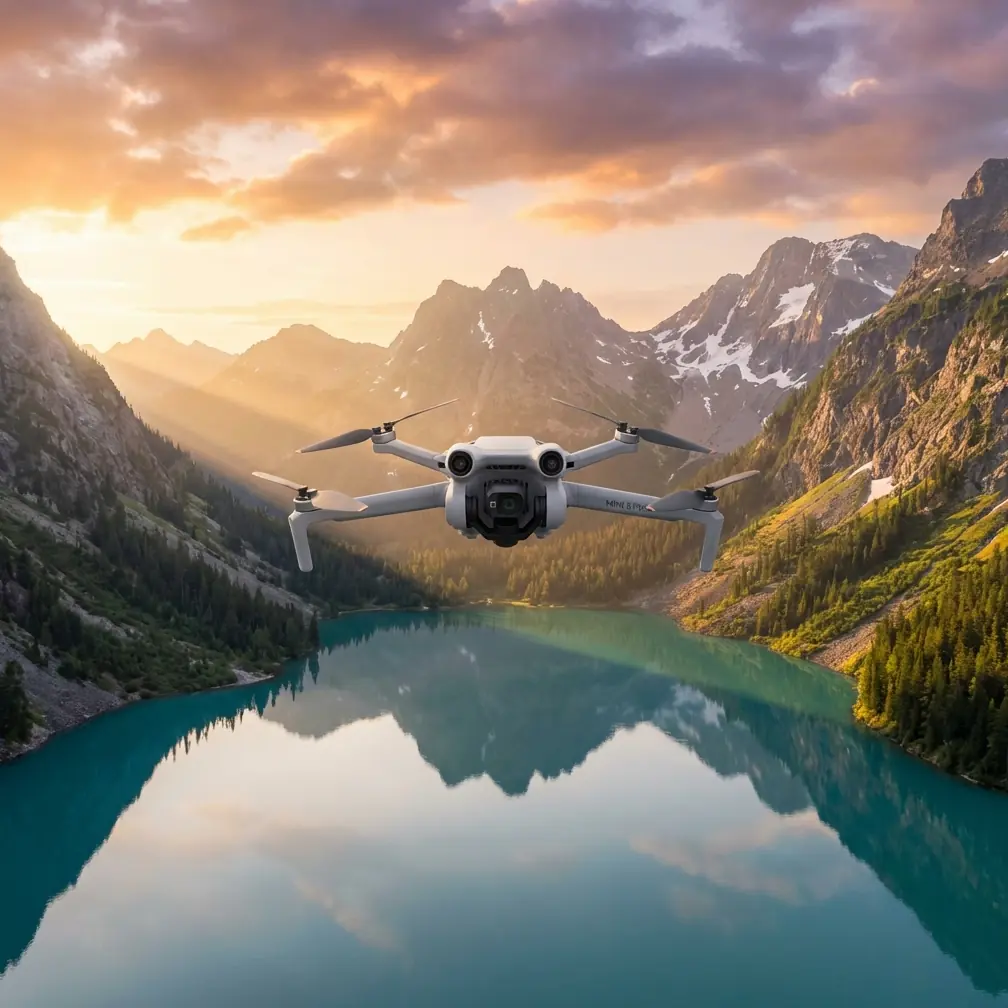
Mini 5 Pro Field Report: Inspecting Urban Coastlines With the Right Altitude Strategy
META: A field-tested look at how Mini 5 Pro can support urban coastline inspection, with practical altitude planning, obstacle awareness, tracking workflows, and lessons drawn from long-endurance pipeline UAV operations.
I spend a lot of time around waterlines, seawalls, piers, drainage outlets, and the awkward edges where cities meet the sea. Urban coastline inspection sounds simple until you are actually out there. Wind curls around buildings. Signal conditions change block by block. Concrete, railings, lamp posts, bridge spans, and pedestrian traffic squeeze your options. The challenge is not just getting footage. It is getting reliable visual data without wasting battery, missing defects, or flying too low for comfort.
That is where the Mini 5 Pro conversation gets interesting.
This is not a heavy fixed-wing pipeline aircraft, and it should not be judged like one. But one of the smartest ways to understand what the Mini 5 Pro needs in an urban shoreline workflow is to look at what industrial inspection platforms prioritize when the mission is long linear infrastructure. The reference material on oil pipeline inspection offers a useful benchmark: a 1.60 m wingspan aircraft, weighing 4.5 kg, with 90 to 100 minutes of endurance, a cruise speed of 64 km/h, and an operating altitude from 100 to 4500 m above ground. It was designed for long-distance corridor work, not tight urban flying. That difference matters.
In a city coastline environment, the Mini 5 Pro wins not by copying that aircraft’s endurance or launch method, but by solving the opposite problem: close-range precision in a cluttered space.
What urban coastline inspection actually demands
A coastline in a city is rarely a clean strip of beach. More often, it is a stitched-together zone of:
- retaining walls
- breakwaters
- flood barriers
- stormwater discharge points
- revetments
- marina edges
- ferry structures
- rooflines overlooking the water
- pedestrian pathways
- utility crossings
If you are documenting erosion, concrete cracking, surface displacement, algae buildup, drainage blockage, or storm damage, you need repeatable angles. You also need enough clearance to keep the aircraft safe when wind pushes laterally near vertical structures.
That is why altitude is not a casual setting. It becomes the backbone of the mission.
The optimal flight altitude insight for this scenario
For most urban coastline inspection runs with the Mini 5 Pro, my preferred working band is 25 to 45 meters above the immediate structure or shoreline reference point, then adjusted in segments.
That range is low enough to reveal material condition and edge detail, but high enough to reduce risk from sudden crosswinds, gull activity, light poles, and cable surprises. It also gives the obstacle avoidance system enough room to work as a safety layer rather than a last-second panic response.
Here is how I break it down in practice:
15 to 25 meters
Use this for close visual checks on localized defects such as:
- cracks in seawalls
- missing fasteners on boardwalk hardware
- small drainage outfalls
- rock armor displacement near accessible edges
This altitude can produce excellent detail, but it is also where urban clutter becomes aggressive. Subject tracking or ActiveTrack should be used cautiously here, especially if pedestrians, railings, or overhanging fixtures are entering the frame.
25 to 45 meters
This is the sweet spot for most coastline inspection passes with Mini 5 Pro.
You can read the shoreline as a system rather than a single defect. Waterline condition, access paths, wave impact patterns, and barrier continuity become easier to interpret. If I am building a repeatable inspection route, this is usually where I start. It balances image usefulness with aircraft safety.
45 to 70 meters
This higher band is best when the site is congested, when wind is uneven near structures, or when I need broader context for mapping change over time. It is also useful for documenting the relationship between the coast asset and nearby roads, buildings, and runoff channels.
Above this, detail drops off for defect-focused inspection unless the goal is overview imagery rather than condition assessment.
Why the pipeline reference still matters
The source document describes a very different UAV system for oil pipeline inspection, but two details stand out because they teach the same operational lesson.
First, the aircraft’s imaging workflow was designed around defined overlap metrics: 75% front overlap and 50% side overlap, with specified area coverage targets such as 6 km² at 5 cm GSD. That is a disciplined data-capture mindset. Urban coastline inspection with Mini 5 Pro benefits from the same discipline. Even if you are not flying a formal mapping mission, repeatability matters. If you inspect a seawall this month at roughly 30 meters and next month at 58 meters with a different camera angle, your comparison quality drops immediately.
Second, that pipeline platform had 10 minutes system setup time and full autopilot functions including automated navigation and recovery. The operational significance is simple: inspection quality improves when workflow friction is reduced. On the Mini 5 Pro, that translates into prebuilt flight patterns, consistent return points, predictable camera settings, and clear segment planning. The tool is smaller, but the principle is identical. Fewer improvised decisions in the field means cleaner results.
Mini 5 Pro strengths in an urban coastal workflow
The Mini 5 Pro earns its place when the job requires responsiveness. Coastline work in a city changes minute to minute. A fixed-wing inspection platform with catapult launch and parachute recovery radius of 250 meters, like the one in the reference, makes sense over long open corridors. Along a crowded promenade, it would be absurd. You need something that can launch quickly, reposition precisely, and stop when a cyclist appears under your line.
That is where several Mini 5 Pro-style capabilities become genuinely useful rather than promotional checkbox items.
Obstacle avoidance is not a luxury here
Urban coasts are filled with partial hazards. Not dramatic skyscrapers. Annoying, mission-breaking objects: flags, antennas, mooring poles, handrails, bridge beams. A drone that can sense and manage those obstacles gives you more confidence when flying lateral inspection lines parallel to seawalls or infrastructure edges.
Still, obstacle avoidance is a buffer, not a substitute for route design. I prefer to keep manual control on first-pass inspection lines, then use automated or assisted features once I understand the airspace.
ActiveTrack and subject tracking help on moving shoreline assets
If part of the job involves following a maintenance vessel, documenting floating barriers, or capturing movement along a tidal edge, tracking functions can reduce workload. The trick is using them for controlled observation, not cinematic wandering. In inspection, stability matters more than flair.
D-Log helps when the coastline lighting turns ugly
Urban coastlines often produce brutal contrast. Bright water reflections, dark understructures, concrete glare, and shadow from towers can ruin a standard profile. D-Log gives more grading headroom when you need to recover highlight and shadow information later. For visual inspection records, that flexibility can make the difference between seeing surface spalling clearly and losing it in tonal compression.
QuickShots and Hyperlapse have limited but real documentation value
I would not use QuickShots as a primary inspection method. But they can help create context footage for stakeholders who need to understand the site before they review detailed frames. Hyperlapse is similar. Not for defect diagnosis, but useful for showing tidal transition, traffic flow near the coast, or the progression of light across a flood defense structure during a site visit.
My field workflow for Mini 5 Pro on urban coastlines
When I approach one of these inspections, I separate the mission into three layers.
1. Context pass
I start around 45 to 60 meters, depending on obstacles and local restrictions. The goal is not detail. It is orientation. I want to understand wind behavior, identify bird activity, and confirm where signal quality weakens.
The pipeline reference aircraft offered 5 km transmission with an omnidirectional antenna and up to 10 km with a directional antenna. In an urban coastline environment, those kinds of headline distances are not the point. Buildings, reflections, and interference compress real-world margins. The operational takeaway is this: transmission capability is only useful if the route respects local signal conditions. With Mini 5 Pro, I plan shorter segments and maintain cleaner geometry to the controller rather than assuming distance alone equals safety.
2. Inspection pass
Then I drop to the core altitude band, usually 25 to 45 meters. I run slow parallel lines along the structure, pausing for any anomaly: cracking, undermining, rust stains, vegetation intrusion, displaced armor stone, blocked outfall, damaged fendering.
This is where camera consistency matters most. If the light is shifting, I lock settings rather than letting auto exposure chase reflections off the water.
3. Detail pass
For areas of concern, I go lower only if the environment allows it safely. This may mean 15 to 20 meters over a drainage outlet or fractured wall section. I capture oblique angles, top-down views, and side profiles where possible.
If the site has heavy public movement, I shorten each low-altitude segment and reset often. Long low runs near urban coast structures invite trouble.
Weather and surface effects
The pipeline system in the reference was rated for temperatures from -20°C to 60°C, wind below force 6, and even moderate rain tolerance. That tells you how industrial inspection platforms are built for rough utility conditions. The Mini 5 Pro should be operated far more conservatively, especially around salt air and unstable coastal wind.
The practical lesson is not that your compact drone should imitate industrial weather tolerance. It is that coastal inspection punishes sloppy weather judgment. Even a mild onshore breeze can become turbulent near stepped seawalls or corners of waterfront buildings. My rule is simple: if I see repeated yaw corrections or inconsistent hover behavior during the context pass, I raise altitude for stability or cut the mission into smaller protected sections.
Why repeatability beats spectacle
Jessica Brown the photographer might be tempted to chase the dramatic line of surf against concrete. I understand that instinct. But inspection work rewards restraint. The most useful flights are not always the prettiest. They are the ones you can reproduce next month from the same height, same angle, same path.
This is another hidden lesson from the reference platform. It was built for measurable coverage, controlled overlap, and automated capture. Even though the Mini 5 Pro is a different class of aircraft, the same inspection mindset applies. Build a route. Hold your altitude. Name your segments. Log your conditions. Keep your visual record coherent.
If you are setting up an urban coastline workflow and want a second opinion on route planning or camera setup, you can send your site notes here: message the flight planning desk.
Final take
The Mini 5 Pro makes the most sense for urban coastline inspection when you lean into what compact multirotors do best: precise positioning, quick deployment, and safe operation in spatially complex environments. The biggest mistake is treating it like a miniature long-corridor survey aircraft. The benchmark from pipeline operations is useful, but mainly as a reminder of what serious inspection programs value: consistency, planning, and mission-specific altitude control.
For this scenario, the practical altitude answer is clear. Start broad, then work the shoreline in the 25 to 45 meter range for the main inspection pass, moving lower only for targeted defect review. Use obstacle avoidance as insurance, not permission. Use ActiveTrack selectively. Use D-Log when contrast gets harsh. Skip flashy flight behavior unless it serves the record.
That is how you turn a small aircraft into a reliable coastal inspection tool in a city setting.
Ready for your own Mini 5 Pro? Contact our team for expert consultation.