
How to Inspect Dusty Coastlines With the Mini 5 Pro Without
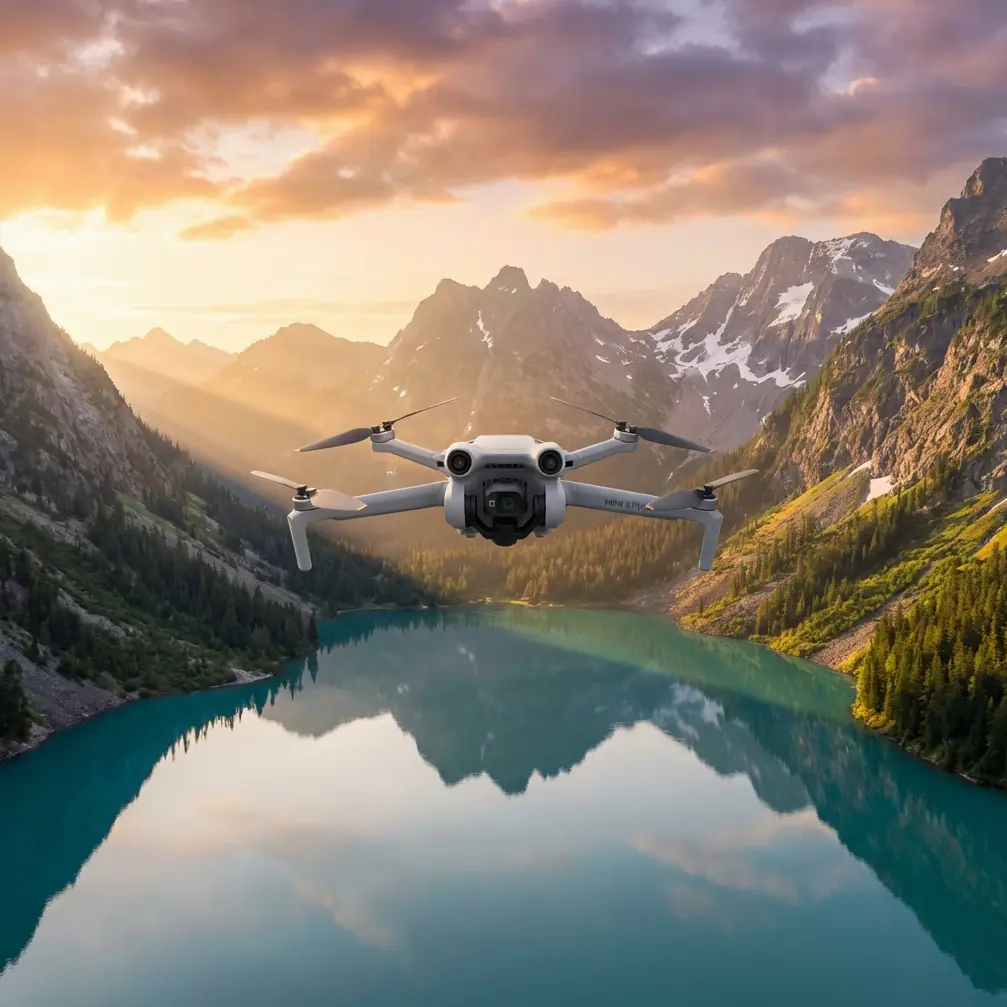
How to Inspect Dusty Coastlines With the Mini 5 Pro Without Losing Detail or Control
META: A field-focused Mini 5 Pro guide for dusty coastline inspection, covering flight planning, obstacle avoidance, tracking, image settings, and why controlled interception concepts matter for safer recovery.
Coastline inspection looks easy from a distance. Open sky, broad visibility, dramatic terrain. In practice, it is one of the messier jobs you can hand a compact drone. Salt haze softens contrast. Dust gets lifted off access roads and rocky embankments. Wind curls around cliffs and structures. The light can shift from harsh glare to flat gray in minutes.
That is exactly where the Mini 5 Pro becomes interesting.
Not because a small drone magically erases environmental risk. It does not. The real advantage is that a lightweight platform with modern obstacle avoidance, reliable subject tracking, and strong imaging tools can cover shoreline assets quickly while staying agile near uneven terrain. For teams checking erosion, revetments, seawalls, drainage outlets, small bridges, coastal roofs, boardwalks, or utility corridors near the water, the Mini 5 Pro fits a job that is often too dynamic for a heavier workflow and too important for a casual recreational approach.
This guide is built for a specific scenario: inspecting coastlines in dusty conditions. I will also draw from an unusual but useful reference point from the source material: a drone carrying a net in its cargo bay, releasing it to intercept another drone, entangling it, then bringing it down to the ground so it stops flying. That reference is not about routine inspection work, but it highlights two operational ideas that matter a lot for Mini 5 Pro crews: controlled interruption of flight, and deliberate recovery rather than letting an aircraft continue in an unstable state.
That matters more on the coast than many pilots realize.
Start with the coastline, not the drone
A lot of poor inspection missions begin with feature obsession. People talk cameras, tracking, flight modes, color profiles. Those are secondary. The first job is to read the site.
Dusty coastlines usually create three image problems at once:
- airborne particulates reduce fine detail
- reflective water and sand confuse exposure
- crosswinds degrade hovering precision near structures
So your plan should be built around environmental windows rather than convenience.
The Mini 5 Pro is best used here in short, intentional sorties. Instead of one long broad sweep, break the mission into segments: upper embankment, transition slope, structure face, runoff points, and shoreline edge. That lets you reset exposure, altitude, and angle as conditions change. It also lowers the chance of pushing the aircraft into the kind of unstable continuation that the reference material indirectly warns against. In that source, the whole point of the net capture was to stop the target drone from continuing to fly after interception. In inspection work, your version of that principle is simpler: if the aircraft is being compromised by dust, turbulence, or visibility loss, do not “push through.” End the leg, recover, and relaunch cleanly.
Small drones reward discipline.
Why the Mini 5 Pro makes sense against competing compact drones
On coastal inspection, compact drones often fail in one of two ways. Some are easy to carry but lack the sensing confidence you want near irregular terrain. Others can shoot attractive footage but are less dependable when the mission becomes a close visual assessment rather than a scenic pass.
The Mini 5 Pro stands out if your work demands all three of these at once:
- obstacle avoidance around terrain, railings, poles, and access structures
- subject tracking or route-following support for repeatable inspection paths
- flexible image settings such as D-Log for recovering detail in bright, contrast-heavy scenes
That combination matters operationally. Competitor models may do one thing well, but coastal inspection is a layered task. You are often flying low enough to inspect surface defects, near enough to man-made structures that avoidance matters, and long enough in changing light that a flatter recording profile helps preserve usable detail.
Obstacle avoidance is not a luxury here. Along coastlines, hazards rarely sit neatly in front of the aircraft. You may be orbiting a lookout platform, creeping laterally along a seawall, or ascending beside a bluff where scrub brush and cables appear from awkward angles. A drone with stronger environmental awareness lets you maintain a safer standoff while still gathering the oblique imagery that inspectors actually need.
Set up for dust before takeoff
Dust is more than a cleanliness issue. It changes how you launch, how you frame, and how long each sortie should run.
Here is the field sequence I recommend for the Mini 5 Pro:
1. Choose a clean launch point
Do not launch from loose sand, dry dirt, or gravel shoulders if you can avoid it. Use a case lid, pad, or stable elevated surface. A compact drone is especially vulnerable to rotor wash recirculating fine particles during takeoff and landing.
2. Keep ascent deliberate
Climb briskly out of the dust layer, then pause. Check horizon stability, wind response, and image clarity. If the feed already looks hazy at a modest altitude, that is your warning that the lower air column is dirty enough to affect detail throughout the mission.
3. Use short reconnaissance passes first
Do one fast, high-level pass over the intended inspection area before committing to low work. This helps identify obstacles, wave spray zones, dust plumes from nearby access traffic, and unpredictable updrafts off retaining structures.
4. Inspect in layers, not in one cinematic move
QuickShots and Hyperlapse are useful tools, but inspection comes first. Use cinematic modes only after your core capture is complete. The mission should prioritize evidence collection: top-down context, mid-altitude obliques, close surface passes, and repeatable angles for change detection.
The best Mini 5 Pro features for coastline inspection
Let’s get practical.
Obstacle avoidance for uneven terrain and built shoreline assets
This is the feature that saves time and mistakes. On dusty coastlines, visual depth perception is often degraded. Haze flattens rock faces. Glare hides cables and rails. Obstacle avoidance gives the pilot a second layer of awareness when moving parallel to revetments, piers, stairs, or drainage structures.
Its significance is not just collision prevention. It also reduces mental load. When the drone is managing proximity more intelligently, the operator can spend more attention on surface conditions: cracks, displaced armor units, washout channels, scour marks, vegetation intrusion, or damaged barriers.
ActiveTrack and subject tracking for repeatability
Many pilots think tracking is for action content. That is too narrow. For inspections, subject tracking can help hold a consistent relation to linear assets like pathways, seawalls, or shoreline roads. Repeatable camera-to-subject spacing is useful when you are documenting change over time.
If the coastline includes a maintenance vehicle, worker path, or moving survey target, tracking can also be used carefully to maintain framing while the pilot concentrates on route safety. The value is consistency, not novelty.
D-Log when the scene has bright water and dark infrastructure
Coastal scenes are contrast traps. White foam, pale sand, reflective water, and dark stone or concrete can all sit in the same frame. D-Log gives you more flexibility to preserve highlight and shadow detail for later review.
That is especially useful when the inspection is not purely visual in the moment. Many teams review footage back in the office, zooming into transitions and edge conditions. If your highlights are clipped, the missed information is gone.
Hyperlapse and QuickShots as secondary documentation tools
These are not the heart of an inspection mission, but they do have value. Hyperlapse can document movement of dust plumes, tidal transitions, or traffic patterns around shoreline infrastructure over time. QuickShots can create fast contextual overviews for reporting packages, stakeholder updates, or site orientation.
Use them after the technical capture is complete.
A safer way to think about recovery
This is where the source material becomes surprisingly relevant.
The reference describes a drone carrying a net in a cargo compartment, releasing the net when it detects another drone, tangling the target, controlling it, and bringing it down so it no longer continues flying. For civilian inspection teams, the operational lesson is not interception. It is controlled termination and recovery.
When you are inspecting a dusty coastline, there are moments when continuing flight becomes the wrong decision:
- dust accumulation appears to be affecting image clarity
- wind near cliffs produces erratic lateral drift
- obstacle warnings spike repeatedly in a constrained zone
- the mission objective has already been captured and extra flight adds only exposure
- visual line of sight becomes degraded by haze or glare
At that point, the professional move is to recover intentionally. Think like that net-capture concept, minus the dramatic hardware: the goal is not to keep the drone airborne at all costs. The goal is to bring the aircraft down safely before a small problem becomes an incident.
That mindset separates inspection pilots from content chasers.
A sample Mini 5 Pro coastline workflow
Here is a clean field method that works well.
Phase 1: Context pass
Fly higher than your inspection altitude and record a broad overview. Identify erosion lines, access points, obstacles, and wind behavior. This becomes your map for the next passes.
Phase 2: Structural sweep
Move parallel to seawalls, embankments, or drainage edges using obstacle avoidance support. Keep speed moderate. Capture steady obliques rather than dramatic angles. This is where defects become visible.
Phase 3: Surface detail
Drop lower for targeted features: cracks, undermining, failed joints, exposed reinforcement, displaced rocks, blocked outfalls. Use careful framing and pause often. Small drones can reveal a lot if you do not rush them.
Phase 4: Repeatability capture
Use ActiveTrack or controlled route repetition where appropriate so that future inspections can match similar angles and distances. Repeatability is gold for asset managers.
Phase 5: Environmental context
If useful for reporting, run a Hyperlapse to show sediment movement, dust drift, or site activity over time. Add a QuickShot only if it helps orient non-technical viewers.
Phase 6: Controlled recovery
Land before battery stress and before conditions deteriorate. Avoid dusty touchdown zones whenever possible.
How to get cleaner data in dusty light
A few field habits make a visible difference:
- Fly slightly offset from the sun line to reduce glare off water and pale ground.
- Use oblique angles rather than purely top-down shots when inspecting vertical or sloped structures.
- Pause for still moments between gusts instead of forcing constant motion.
- Revisit key defects from two angles. Dust and haze can hide edge detail from one side.
- Record short clips of critical issues rather than one long continuous file. Review becomes easier later.
If your team is building a repeatable inspection program around the Mini 5 Pro and wants a practical workflow tuned to shoreline conditions, this direct WhatsApp line is the simplest way to compare setups and mission habits: https://wa.me/85255379740
What experienced operators do differently
The best Mini 5 Pro inspection operators are not the ones with the flashiest reels. They are the ones who manage micro-decisions well.
They know obstacle avoidance is a support system, not permission to crowd structures. They use D-Log because reports need recoverable detail, not because flat footage looks technical. They rely on tracking for consistency, not spectacle. And they recover early when the environment starts taking control away from the pilot.
That final point matters most on dusty coastlines. The reference source describes a forced descent after a net capture so the intercepted drone cannot continue flying. Civilian inspection work should adopt the same logic in principle: once the aircraft is no longer operating in a clean, confident envelope, do not let the mission drift forward on optimism. Bring it back, inspect the aircraft, clean what needs cleaning, and launch again only when the next pass will produce usable data.
The Mini 5 Pro excels here because it gives you enough intelligence and imaging flexibility to work in a hard environment without dragging in a larger operational footprint. Compared with compact rivals that either simplify sensing or lean too far into casual aerial imaging, this model is better suited to real shoreline inspection: narrow margins, shifting light, repetitive routes, and the need to come home with footage that can actually support decisions.
That is the measure that counts.
Ready for your own Mini 5 Pro? Contact our team for expert consultation.