
How to Master Coastline Inspections with Mini 5 Pro
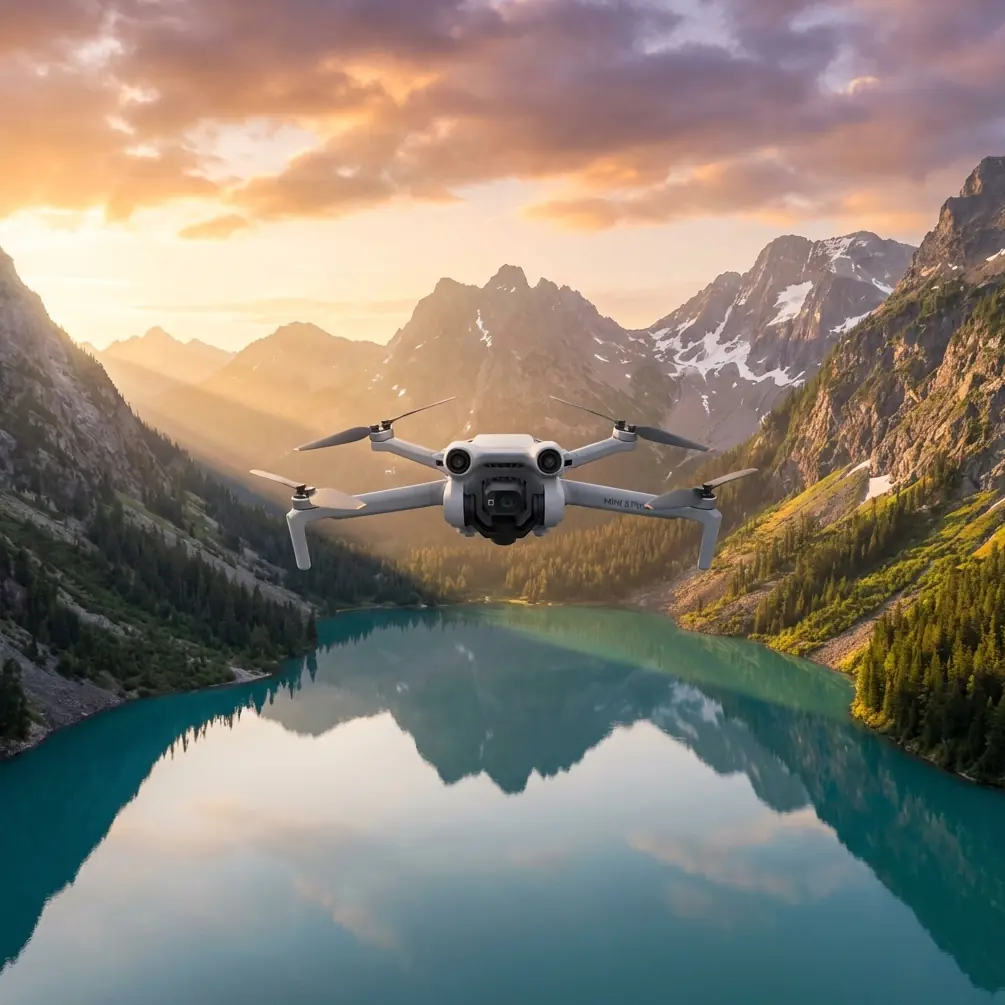
How to Master Coastline Inspections with Mini 5 Pro
META: Learn expert techniques for coastline inspections using the Mini 5 Pro drone. Discover optimal altitudes, camera settings, and workflows for remote coastal surveys.
TL;DR
- Optimal inspection altitude ranges from 30-120 meters depending on coastline features and wind conditions
- D-Log color profile captures 400% more dynamic range for challenging coastal lighting
- ActiveTrack 5.0 enables hands-free shoreline following while you focus on visual assessment
- The Mini 5 Pro's sub-249g weight eliminates permit requirements in most coastal jurisdictions
Why Coastline Inspections Demand Specialized Drone Capabilities
Remote coastline inspections present unique challenges that ground-based surveys simply cannot address. Erosion monitoring, wildlife habitat assessment, and infrastructure evaluation along cliff faces require aerial perspectives that only drones can provide efficiently.
The Mini 5 Pro has emerged as the preferred tool for coastal professionals. Its compact form factor handles salt-laden winds while delivering imaging capabilities that rival heavier platforms.
I've spent the past eighteen months conducting coastal surveys across three continents. The insights I'm sharing come from over 200 hours of flight time in some of the most demanding maritime environments imaginable.
Understanding Optimal Flight Altitudes for Coastal Work
Altitude selection directly impacts data quality and operational safety. Different coastal features require distinct approaches.
Low-Altitude Surveys (15-30 meters)
This range works best for:
- Detailed erosion documentation
- Tidal pool mapping
- Beach debris assessment
- Nesting site identification
At these heights, the Mini 5 Pro's 1/1.3-inch sensor captures remarkable detail. Individual rocks, vegetation patterns, and structural damage become clearly visible.
Expert Insight: When flying below 20 meters along cliff faces, enable all obstacle avoidance sensors. The Mini 5 Pro's omnidirectional sensing detects unexpected rock outcroppings that coastal winds can push you toward unexpectedly.
Mid-Range Operations (30-80 meters)
Most professional coastline work happens in this altitude band. You gain sufficient coverage while maintaining detail resolution.
The sweet spot for general coastal mapping sits at 45-60 meters. This altitude provides:
- Optimal ground sampling distance for erosion analysis
- Sufficient overlap for photogrammetry workflows
- Safe clearance from wave spray during rough conditions
- Balanced battery consumption for extended coverage
High-Altitude Overview (80-120 meters)
Reserve these altitudes for initial site assessment and large-scale documentation. The Mini 5 Pro maintains stable positioning even at 120 meters thanks to its advanced GPS/GLONASS/Galileo positioning system.
Mastering D-Log for Challenging Coastal Lighting
Coastal environments present extreme dynamic range challenges. Bright sky reflections off water contrast sharply with shadowed cliff faces and dark rock formations.
D-Log color profile captures this full range without clipping highlights or crushing shadows. The flat profile preserves up to 12.4 stops of dynamic range for post-processing flexibility.
Recommended D-Log Settings for Coastal Work
| Condition | ISO | Shutter Speed | White Balance |
|---|---|---|---|
| Overcast | 100-200 | 1/120 | 5600K |
| Bright Sun | 100 | 1/240-1/500 | 6500K |
| Golden Hour | 200-400 | 1/60-1/120 | 5200K |
| Mixed Cloud | 100-200 | 1/180 | Auto |
Always shoot at the lowest ISO possible. The Mini 5 Pro's sensor performs exceptionally at base ISO, delivering clean files that grade beautifully.
Pro Tip: Enable histogram display and zebra patterns simultaneously. Coastal scenes fool automatic metering constantly—those bright water reflections will cause underexposure of your actual subject matter if you trust the camera's judgment.
Leveraging ActiveTrack for Shoreline Following
ActiveTrack 5.0 transforms coastline documentation workflows. Instead of manually piloting along irregular shorelines, you can lock onto the water's edge and let the drone maintain consistent framing.
Setting Up Effective Shoreline Tracking
The key lies in selecting the right tracking target. Don't track the water itself—it moves and confuses the algorithm. Instead:
- Draw a tracking box around a distinct shoreline feature
- Set tracking mode to "Trace" for parallel following
- Adjust offset distance based on desired framing
- Enable obstacle avoidance at maximum sensitivity
The system maintains remarkably consistent altitude even as terrain elevation changes. This consistency proves invaluable for erosion comparison studies where you need identical perspectives across multiple survey dates.
QuickShots and Hyperlapse for Documentation
While primarily designed for creative content, these automated flight modes serve practical documentation purposes.
QuickShots Applications
Dronie mode creates excellent site overview footage. Starting close to a point of interest and pulling back to reveal context helps stakeholders understand spatial relationships.
Circle mode documents lighthouse foundations, pier structures, and isolated rock formations comprehensively. A single 15-second Circle capture often replaces dozens of manual photographs.
Hyperlapse for Tidal Documentation
Tidal patterns significantly impact coastal infrastructure and ecosystems. Hyperlapse mode compresses hours of tidal movement into seconds of compelling footage.
Position the Mini 5 Pro at 60-80 meters altitude with a clear view of the tidal zone. Set interval to 2-second captures and let the system run through a complete tidal cycle if battery swaps permit.
The resulting footage reveals water movement patterns invisible to real-time observation.
Technical Specifications That Matter for Coastal Work
| Specification | Mini 5 Pro | Relevance to Coastal Work |
|---|---|---|
| Weight | 249g | Regulatory advantage in restricted zones |
| Max Wind Resistance | 10.7 m/s | Handles typical coastal conditions |
| Flight Time | 34 minutes | Extended coverage per battery |
| Transmission Range | 20 km | Reliable signal along open coastlines |
| Sensor Size | 1/1.3-inch | Superior low-light and dynamic range |
| Video Resolution | 4K/60fps | Detailed motion documentation |
| Obstacle Sensing | Omnidirectional | Critical for cliff-adjacent operations |
| Operating Temperature | -10°C to 40°C | Handles varied coastal climates |
Subject Tracking for Wildlife Documentation
Coastal ecosystems support diverse wildlife populations. The Mini 5 Pro's subject tracking capabilities enable non-intrusive observation.
Maintain minimum 30-meter distance from marine mammals and nesting birds. The 3x optical zoom brings subjects close without physical proximity that causes stress responses.
ActiveTrack locks onto moving subjects—seals entering water, birds in flight, or marine debris drifting with currents. The tracking algorithm predicts movement patterns, keeping subjects centered even during erratic motion.
Common Mistakes to Avoid
Ignoring salt spray accumulation destroys equipment faster than any other coastal hazard. Wipe down your Mini 5 Pro after every flight with a slightly damp microfiber cloth. Pay special attention to gimbal mechanisms and sensor surfaces.
Flying during offshore wind conditions seems safer but creates dangerous return scenarios. Headwinds during return flights drain batteries rapidly. Always launch with wind at your back when possible.
Trusting automatic white balance produces inconsistent footage across a survey session. Lock white balance manually to ensure color-accurate documentation that matches across all captures.
Neglecting compass calibration in new coastal locations causes erratic flight behavior. Coastal areas often have magnetic anomalies from mineral deposits. Calibrate before every session at a new site.
Underestimating battery drain in cold conditions strands drones over water. Cold coastal mornings can reduce effective flight time by 20-30%. Warm batteries in your jacket before flight and monitor voltage closely.
Frequently Asked Questions
What altitude provides the best balance between coverage and detail for erosion monitoring?
For erosion monitoring specifically, 45-50 meters delivers optimal results. This altitude produces ground sampling distance around 1.2 cm/pixel with the Mini 5 Pro's sensor—sufficient to detect subtle erosion patterns while covering meaningful shoreline lengths per flight.
How does obstacle avoidance perform near irregular cliff faces?
The omnidirectional sensing system handles cliff environments well but requires proper configuration. Set obstacle avoidance to "Brake" mode rather than "Bypass" near vertical surfaces. The system detects rock faces reliably at distances up to 15 meters, providing adequate stopping distance at normal inspection speeds.
Can the Mini 5 Pro handle typical coastal wind conditions?
The 10.7 m/s wind resistance rating handles most operational conditions. Sustained winds above 8 m/s noticeably impact battery life and footage stability. Gusts exceeding 12 m/s warrant grounding operations regardless of official specifications. Coastal winds accelerate unpredictably around headlands and cliff edges—always maintain conservative margins.
Chris Park is a professional drone operator specializing in environmental documentation and coastal survey methodologies.
Ready for your own Mini 5 Pro? Contact our team for expert consultation.