
Mini 5 Pro in the Vineyard: A Field Report on Wind
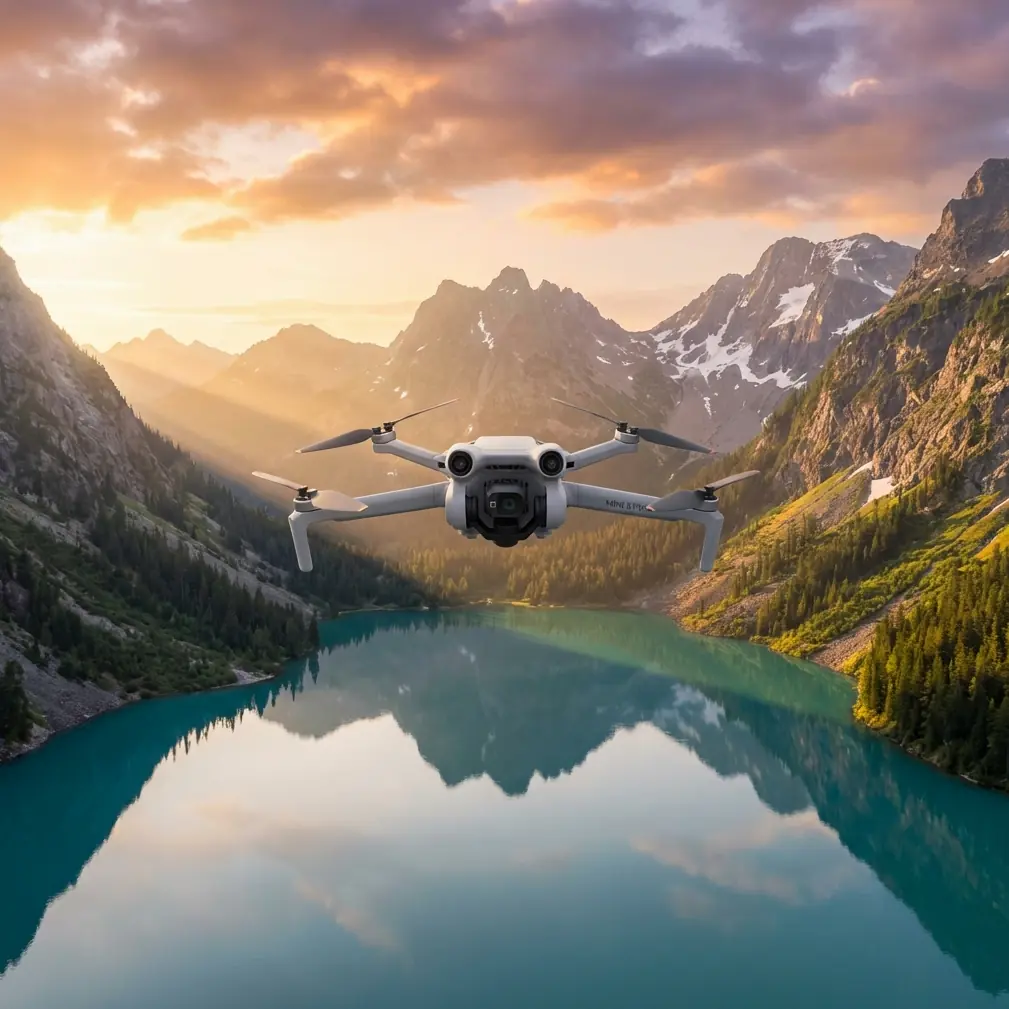
Mini 5 Pro in the Vineyard: A Field Report on Wind, Tracking, and Why Small Matters
META: Field-tested insights on using Mini 5 Pro for vineyard filming in windy conditions, with practical guidance on obstacle avoidance, subject tracking, D-Log, QuickShots, and Hyperlapse.
Vineyards expose a drone in ways a city park never will. The rows create repeating patterns that look beautiful from the air, but they also hide hazards: trellis wires, uneven terrain, gusts rolling over ridgelines, and changing light that can flatten detail if your camera settings are lazy. If your brief is to film a working vineyard in windy conditions, the Mini 5 Pro sits in an interesting position. It promises the portability of the sub-250 g class, yet the real question is whether it can behave like a more serious camera platform when the air gets rough and the shot list gets demanding.
That is the test that matters.
This field report is built around that exact scenario: capturing a vineyard when the breeze is strong enough to challenge a lightweight aircraft, but the production still needs smooth reveals, reliable tracking, and footage with enough grading latitude to match ground cameras later. The Mini 5 Pro, at least on paper and in the way its feature set is understood against this category, aims directly at that tension.
Why vineyards are harder than they look
From a drone pilot’s perspective, vineyards are repetitive and deceptive. Every row looks like a safe corridor until your aircraft drifts a little off line. Wind makes that drift worse, especially when it moves diagonally across the vines rather than straight down the rows. Add a slope and the aircraft may encounter different air behavior at the top and bottom of the block in the same pass.
This is where obstacle avoidance stops being a bullet point and becomes an operational issue. In a vineyard, obstacle sensing is not just for dramatic near-object flying. It protects continuity. If you are running a slow lateral pass to reveal the geometry of the vines, a small correction from the aircraft can save a shot that would otherwise be ruined by a sudden manual input. On a smaller drone, that matters even more because light aircraft tend to show every gust in their movement if the flight control and sensing systems are not doing enough behind the scenes.
Many pilots shopping this class compare the Mini 5 Pro with compact competitors that are easy to carry but less confident around obstacles or less polished when trying to track movement across uneven agricultural terrain. The Mini line has always attracted creators who want convenience. The “Pro” label only means something if it reduces the number of compromised shots. For vineyard work, that reduction tends to show up in two places: safer low-altitude movement between rows and steadier framing when wind starts pushing the drone off its intended line.
Wind is the real audition
Let’s be honest about small drones. Weight matters. A sub-250 g platform is easier to carry, quicker to launch, and often simpler from a compliance standpoint depending on location. But when the weather shifts, that same low mass can work against you. Vineyard filming often happens when the landscape is at its most photogenic: early morning or late afternoon. Those windows can still bring mechanical turbulence, especially on exposed hillsides.
That is why the Mini 5 Pro’s value in this scenario is not just whether it can stay in the air. Almost any modern drone can stay airborne in less-than-perfect conditions for some period. The better question is whether it can preserve shot quality under wind load.
There is a huge practical difference between a drone that merely resists a gust and one that keeps the horizon stable enough that you do not spend the edit trying to disguise micro-wobbles. For creators filming vineyard estates, hospitality venues attached to wineries, or seasonal crop visuals for brand storytelling, those micro-instabilities are what separate usable footage from footage that looked fine on the controller and disappointing on a larger monitor.
In this class, the Mini 5 Pro stands out when compared with weaker compact alternatives because it is not relying on size alone as its advantage. The package only works if stabilization, obstacle awareness, and intelligent flight behavior combine well enough that the pilot can focus on composition instead of constant correction.
Subject tracking in a working vineyard
A vineyard shoot is rarely only about landscape. You often need motion in the frame: a utility vehicle moving between rows, a vineyard manager walking a block at sunrise, harvest crews bringing activity into an otherwise static geometry, or a cyclist traveling along a boundary road for tourism content.
This is where subject tracking and ActiveTrack become more than convenience features. In open fields, many drones can follow a subject adequately. In vineyards, the challenge is visual clutter and variable spacing. Lines repeat. Foliage patterns repeat. Shadows create false edges. If tracking loses confidence, the move falls apart.
A reliable tracking mode lets the Mini 5 Pro do two things at once: maintain the subject and preserve the setting. That second point is easy to miss. The best vineyard footage does not isolate the person or vehicle so tightly that the agricultural context disappears. You want the rows, the slope, the spacing, the rhythm of the land. A decent ActiveTrack implementation allows you to keep that environmental storytelling intact while reducing the pilot workload.
Operationally, that means a solo creator can capture shots that once required a dedicated pilot and a separate camera operator. For vineyard marketing teams, tourism operators, and estate content producers, that changes the economics of aerial coverage. It also shortens setup time. When the light breaks through for ten minutes over a ridge, you need speed more than theory.
QuickShots and Hyperlapse are not gimmicks here
In many reviews, QuickShots and Hyperlapse get treated like novelty modes. In vineyard production, that is unfair.
QuickShots matter because vineyards are pattern-heavy environments. Automated reveal moves, orbits, and pull-backs can produce highly repeatable compositions that make estate content look consistent across seasons. If you are documenting budbreak, veraison, harvest, and post-harvest conditions across the same blocks, consistency is gold. An automated move gives you a better chance of matching shot style from one month to the next.
Hyperlapse is even more useful than most people expect. Vineyards change visually with wind, sun angle, mist, and worker movement. A Hyperlapse shot from a safe, elevated position can compress those changes into a sequence that tells a much fuller story than a standard clip. Clouds racing over a planted slope or fog lifting from low ground gives context that static footage cannot.
The operational significance is simple: these modes let a small drone produce sequences that feel planned rather than improvised. That matters when one operator is expected to gather hero footage, environmental cutaways, and social-ready clips in a single site visit.
D-Log is where the Mini 5 Pro starts acting like a serious tool
For vineyard filmmaking, the camera profile can matter as much as the aircraft. Rows of vines create alternating bands of highlight and shadow. White winery buildings, dusty access roads, reflective metal tanks, and dark leaf canopies often occupy the same scene. If your profile clips highlights too early or crushes shade detail, you lose the texture that makes vineyard footage feel rich.
This is why D-Log deserves attention. It gives the editor more room to manage contrast and color in post, which is especially helpful during golden hour when warm light can look beautiful to the eye and messy to a standard profile. In practical terms, D-Log helps retain leaf detail, cloud structure, and subtle variation in soil color without forcing a baked-in look on location.
Compared with entry-level compact drones that lean harder on ready-made color and less on grading flexibility, the Mini 5 Pro makes more sense for creators who are delivering finished work rather than simply posting same-day clips. If you need your aerials to sit comfortably beside mirrorless camera footage, having a log profile is not a luxury. It is workflow insurance.
And in vineyard storytelling, color accuracy carries real weight. Different varietals, different soil zones, and different times in the growing cycle all show up visually. A file with more grading latitude gives you a better chance of preserving those distinctions rather than smoothing them into generic green.
How I would fly it on a windy vineyard assignment
My first pass would not be cinematic. It would be diagnostic. I would launch from a clear edge away from wires, climb to a conservative height, and study how the Mini 5 Pro reacts at different positions relative to the ridge and row orientation. Vineyards often produce localized turbulence that does not show up uniformly across the property.
Once I know where the air is cleaner, I would build the sequence around that reality instead of forcing idealized moves in the worst section of sky.
A practical shot plan might look like this:
- A high establishing pass to show the full geometry of the site and identify where wind is visibly affecting foliage.
- A slow lateral move with obstacle avoidance active near the top of the canopy, keeping enough offset from the rows to avoid trellis surprises.
- An ActiveTrack sequence on a vineyard vehicle or walking subject, framed wide enough to keep the block structure visible.
- A QuickShot reveal from behind a line of vines toward the winery building or hillside.
- A locked or carefully programmed Hyperlapse during shifting cloud cover.
- A final low-angle departure shot at calmer wind periods near sunrise or late-day softening.
The key is not to fly low simply because low looks dramatic. In vineyards, low flight in gusts can turn a clean move into a correction-fest. The Mini 5 Pro earns its place by giving you enough intelligence and camera flexibility to adapt the plan quickly.
Where it beats many rivals in this use case
A lot of compact drones look similar in a spec sheet conversation. The difference appears on site.
For windy vineyard work, the Mini 5 Pro’s edge is the balance of portability and advanced capture tools. Some competing small drones are easy to travel with but feel too bare in obstacle awareness or too limited in pro-style imaging options. Others may be competent in calm conditions but become less confidence-inspiring once you combine wind, repetitive obstacles, and moving subjects.
That combination is the point. Vineyard filming is not one problem. It is several stacked together: air instability, geometric clutter, mixed lighting, and the need to deliver both cinematic and practical content from one session. A drone that excels at only one of those tasks is easy to outgrow.
The Mini 5 Pro makes a stronger case because obstacle avoidance helps protect low and mid-level passes, ActiveTrack supports one-person operation, QuickShots and Hyperlapse add repeatable production value, and D-Log keeps the footage useful beyond social-first edits. None of those features alone wins the day. Together, they make the aircraft more capable than the typical “small drone” label suggests.
What to watch before you rely on it
Even with a feature-rich platform, vineyard operators and creators should not romanticize automation. Obstacle sensing can struggle with thin wires and visually complex structures. Tracking can still be challenged by overlap, shadows, and sudden subject direction changes. Wind can overpower even well-tuned stabilization if you push too low or too far from your clean air zone.
The solution is not to avoid the Mini 5 Pro. It is to use it like a professional tool rather than a shortcut.
Scout the rows before flight. Note irrigation lines, netting, utility poles, and reflective surfaces. Build a shot list that leaves room for weather adjustment. Record in D-Log when the final deliverable justifies grading time. Use QuickShots and Hyperlapse intentionally, not as filler. And if the wind at canopy level feels marginal, gain altitude and recompose instead of insisting on the original move.
If you are planning a vineyard workflow and want to compare flight setups or accessory choices for this kind of terrain, I’d suggest reaching out through this direct WhatsApp line for a practical discussion rather than guessing from generic drone forums.
Final take from the field
For vineyard filming in wind, the Mini 5 Pro is compelling because it solves a real production problem: how to travel light without accepting toy-like results. That is the dividing line. You want a drone small enough to deploy quickly between changing light and site activity, but capable enough to handle obstacle-rich agricultural spaces and produce footage worth grading.
The inclusion of obstacle avoidance and subject tracking has operational significance because it directly lowers the risk of broken shots in row-based terrain. The availability of D-Log matters because vineyard scenes often exceed what a standard color profile handles gracefully. Add QuickShots and Hyperlapse, and the aircraft becomes more than a simple camera in the sky. It becomes a compact storytelling platform that suits solo creators and lean production teams.
For this specific job, that is what excellence looks like. Not bigger for the sake of bigger. Not smarter on paper only. Just a small drone that can keep up when the landscape is beautiful, the wind is uncooperative, and the client still expects polished work.
Ready for your own Mini 5 Pro? Contact our team for expert consultation.