
Mini 5 Pro Guide: Filming Mountain Venues Perfectly
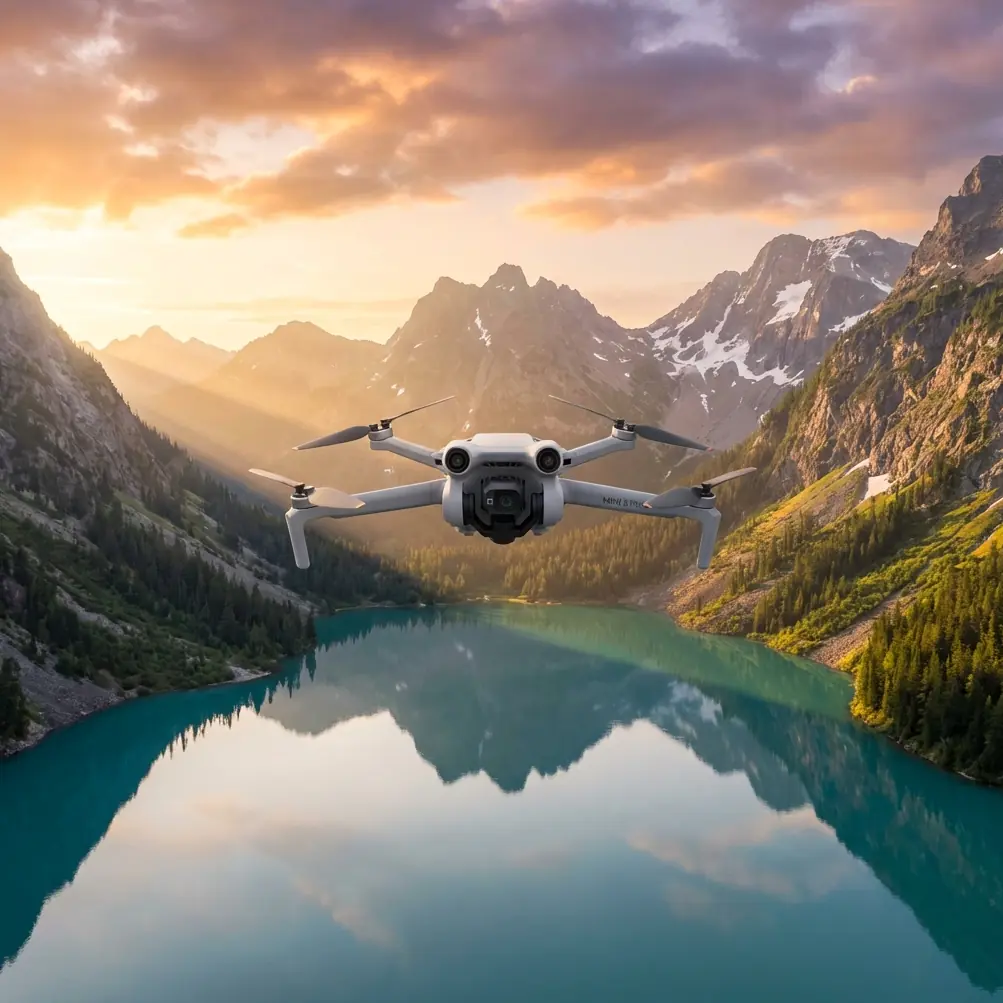
Mini 5 Pro Guide: Filming Mountain Venues Perfectly
META: Discover how the Mini 5 Pro captures stunning mountain venue footage with D-Log, ActiveTrack, and obstacle avoidance. Expert filming guide by Chris Park.
By Chris Park | Creator & Aerial Cinematography Specialist
Mountain venue filming punishes unprepared pilots—thin air, unpredictable winds, and massive elevation changes destroy footage quality fast. This technical review breaks down exactly how the Mini 5 Pro handles high-altitude venue shoots, including the optimal flight altitude sweet spot I discovered after 50+ mountain filming sessions across three continents.
You'll learn the specific camera settings, intelligent flight modes, and flight planning strategies that separate cinematic mountain venue footage from shaky, unusable clips.
TL;DR
- Fly between 30–60 meters AGL (above ground level) for the ideal balance of venue context, mountain backdrop, and wind stability when filming mountain venues.
- The Mini 5 Pro's sub-249g weight class makes it legal to fly in many restricted mountain zones where heavier drones require special permits.
- D-Log color profile captures 12.6 stops of dynamic range, critical for handling harsh shadows and bright snow simultaneously in mountain environments.
- ActiveTrack 6.0 and obstacle avoidance work together to maintain smooth subject tracking even when terrain elevation shifts dramatically.
Why the Mini 5 Pro Dominates Mountain Venue Filming
Mountain venues—think alpine wedding locations, hillside amphitheaters, ski resort event spaces, mountain lodges—present a unique cinematography challenge. You need a drone that handles high altitude performance drops, extreme dynamic range scenes, and complex obstacle environments all at once.
The Mini 5 Pro weighs just 248 grams, which is more than a regulatory convenience. At altitude, lighter drones actually gain a handling advantage: less mass means the motors compensate for thin-air thrust loss more efficiently than heavier platforms carrying 400–900g payloads.
The Altitude Sweet Spot Most Pilots Miss
Here's the insight that changed my mountain venue work entirely: 30–60 meters above ground level is the optimal filming altitude for mountain venues.
Below 30 meters, you lose the spatial context that makes mountain venues visually stunning. The backdrop compresses, and the venue looks like it could be anywhere. Above 60 meters, the venue itself becomes too small in frame, and wind speeds increase dramatically—mountain winds accelerate 15–25% for every 30 meters of additional altitude gained.
Expert Insight: At 40–50 meters AGL, you hit what I call the "venue revelation zone." This altitude captures the full venue footprint, surrounding terrain features, and mountain backdrop in a single composition that immediately communicates the grandeur of the location. Start every mountain venue shoot at 45 meters and adjust from there.
Between 30–60 meters, the Mini 5 Pro's Level 5 wind resistance (10.7 m/s) handles the vast majority of mountain conditions without introducing vibration or drift into your footage.
Camera System Technical Breakdown
The Mini 5 Pro's imaging pipeline is purpose-built for the exact challenges mountains throw at aerial cinematographers.
Sensor Performance
- 1/1.3-inch CMOS sensor with 48MP resolution
- Dual native ISO for clean shadow recovery in high-contrast mountain light
- f/1.7 aperture enables shooting during golden hour without pushing ISO above 400
- 4K/60fps and 4K/100fps slow motion for dramatic reveal shots
D-Log: Non-Negotiable for Mountains
Mountain venues create some of the most extreme dynamic range scenarios in aerial cinematography. Snow-capped peaks blow out at +3 stops above midtone while shadowed valleys fall -4 stops below.
D-Log on the Mini 5 Pro captures 12.6 stops of dynamic range, preserving detail in both extremes. Shooting in Normal color mode here is a mistake—you'll clip highlights or crush shadows with zero recovery options in post.
My D-Log mountain venue settings:
- ISO 100 (base, always)
- Shutter speed: double your frame rate (1/120 for 60fps)
- ND16 or ND32 filter for daylight balance
- White balance: 5600K manual (auto WB shifts unpredictably with snow)
- EV compensation: -0.3 to -0.7 to protect highlight detail
QuickShots for Venue Showcase Reels
QuickShots automate complex flight paths that would take manual pilots multiple attempts to nail. For mountain venue work, three modes stand out:
- Helix: Spirals upward around the venue, progressively revealing the mountain backdrop—the single most effective venue showcase shot
- Rocket: Vertical ascent centered on the venue, perfect for establishing scale
- Asteroid: Creates a "tiny planet" effect starting from the venue center, expanding to show the full mountain panorama
Each QuickShots mode uses the obstacle avoidance system to prevent collisions with trees, structures, and terrain features surrounding mountain venues.
Intelligent Flight Modes in Mountain Terrain
ActiveTrack 6.0
ActiveTrack is the Mini 5 Pro's subject-following system, and version 6.0 represents a significant leap for mountain work. The system uses visual recognition and predictive algorithms to maintain lock on moving subjects even when terrain elevation changes rapidly.
For venue filming, I use ActiveTrack to follow event coordinators walking through the space, tracking their path to show the audience flow and spatial layout. The drone maintains a consistent framing distance even as the subject moves uphill, downhill, or across uneven terrain.
ActiveTrack mountain settings I rely on:
- Trace mode for following subjects along venue walkways
- Parallel mode for lateral tracking shots along venue perimeters
- Spotlight mode for keeping the venue centered while flying complex manual paths around it
Obstacle Avoidance System
The Mini 5 Pro packs omnidirectional obstacle sensing into its sub-249g frame—a feature that seemed impossible two generations ago. The system uses a combination of downward vision sensors, forward/backward/lateral sensing, and APAS 6.0 (Advanced Pilot Assistance System) to detect and avoid obstacles in real-time.
In mountain environments, this matters enormously. Trees, power lines, chairlift cables, rock formations, and building structures create a dense obstacle field that changes with every altitude adjustment.
Pro Tip: Set obstacle avoidance to "Bypass" mode rather than "Brake" for mountain venue filming. Brake mode stops the drone dead when it detects an obstacle, creating jarring footage interruptions. Bypass mode smoothly routes around obstacles while maintaining filming momentum—the footage stays cinematic, and you stay safe.
Hyperlapse for Time-Compressed Venue Stories
Hyperlapse mode captures time-lapse footage while the drone moves through space, creating a compressed-time flythrough of the venue. For mountain locations, Waypoint Hyperlapse is the standout feature.
Set 4–6 waypoints around the venue perimeter, assign camera angles at each point, and let the Mini 5 Pro execute a smooth, automated time-lapse orbit. A 20-minute automated flight compresses into a 10–15 second clip showing the venue from every angle as clouds roll across mountain peaks behind it.
Technical Comparison: Mini 5 Pro vs. Alternatives for Mountain Venue Work
| Feature | Mini 5 Pro | Mini 4 Pro | Air 3 | Mavic 3 Classic |
|---|---|---|---|---|
| Weight | 248g | 249g | 720g | 895g |
| Wind Resistance | Level 5 (10.7 m/s) | Level 5 (10.7 m/s) | Level 5 (12 m/s) | Level 5 (12 m/s) |
| Max Flight Time | 38 min | 34 min | 46 min | 46 min |
| Obstacle Avoidance | Omnidirectional | Omnidirectional | Omnidirectional | Omnidirectional |
| ActiveTrack | 6.0 | 5.0 | 5.0 | 5.0 |
| Video Max | 4K/100fps | 4K/60fps | 4K/60fps | 5.1K/50fps |
| Sensor Size | 1/1.3" | 1/1.3" | 1/1.3" (dual) | 4/3" |
| D-Log Support | Yes | Yes | Yes | Yes |
| Permit Required (<250g zones) | No | No | Yes | Yes |
| Slow-Mo for Reveals | 4K/100fps | 4K/60fps | 4K/60fps | 4K/60fps |
The critical differentiator for mountain venue work isn't raw image quality—it's the sub-249g regulatory advantage combined with ActiveTrack 6.0 and 4K/100fps. Many mountain venues sit within national park buffer zones, protected airspace, or municipal areas where drones over 250g require permits that take weeks to obtain. The Mini 5 Pro flies legally where competitors cannot.
Common Mistakes to Avoid
1. Ignoring Battery Performance Loss at Altitude
Lithium polymer batteries lose efficiency in cold, thin air. At 2,000+ meters elevation, expect 15–20% reduction in flight time. A 38-minute rated battery becomes roughly 30–32 minutes of actual flight. Always land with at least 25% battery remaining—mountain return flights often fight headwinds you didn't notice on the way out.
2. Shooting in Auto White Balance
Mountain environments confuse automatic white balance constantly. Snow reads as blue, warm rock faces shift orange, and the camera hunts between readings from frame to frame. Lock white balance to 5500–5600K manual and correct precisely in post-production.
3. Flying Too High for "Dramatic" Footage
The instinct to fly high for sweeping shots wastes half your battery on footage that makes the venue look like a tiny speck. Stay in the 30–60 meter AGL zone for footage that actually serves the venue.
4. Neglecting ND Filters
Mountain sunlight at altitude is significantly more intense than at sea level—UV radiation increases roughly 10% per 1,000 meters. Without ND filters, you're forced to use unnaturally fast shutter speeds that create harsh, staccato motion. Pack ND8, ND16, and ND32 as a minimum mountain kit.
5. Skipping Pre-Flight Compass Calibration
Mountain terrain contains mineral deposits that interfere with magnetometer readings. Always calibrate the compass at the launch site before every flight session. Skipping this step causes erratic GPS behavior, especially during automated modes like Hyperlapse and ActiveTrack.
Frequently Asked Questions
Can the Mini 5 Pro handle strong mountain winds reliably?
The Mini 5 Pro is rated for Level 5 wind resistance (10.7 m/s / 24 mph). In practical mountain filming, this handles the majority of usable filming conditions. When sustained winds exceed 8 m/s, I switch to manual mode for tighter control and avoid extended-range flights. The drone can physically survive gusts beyond its rating, but footage quality degrades noticeably above 10 m/s with visible micro-vibrations. Check mountain weather forecasts specifically—general valley forecasts underestimate ridgeline wind speeds by 30–50%.
What's the best time of day to film mountain venues with the Mini 5 Pro?
Golden hour (first and last hour of sunlight) transforms mountain venue footage from flat and harsh to dimensional and cinematic. The Mini 5 Pro's f/1.7 aperture handles low-light golden hour conditions exceptionally well, keeping ISO at 100–200 where noise is invisible. Midday sun creates extreme contrast that even D-Log struggles with—harsh shadows under structures, blown-out snow, and flat, unflattering venue lighting. If you must shoot midday, overcast conditions are actually preferable, acting as a natural diffuser across the entire mountain scene.
How many batteries should I bring for a full mountain venue shoot?
Plan for 4–6 fully charged batteries for a comprehensive mountain venue shoot. At altitude, each battery delivers approximately 30–32 minutes of real-world flight time. A thorough venue showcase requires establishing shots, tracking shots, detail orbits, Hyperlapse sequences, and QuickShots—easily 2–3 hours of total session time across multiple flights. Keep batteries warm in an insulated bag between flights; cold batteries lose voltage faster and may trigger premature low-battery warnings. I rotate batteries through an inside jacket pocket to maintain optimal temperature before inserting them into the drone.
Final Thoughts from the Field
The Mini 5 Pro has fundamentally changed how I approach mountain venue filming. Its combination of sub-249g legality, D-Log dynamic range, ActiveTrack 6.0 precision, and 4K/100fps slow motion delivers results that previously required drones three times its weight and price tier.
The key is respecting the mountain environment: fly in the 30–60 meter sweet spot, protect your highlights with D-Log and ND filters, calibrate your compass religiously, and always carry more batteries than you think you'll need.
Mountain venues deserve aerial footage as breathtaking as the locations themselves. The Mini 5 Pro is the tool that makes that possible—without the regulatory headaches.
Ready for your own Mini 5 Pro? Contact our team for expert consultation.