
Mini 5 Pro Filming Guide: Best Practices for Highway Shoots
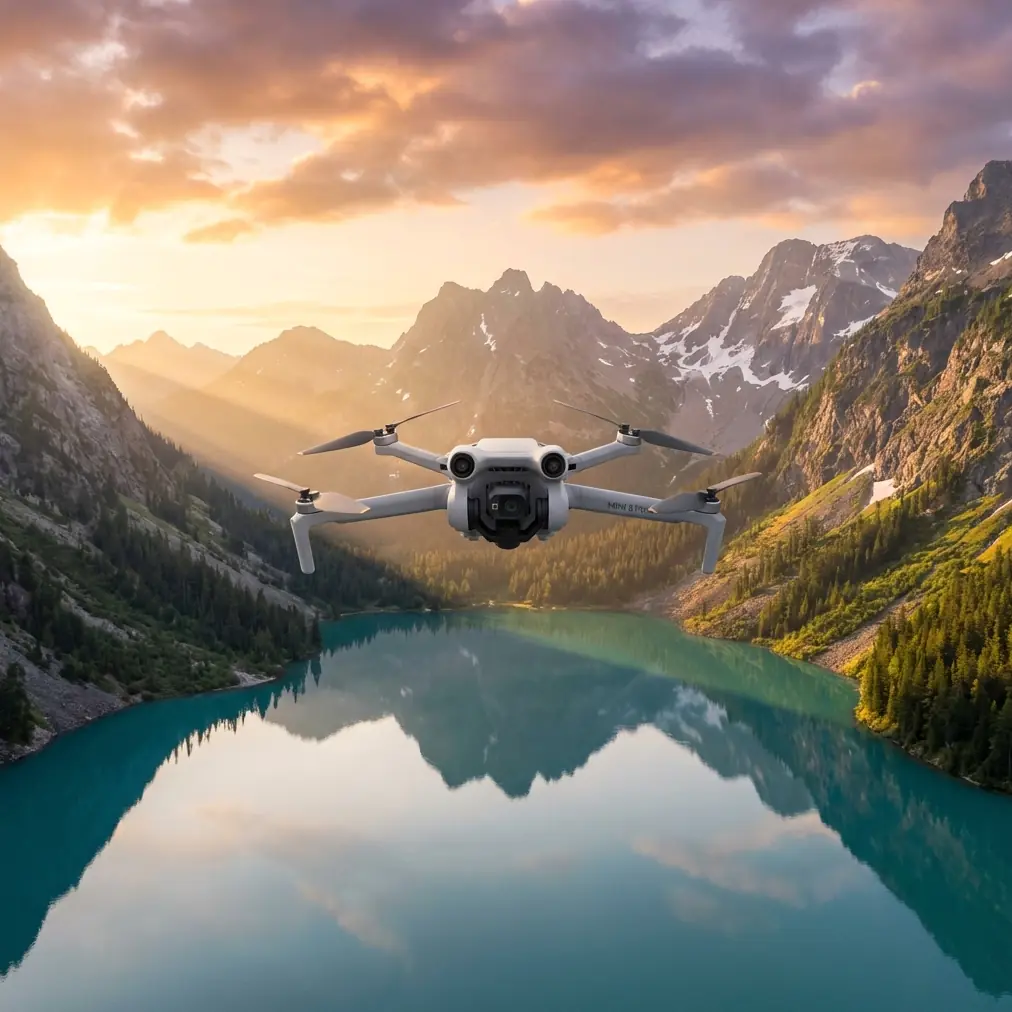
Mini 5 Pro Filming Guide: Best Practices for Highway Shoots in Extreme Temperatures
META: A practical Mini 5 Pro filming guide for highway work in extreme temperatures, covering stabilization, positioning, sensor limits, subject tracking, D-Log workflows, and safer shot planning.
Highway filming looks simple from a distance. Long lanes, predictable movement, open space. In the field, it rarely feels that tidy. Heat shimmer softens detail. Wind pushes a light aircraft off line. Cold drains batteries faster than expected. Reflective pavement can confuse exposure and visual sensing. And when the job has to happen near moving traffic, small stability errors stop being minor.
That is exactly where a smart Mini 5 Pro workflow matters.
If I were preparing a Mini 5 Pro for extreme-temperature highway filming as a working photographer, I would not start with QuickShots or color profiles. I would start with the logic underneath stable flight and usable footage: how the aircraft understands its position, how it manages altitude, and how camera isolation protects the image when the airframe is getting knocked around.
A useful technical reference here comes from a university hexacopter design paper that breaks down a sensor stack in practical terms. Even though it is not written about the Mini 5 Pro specifically, the operating principles map directly to the kind of small-camera drone work people care about in the real world. The paper describes a combined airborne sensing system built around gyroscope, accelerometer, magnetometer, barometer, optical flow, GPS receiver, and ultrasonic ranging. That mix matters because no single sensor is perfect in every environment. Highway filming in extreme weather exposes those weaknesses fast.
Why highway filming pushes the Mini 5 Pro harder than most creators expect
A highway scene is full of motion, but not always the motion you want.
The obvious movement is vehicle traffic. The less obvious movement is the drone itself: little yaw corrections, altitude oscillations, and lateral drift caused by crosswinds or thermals rising from hot pavement. In freezing conditions, the challenge flips. Air can be denser and cleaner, but battery behavior becomes less forgiving, and a drone that feels solid at launch can behave differently ten minutes later.
The goal is not merely to keep the Mini 5 Pro airborne. The goal is to keep its camera perspective calm enough that the footage feels intentional.
This is where gimbal performance and flight sensing intersect. The reference material notes that the onboard camera is mounted on a gimbal, and that the gimbal controller uses an inertial attitude module to hold a target orientation, separating body motion from the camera image. That is not just engineering trivia. Operationally, it means your usable footage depends on two layers of stability working together:
- The aircraft must hold position, heading, and height with minimal drift.
- The gimbal must absorb the remaining movement and preserve framing.
On a hot highway shoulder, where rising air can nudge a compact drone every few seconds, that separation is the difference between footage that looks composed and footage that looks nervous.
Use the right positioning logic for the environment, not just the shot
One of the most valuable details in the reference is the distinction between optical flow and GPS.
According to the source, optical flow does not require an external GPS signal and can deliver high positional and speed precision indoors, but its position output drifts over time. GPS, on the other hand, works outdoors and at higher altitude, and it is not dependent on lighting conditions, though its position accuracy is lower than optical flow in some close-range scenarios.
That tradeoff matters a lot for Mini 5 Pro operators filming highways.
In bright daytime conditions near the road surface
If you are flying relatively low for lane-pattern reveals, bridge underpasses, or road-entry establishing shots, optical positioning can help produce very steady short takes. Pavement textures, painted lines, and roadside detail often give visual sensors enough information to hold well. But there is a catch: heat can distort the scene. In severe summer conditions, shimmering air above asphalt reduces visual consistency. That can weaken the advantage of optical sensing.
At higher altitude or in low-detail scenes
GPS becomes more important. The paper specifically highlights GPS as suitable for outdoor use and higher altitude, with the added benefit of not depending on light conditions. If you are shooting broad traffic flow from above an interchange, or filming at dawn when shadows stretch across lanes, this matters more than many people realize. Optical systems love detail and consistency. High-altitude airspace over repeating road patterns and changing light is less forgiving.
What this means in practice for Mini 5 Pro users
Do not assume one positioning mode will carry the entire session. Plan the shoot in layers.
- Use lower-altitude passes for short, deliberate captures.
- Use higher-altitude or wide establishing shots when satellite positioning is strongest.
- Keep an eye on drift during hovers over heat-affected pavement.
- Avoid long static holds close to the ground when the air is visibly unstable.
If you want subject tracking on vehicles, this becomes even more relevant. ActiveTrack is powerful, but tracking quality depends on the aircraft’s ability to stay composed while the visual system keeps a lock on the subject. In extreme heat, the drone may still track, but the shot can look less polished if atmospheric distortion and crosswind are both in play.
Altitude control is not one thing
Another excellent operational detail from the source is the contrast between barometric altitude sensing and ultrasonic ranging. The paper explains that the barometer has a larger measurement range, while the ultrasonic sensor gives more accurate height values at close range.
That distinction is useful for anyone filming highways with a Mini 5 Pro.
When you are close to the ground—capturing a controlled slide above roadside barriers, lane markings, or a parked inspection vehicle—fine low-altitude accuracy matters more than broad vertical range. When you climb for a top-down traffic pattern shot, large-range height awareness takes over.
This is why low-altitude shots can look fantastic one minute and slightly unsettled the next if the environment changes. Surface temperature, roadside structures, vehicle turbulence, and reflective materials can all affect what “close to the ground” feels like operationally. For the pilot, the lesson is simple: do not treat all altitude work as the same type of flying.
A good rule for highway filming in extreme temperatures is to break shots into three categories:
- Near-surface detail work: prioritize caution, short takes, and stable air.
- Mid-level tracking work: expect the most wind and turbulence variability here.
- High establishing work: easier for broad composition, but less intimate.
That structure helps you choose when to use ActiveTrack, when to hand-fly, and when to abandon a planned move because the air simply is not good enough.
Why obstacle avoidance helps most before and after the “hero shot”
Obstacle avoidance gets talked about as if it is only for beginners. That is a shallow way to think about it.
On highway assignments, obstacle avoidance is often most useful during setup transitions rather than the main cinematic move. Overpasses, signage, power infrastructure, poles, sound barriers, and uneven roadside terrain all create complexity around takeoff, repositioning, and return paths. In hot weather, concentration drops faster; in cold weather, gloves and reduced dexterity can make fine control less precise.
That makes obstacle sensing a risk-management tool, not a shortcut.
The Mini 5 Pro pilot still needs to build a route that avoids traffic-facing distractions and keeps a healthy offset from structures. But obstacle avoidance earns its place by catching the small errors that happen at the least glamorous moments: backing up for reframing, descending after a pass, or sliding sideways near a barrier line.
D-Log is useful on highways for one reason above all
People often choose D-Log because they want “more cinematic color.” On highway shoots, the stronger reason is contrast control.
Road environments in extreme temperatures tend to produce ugly dynamic range problems. Bright sky. Dark vehicle roofs. Reflective windshields. Sunlit concrete. Shadow under ramps. D-Log gives you more room to preserve those transitions and shape them later with restraint.
If you are filming in high noon heat, expose to protect the brightest road reflections and metallic highlights. If you are filming in winter with low-angle sunlight, watch for specular glare that clips faster than the rest of the frame suggests. D-Log will help, but only if your exposure discipline is already solid.
For a cleaner finishing workflow, I prefer to think of D-Log as insurance for difficult surfaces rather than as a style preset.
QuickShots and Hyperlapse are not always the answer
QuickShots can be useful for fast repeatable social cuts, especially if the assignment includes a short promotional recap for a construction team, road survey client, or infrastructure update. Hyperlapse can also tell a strong story when you want to compress traffic patterns or weather movement.
But for highway work in extreme conditions, both modes need judgment.
Automated moves look best when the aircraft can fly predictably through the full programmed path. Heat shimmer, gusts, or cold-related battery caution can reduce that margin. If you use QuickShots, deploy them when the air is settled and the shot geometry is clean. If you use Hyperlapse, pick a vantage point with minimal turbulence and strong visual separation between road elements.
The mistake is assuming automation makes the environment easier. It does not. It just changes what you monitor.
A third-party accessory that genuinely helps
One third-party upgrade I would seriously consider for this kind of work is a high-quality landing pad with a weighted edge. Not glamorous, but genuinely useful.
On hot roadside shoulders, dust and grit can get kicked into the gimbal area during takeoff. In colder months, damp ground and roadside debris create their own mess. A stable landing pad gives the Mini 5 Pro a cleaner launch point, helps protect the camera system, and reduces the chance of contamination affecting gimbal smoothness over a long day.
That ties directly back to the reference’s emphasis on image stability through gimbal isolation. The gimbal can only do its job well if it starts clean and unobstructed. In real field work, tiny contamination issues are often what ruin “perfectly planned” shoots.
Sensor fusion is why the Mini 5 Pro feels smarter than a simple flying camera
The paper’s most useful systems-level insight is that the main controller combines all sensor inputs to derive attitude, position, and velocity, then uses that feedback to control the aircraft. It also notes that gyroscope, accelerometer, and magnetometer data can be fused through an extended Kalman filter to achieve accurate, drift-free attitude and heading estimation.
That may sound academic, but it explains why a well-tuned camera drone can still deliver stable footage in changing conditions. No single measurement tells the whole story. The drone is constantly reconciling multiple data streams, each with strengths and weaknesses.
For a Mini 5 Pro operator filming highways, the practical takeaway is this: when conditions get weird, trust the system less blindly and observe more actively. If the drone is correcting more than usual, if the hover is not as locked as expected, or if framing starts to micro-wobble, the aircraft is telling you the sensing environment has changed. Adapt the shot.
Shorter takes. More margin. Simpler paths.
That is how professionals protect footage quality.
Don’t overlook settings persistence before a harsh-weather shoot
One last technical detail from the reference deserves more attention than it usually gets: the design stores important parameters in EEPROM because RAM-based information is lost when power is removed. The significance is straightforward. Critical settings should survive shutdown so the aircraft can restore them on the next power-up.
For modern Mini 5 Pro users, the exact hardware implementation is different, but the operational principle remains highly relevant. Before a highway session in extreme temperatures, verify that your preferred settings are actually retained and reloaded as expected after battery swaps:
- color profile
- obstacle avoidance behavior
- return-to-home altitude
- subject tracking preferences
- units and exposure settings
On a cold morning or in punishing heat, it is easy to rush through a battery change and discover too late that one setting reset changed the whole flight plan.
A clean workflow for Mini 5 Pro highway filming
Here is the field sequence I would use:
- Arrive early enough to watch air behavior, not just traffic behavior.
- Launch from a clean pad, especially in dusty or dirty roadside conditions.
- Start with a short hover check at low altitude and watch for drift.
- Capture high, simple establishing shots first while batteries are strongest.
- Move into controlled mid-level tracking only if wind and sensor behavior stay consistent.
- Save low-altitude detail passes for the calmest moments, not the most rushed ones.
- Use D-Log when contrast is severe.
- Treat ActiveTrack as a tool, not a guarantee.
- Keep QuickShots and Hyperlapse for conditions that are genuinely stable.
- Re-check settings after every battery swap.
If you are planning this kind of shoot regularly and want a practical setup discussion, you can message our drone team directly on WhatsApp.
The Mini 5 Pro can be an excellent platform for highway filming, even in difficult temperatures, but only if you respect what the sensors are actually good at. Optical flow can be precise yet drift over time. GPS is less dependent on lighting and better suited to outdoor altitude work. Barometric and close-range height sensing each have their own role. Gimbal isolation protects the image, but only after the aircraft has done its part.
That is the difference between owning a capable drone and operating it well.
Ready for your own Mini 5 Pro? Contact our team for expert consultation.