
Mini 5 Pro in Coastal Forests: A Field Case Study on Safe
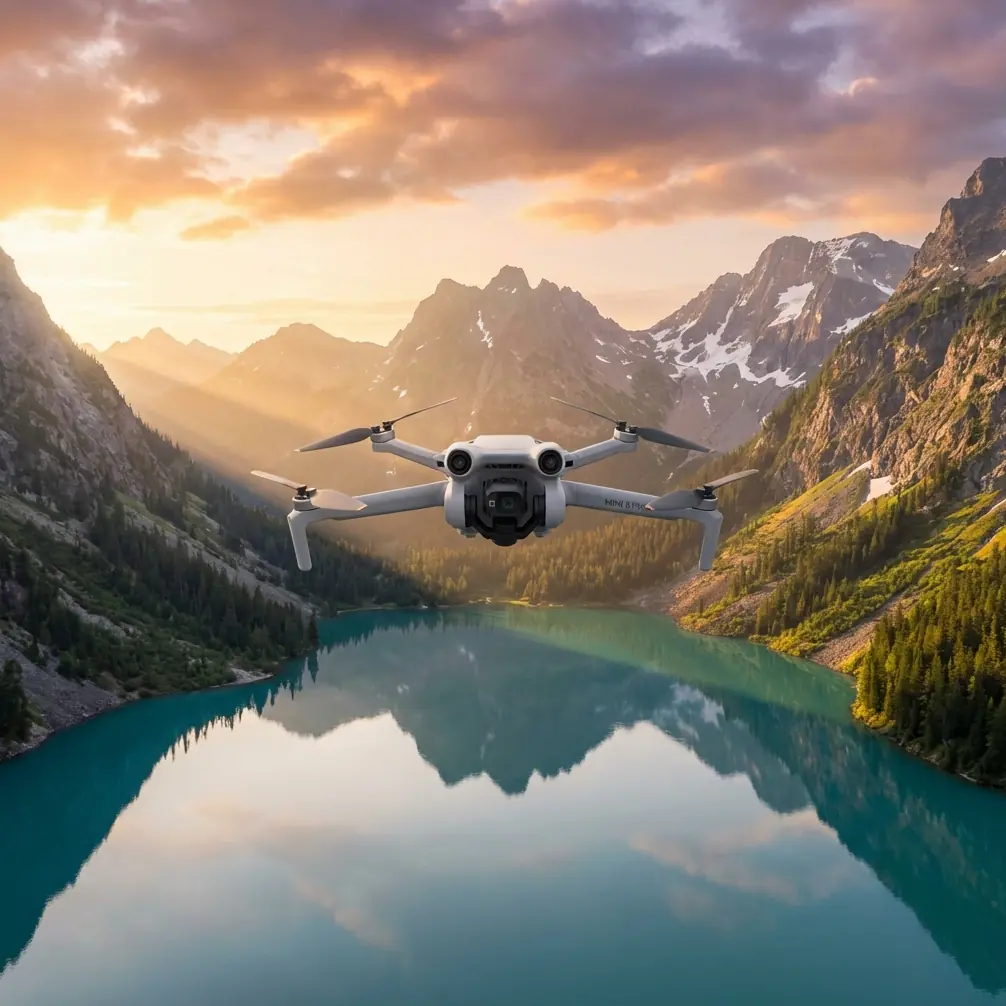
Mini 5 Pro in Coastal Forests: A Field Case Study on Safe Tracking, Color Control, and Tight-Canopy Flying
META: A practical Mini 5 Pro case study for filming coastal forests, covering obstacle avoidance, ActiveTrack, D-Log, QuickShots, Hyperlapse, and real-world flight decisions around wildlife and dense tree cover.
Coastal forests punish lazy drone flying.
They give you beauty, then hide branches in the same frame. Wind comes off the water in uneven pulses. Light changes by the minute as clouds move inland. Salt hangs in the air. Tree lines open and close without warning. If you are filming with a sub-250 g class aircraft like the Mini 5 Pro, the challenge is not just getting cinematic footage. It is getting usable footage consistently, without spooking wildlife or clipping a branch you never saw on the screen.
I have been testing a Mini 5 Pro workflow in exactly that kind of environment: coastal woodland, mixed evergreen canopy, narrow openings, damp air, and shifting light. This is not a theoretical overview. It is a field-minded look at how the aircraft’s obstacle avoidance, subject tracking, QuickShots, Hyperlapse, and D-Log actually matter when the subject is moving through a difficult natural setting.
The short version: in coastal forests, the Mini 5 Pro earns its keep when you treat its automation as a safety layer and a composition assistant, not as a substitute for pilot judgment.
Why coastal forest filming exposes a drone’s weak points
A lot of drone content is created in open landscapes where any modern camera drone can look good. Coastal forests are different. The scene is busy. Vertical lines dominate the frame. Fine detail in needles, leaves, bark, and undergrowth can turn to mush if your camera settings are sloppy. Bright sky behind dark trees stresses dynamic range. Wind shear near the canopy creates small but meaningful position changes that ruin smooth motion.
This is where several Mini 5 Pro features become more than bullet points.
Obstacle avoidance matters because branch strikes rarely happen in the obvious places. They happen at the edge of confidence: a backward reveal near overhanging pine, a lateral tracking move beside driftwood-rooted spruce, a descent through a gap that looked wider from 20 meters up. A small aircraft can physically fit into tighter spaces, but that also tempts pilots into poorer decisions. Reliable sensing does not make those spaces safe. It gives you one more chance to recognize a bad line before contact.
ActiveTrack and subject tracking matter because coastal forest footage often involves a moving subject on a trail, along a bluff, or through a break in the trees. Manual tracking in those conditions is possible, but the pilot workload climbs fast when you are also managing wind, foreground obstacles, and changing exposure. Good tracking reduces control burden and lets you think about path, spacing, and story.
D-Log matters because the forest-to-sky contrast can be severe. If you expose only for the canopy, the sea-facing openings can blow out. If you expose only for the bright gaps, the under-canopy detail collapses. A flatter recording profile gives you room to recover a more natural tonal balance later, especially in scenes where sunlit mist, reflective water, and dark trunks all share the frame.
The wildlife moment that changed the flight plan
The most instructive sequence from my recent sessions happened at the edge of a cedar and pine stand above a tidal inlet. I was setting up a low lateral move along the forest margin, planning to follow the contour where roots met the mossy bank. The light was excellent: thin marine cloud, no hard shadows, enough contrast to shape the tree trunks without crushing detail.
Then a small group of deer stepped out from the understory and moved diagonally toward an opening near the bluff.
This is where bad drone habits reveal themselves. A lot of pilots would keep the shot rolling, push closer, and tell themselves they were documenting a natural encounter. That is not the right approach. Wildlife should change your operating plan, not become an excuse to pressure the subject.
I held distance, climbed slightly to avoid a low broken branch ahead of the aircraft, and let the drone’s forward sensing support a conservative path while I kept the camera angle gentle and non-invasive. The significance of obstacle sensing here was not dramatic last-second braking for social media. It was quieter than that. It let me split my attention between the deer’s movement and the surrounding branch geometry without abandoning situational awareness.
The result was a restrained, wider sequence that respected the animals and still told the story of the location. More importantly, it avoided the classic coastal-forest trap: becoming so absorbed in a living subject that you drift backward into unseen limbs.
That is the operational value of obstacle avoidance in a real civilian filming environment. It protects the mission from human tunnel vision.
ActiveTrack in the woods: where it helps and where it can mislead
The Mini 5 Pro’s subject tracking tools are most useful in coastal forests when the subject path is predictable and the route has vertical clearance. Think boardwalk approach shots, a hiker emerging from dense cover into a brighter corridor, or a runner moving parallel to the tree line rather than weaving through trunks.
Used well, ActiveTrack becomes less about flashy autonomy and more about consistency. In an environment where every manual correction shows up in the footage, that matters.
But there is a catch. Forest scenes create visual ambiguity. Branches cross over the subject. Light flickers as the drone and subject move between shade and brighter openings. Textures repeat. Your subject can disappear behind trunks for a second and re-emerge in a different light value. That means you should not assume tracking will behave the same way it does in an open meadow or on a beach.
My rule is simple: use tracking to reduce pilot workload only after you have flown the route manually and identified escape directions. If there is no obvious vertical or lateral out, do not rely on tracking. If there is an open corridor and the subject remains clearly separable from the background, the tool can produce impressively stable results.
For coastal-forest creators, that difference is practical. It decides whether you come home with a clean 12-second keeper shot or a set of nervous corrections you will never want to edit.
QuickShots are not just beginner tools in this environment
QuickShots get dismissed too easily by experienced pilots, mostly because people associate them with generic travel footage. In a coastal forest, they can actually serve a more disciplined role.
A pre-planned reveal, pull-away, or orbit can be useful when you have already assessed the airspace and want a repeatable move with smooth speed control. The value is not novelty. The value is repeatability under pressure.
Let’s say you have found a break in the canopy where the sea appears between two dense tree masses. You want a clean reveal starting from bark texture and fern detail, then easing back to show the larger geography. A controlled automated move can help maintain even motion while you monitor spacing and framing. In damp, low-contrast conditions where judging motion by eye is harder, that repeatability matters.
The caveat is obvious: no automated move should be launched until you have verified branch clearance in the full path, not just the opening in front of the lens. In forest work, the camera’s beautiful view is often the least honest thing in the aircraft.
Hyperlapse in marine weather: where small changes become story
Coastal forests are ideal Hyperlapse territory because the landscape is always moving in subtle ways. Fog fingers through the canopy. Tidal haze shifts behind the ridgeline. Tree crowns bend in staggered layers as gusts pass over from the water. If you want to show place rather than just action, Hyperlapse can do that better than a normal pass.
With the Mini 5 Pro, the operational advantage is efficiency. A lightweight platform can be positioned quickly during short weather windows. In coastal conditions, those windows may last only minutes before the cloud deck thickens or the wind changes direction.
The trick is to avoid compositions that ask too much of stabilization or obstacle sensing. Hyperlapse works best from clean, conservative positions with generous clearance and a strong foreground-to-background relationship. A leaning snag in the near frame, a middle layer of conifers, and the ocean haze beyond can create a time-compressed sequence that explains the site in one shot.
This is also where D-Log earns its place again. Coastal atmosphere can flatten contrast while still containing bright reflective patches. A log profile preserves flexibility when you need to separate mist, water brightness, and dark foliage in post.
D-Log in a green-dominant environment
Forest color is harder than people admit.
The problem is not simply “too much green.” It is too many kinds of green under unstable light, plus cool marine spill from the sky and occasional warm breaks when the sun cuts through. Standard profiles can look pleasing right away, but they often clip subtle transitions in needles, moss, and shaded bark. Once that information is gone, your footage starts to feel thin.
D-Log gives the Mini 5 Pro shooter room to shape those transitions properly. In practical terms, that means you can preserve texture in dark conifer sections while still holding detail in openings toward the coast. It also helps keep the grade from swinging too magenta or too yellow when the weather shifts between takes.
For anyone filming a sequence that mixes under-canopy passes, edge-of-bluff reveals, and open-sky establishing shots, that flexibility is not academic. It is the difference between a coherent edit and a patchwork of clips that never sit together.
A flight method that worked reliably
For this location class, I settled into a simple operating pattern:
First, I walked the route on foot and looked for deadfall, hidden snags, and side branches that would be nearly invisible on-screen. Second, I flew a high reconnaissance pass to read the canopy shape and wind behavior. Third, I captured any essential manual shots before using tracking or QuickShots. That sequence matters. If the light or wildlife changes the scene, the manual keeper shots are already secured.
On one morning session, wind at launch felt manageable, but the tree crowns told a different story. Gusts above the sheltered trail line were stronger than expected, especially where the forest edge met the inlet. That changed how I used ActiveTrack. Instead of a long exposed follow, I shortened the route to a protected corridor and let the drone track only through the section with the cleanest overhead and side clearance.
This is a good example of why feature lists mean very little without context. Subject tracking is valuable, but only when paired with route discipline. Obstacle avoidance is reassuring, but only when the pilot understands where sensors have blind spots or reduced utility around fine branches, dense textures, and abrupt lighting transitions. A small drone gives access. It does not suspend consequences.
The overlooked benefit of the Mini platform here
There is one more reason the Mini 5 Pro fits this kind of assignment well: a small aircraft changes the feel of the operation.
In coastal forests, you are often working near sensitive natural areas, hikers, campers, or wildlife corridors. A compact platform is easier to launch from constrained spaces, quicker to reposition, and generally less intrusive in the environment than a larger aircraft. That does not remove your responsibility to fly respectfully, but it does support a lower-impact shooting style.
For creators building films around place, not just spectacle, that matters. You can capture transitions, edge habitats, and weather shifts without turning the whole session into a heavy production event.
If you are planning a similar shoot and want to compare route ideas or setup choices, you can message me here: coastal forest filming notes.
Best-practice takeaways from this case
The Mini 5 Pro is most convincing in coastal forests when you use its tools with restraint.
Obstacle avoidance is operationally significant because forest flying causes attention drift. Wildlife, changing light, and tight composition all tempt the pilot to fixate. Sensors help catch the moments when your eyes are on the story and not the branch line.
ActiveTrack is significant because it lowers pilot workload during predictable movement, which is especially useful in narrow visual corridors. But it should be deployed only after a manual scouting pass confirms clean escape routes.
QuickShots make sense when repeatability is more valuable than improvisation. Hyperlapse shines when marine weather is shaping the landscape and you want to show those changes over time. D-Log is the thread that holds the whole edit together when deep shade, bright sky gaps, and sea reflection all collide in the same sequence.
My strongest advice is simple: film the forest on its terms. Let the drone support your judgment, not replace it. Respect wildlife distance. Assume every attractive opening hides a branch somewhere just outside the frame. Keep your moves cleaner than your ambition.
That is how the Mini 5 Pro stops being a spec-sheet object and becomes a trustworthy field tool.
Ready for your own Mini 5 Pro? Contact our team for expert consultation.