
How to Film Stunning Forest Footage with Mini 5 Pro
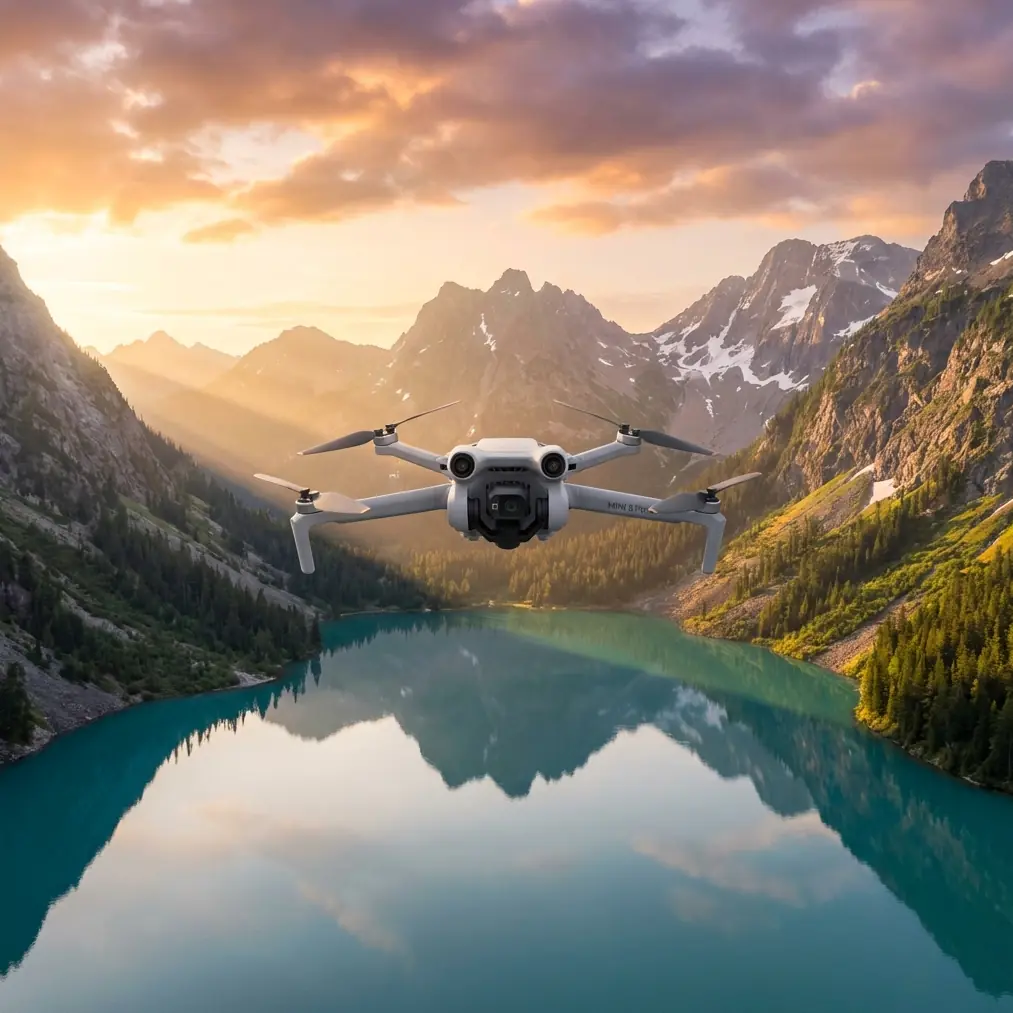
How to Film Stunning Forest Footage with Mini 5 Pro
META: Master urban forest filming with the Mini 5 Pro drone. Learn expert techniques for obstacle avoidance, subject tracking, and cinematic D-Log footage in challenging environments.
TL;DR
- Antenna positioning at 45-degree angles maximizes signal penetration through dense tree canopies
- ActiveTrack 5.0 combined with obstacle avoidance enables safe autonomous filming in tight forest corridors
- D-Log color profile captures 14 stops of dynamic range for preserving shadow and highlight detail under canopy
- QuickShots modes create professional-quality cinematic sequences without manual stick skills
Urban forests present unique challenges that separate amateur drone footage from professional cinematography. The Mini 5 Pro's 249-gram frame paired with advanced sensing systems makes it the ideal tool for capturing stunning woodland footage in city parks, nature reserves, and green corridors.
This case study breaks down my complete workflow for filming forest environments—from pre-flight antenna optimization to post-production color grading. You'll learn the exact settings, flight patterns, and safety protocols I use on every urban forest shoot.
Why Urban Forests Demand Specialized Drone Techniques
City forests differ dramatically from open landscapes. Tree density, variable lighting, and signal interference create a trifecta of technical challenges.
Canopy coverage blocks GPS signals intermittently. Dappled sunlight creates exposure swings of 8+ stops within single frames. Branches appear suddenly in flight paths.
The Mini 5 Pro addresses each challenge with purpose-built features. Understanding how to leverage these tools transforms frustrating shoots into productive sessions.
Signal Penetration Through Dense Canopy
My antenna positioning strategy evolved through dozens of failed flights. The default controller position—antennas pointed straight up—loses signal within 150 meters under heavy tree cover.
Optimal antenna configuration:
- Angle both antennas at 45 degrees toward your flight area
- Keep antenna faces perpendicular to the drone's position
- Maintain line-of-sight to canopy gaps when possible
- Position yourself at forest edges rather than deep inside
Expert Insight: Radio signals reflect off wet leaves more than dry ones. After rain, expect 30-40% range reduction and fly more conservatively. I always scout my flight zone during dry conditions first, noting maximum comfortable distances.
This positioning technique extended my reliable range from 150 meters to over 400 meters in moderate forest density. The difference between unusable footage and professional results often comes down to signal stability.
Mastering Obstacle Avoidance in Forest Environments
The Mini 5 Pro's omnidirectional obstacle sensing uses multiple vision sensors to detect branches, trunks, and unexpected obstacles. But default settings aren't optimized for forest work.
Recommended Obstacle Avoidance Settings
| Setting | Open Field | Light Forest | Dense Forest |
|---|---|---|---|
| Obstacle Avoidance | Normal | Brake | Bypass |
| Sensing Distance | Standard | Far | Far |
| Return-to-Home Altitude | 30m | 50m | 60m+ |
| Max Speed | Sport | Normal | Cine |
| APAS Mode | On | On | Off |
Critical adjustment: Set your Return-to-Home altitude above the tallest trees in your filming zone. I measure canopy height using the drone's altitude reading at hover, then add 15 meters as a safety buffer.
When to Disable Obstacle Avoidance
Counterintuitively, dense forest filming sometimes requires turning off obstacle avoidance. The system can become overwhelmed by multiple close obstacles, causing erratic flight behavior.
Disable obstacle avoidance when:
- Flying through narrow gaps you've pre-scouted
- Executing precise proximity shots near tree trunks
- Operating in Cine mode at very slow speeds
- Branches trigger constant false positives
Manual control in these situations provides smoother footage. The key is flying slowly enough to react visually—typically under 3 meters per second.
Subject Tracking Through Forest Corridors
ActiveTrack transforms forest filming from stressful manual flying to creative direction. The Mini 5 Pro's ActiveTrack 5.0 maintains subject lock even when trees temporarily obscure your target.
Optimal Subject Tracking Configuration
Select your subject using the touchscreen, then configure these settings:
- Trace mode for following subjects along paths
- Parallel mode for lateral movement through clearings
- Spotlight mode when you want manual flight control with automatic framing
Pro Tip: For wildlife or hiking subjects, enable subject re-acquisition in settings. This allows the drone to relocate your subject after brief obstructions—essential when trees block the camera momentarily.
The system tracks subjects at distances between 5 and 50 meters. Forest filming works best at 15-25 meters, providing enough reaction time for obstacle avoidance while maintaining intimate framing.
Cinematic Techniques: QuickShots and Hyperlapse
Automated flight modes produce Hollywood-quality sequences without requiring expert piloting skills. Forest environments showcase these features beautifully.
QuickShots for Forest Cinematography
Dronie: Pulls back and up from subject, revealing forest context. Set distance to 30-40 meters for dramatic reveals without losing subject detail.
Helix: Spirals around a central point while ascending. Position over a distinctive tree or clearing for maximum visual impact.
Rocket: Ascends straight up. Perfect for canopy breakthrough shots—start below treeline and rise through gaps into open sky.
Circle: Orbits a fixed point. Use around ancient trees or forest landmarks for establishing shots.
Hyperlapse Through Changing Light
Forest Hyperlapse captures the magical quality of shifting sunlight through leaves. The Mini 5 Pro processes 2-second intervals into smooth motion sequences.
Recommended Hyperlapse settings:
- Interval: 2 seconds
- Duration: 15-30 minutes of real time
- Mode: Waypoint for complex paths, Free for simple movements
- Photo format: JPEG for faster processing, RAW for maximum flexibility
Morning and late afternoon sessions produce the most dramatic results. Sunlight angles create moving shadow patterns that Hyperlapse compresses into mesmerizing sequences.
D-Log Color Profile: Preserving Forest Dynamic Range
Standard color profiles crush shadow detail under forest canopy. D-Log captures flat, desaturated footage that preserves 14 stops of dynamic range for color grading.
D-Log Camera Settings for Forest
| Parameter | Recommended Setting | Rationale |
|---|---|---|
| Color Profile | D-Log | Maximum dynamic range |
| ISO | 100-400 | Minimize noise in shadows |
| Shutter Speed | 1/50 at 24fps | Natural motion blur |
| White Balance | Manual 5600K | Consistent for grading |
| ND Filter | ND16-ND64 | Control bright sky exposure |
Essential ND filter selection: Forest filming requires quick ND changes. Canopy shade might need ND8, while clearings demand ND64. I carry the full range and swap based on conditions.
Basic D-Log Grading Workflow
D-Log footage looks flat and gray straight from camera. Apply these corrections in order:
- Exposure adjustment: Lift shadows, control highlights
- Contrast curve: Add S-curve for punch
- Saturation boost: Increase 20-30% from baseline
- Color temperature: Warm slightly for golden hour feel
- Green adjustment: Forest greens often need desaturation to avoid neon appearance
Common Mistakes to Avoid
Flying too fast through trees: Speed kills footage quality and increases crash risk. Keep movements under 5 m/s in forested areas.
Ignoring wind at canopy level: Ground-level calm doesn't indicate conditions above trees. Canopy turbulence can exceed 20 km/h even on seemingly still days.
Forgetting spare batteries: Cold forest shade drains batteries faster. Bring minimum three batteries for serious shoots.
Neglecting pre-flight compass calibration: Metal in urban forest infrastructure (benches, signs, underground utilities) causes compass errors. Calibrate at each new location.
Shooting only wide angles: Forest footage benefits from telephoto compression. Use digital zoom at 2x for intimate canopy details.
Skipping location scouting: Walk your flight path first. Identify obstacles, note GPS dead zones, and plan emergency landing spots.
Frequently Asked Questions
What's the maximum safe flight distance in dense forest?
Maintain visual line of sight, typically 200-300 meters maximum in moderate forest density. Signal strength, not regulations, usually limits range. Monitor your signal indicator constantly and establish a personal minimum threshold—I return when signal drops below two bars.
Can the Mini 5 Pro fly in light rain under forest canopy?
The Mini 5 Pro lacks official weather sealing. While canopy provides some protection, moisture damages electronics and affects sensor performance. Avoid flying during precipitation or when leaves are actively dripping. Morning dew on branches also poses risks during close-proximity shots.
How do I recover smooth footage when obstacle avoidance causes jerky movements?
Post-production stabilization helps, but prevention works better. Fly in Cine mode for smoother avoidance maneuvers. If jerky footage is unavoidable, apply warp stabilizer at 50% smoothness in editing software, then crop the frame slightly to hide edge warping.
Urban forest cinematography rewards patience and preparation. The Mini 5 Pro's combination of compact size, advanced sensing, and professional imaging capabilities makes it uniquely suited for these challenging environments.
Master antenna positioning, configure obstacle avoidance appropriately, and leverage automated flight modes. Your forest footage will stand apart from typical drone content.
Ready for your own Mini 5 Pro? Contact our team for expert consultation.