
Mini 5 Pro for Remote Construction Site Filming
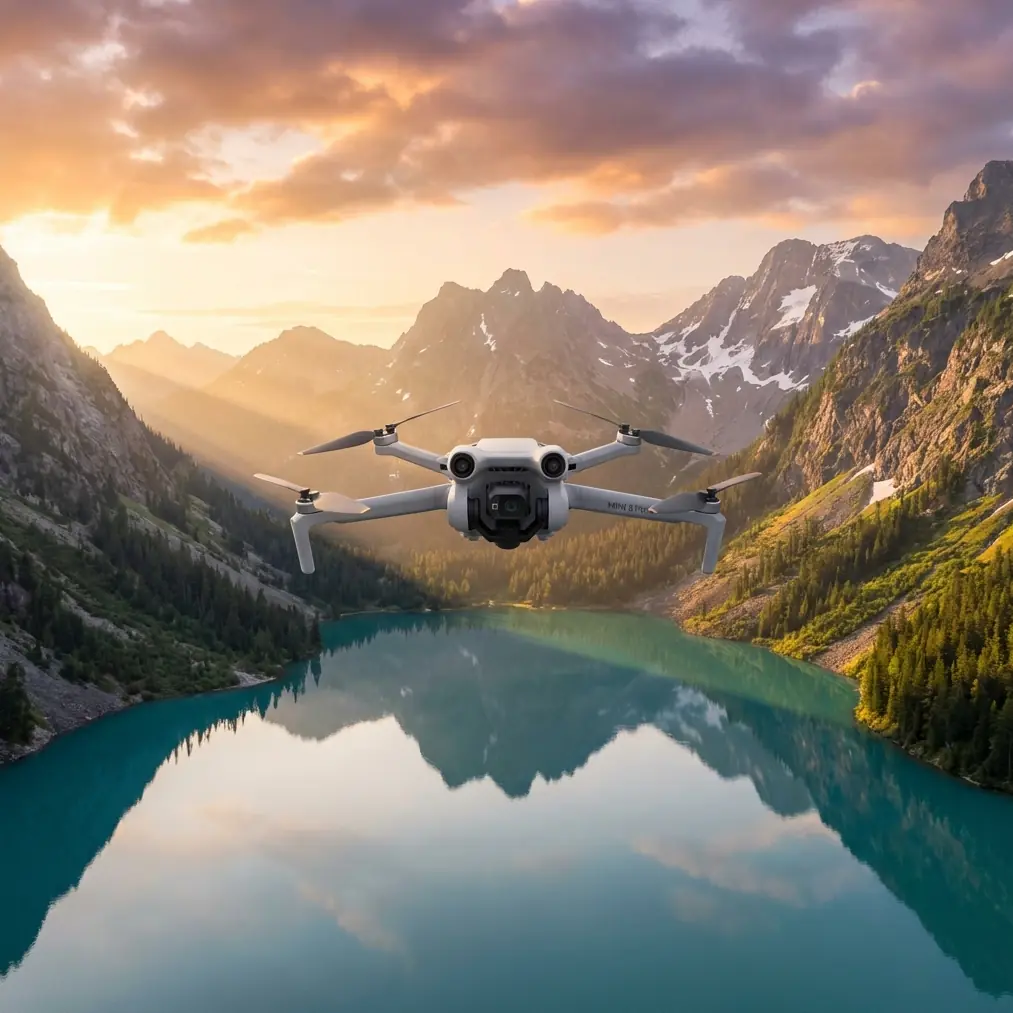
Mini 5 Pro for Remote Construction Site Filming: What Actually Matters in the Field
META: A field-focused look at how Mini 5 Pro fits remote construction site filming, using real road-survey hardware benchmarks like 1080p live transmission, 5km links, and high-resolution mapping workflows to explain what professionals should prioritize.
Remote construction filming sounds simple until the site is three hours from the nearest office, the access road is half-finished, the weather turns, and the project team wants both cinematic updates and useful visual documentation from the same flight window.
That is where the Mini 5 Pro conversation gets interesting.
Most people approach a compact drone as a camera choice. On remote construction work, that is too narrow. The real question is whether a small platform can support the operational demands that serious site teams care about: dependable live view, clean progress records, safe flight around structures, and footage that remains usable once it leaves the pilot’s screen.
A useful way to judge the Mini 5 Pro is not by hype, but by comparing it to what dedicated road-survey drone solutions have historically prioritized. One reference point comes from a road reconnaissance solution built around an iCamQ5 camera and an iGCS-1 HD digital image transmission system. That setup tells us a lot about the problems professionals have been trying to solve for years: image detail, transmission reliability, weather tolerance, and downstream mapping workflow.
Those same problems still exist on remote building sites. The Mini 5 Pro just answers them differently.
The real problem on remote sites is not filming. It is trust in the footage.
Construction teams do not need pretty aerial clips alone. They need confidence.
Confidence that the pilot can fly near cranes, temporary steel, stockpiles, edge protection, and half-built façades without turning each sortie into a risk event. Confidence that supervisors on the ground can see what the drone sees. Confidence that a windy or lightly wet day does not automatically end the mission. Confidence that the footage can serve both communications and operational review.
That is why the reference road-survey system is so revealing. Its camera payload was built around measurable output: more than 100 million total pixels, a fixed-focus lens under 35mm, a 23.2mm × 15.4mm sensor, 4.2μm pixel size, and image resolution ranging from 1cm to 10cm. In other words, the system was designed for evidence, not just aesthetics.
For a Mini 5 Pro operator filming remote construction, that benchmark matters because it changes how you define success. You are not trying to turn a lightweight drone into a heavy survey aircraft. You are trying to borrow the survey mindset: capture site conditions in a way that remains useful after the flight.
That means planning passes that show trench progression, haul-road condition, formwork sequencing, roof membrane status, drainage alignment, and perimeter access points. It also means using the drone’s smart tools selectively instead of treating every job like a social media reel.
Why obstacle avoidance matters more on a construction site than in most creator workflows
On open land, almost any modern drone can look competent. On a live project site, the airspace is cluttered in ways that are easy to underestimate.
There are rebar cages, cables, parked plant, temporary site offices, scaffold bridges, concrete pump booms, fencing, and unfinished geometry that confuses depth judgment from the ground. This is where obstacle avoidance stops being a marketing bullet and becomes a practical control layer.
For Mini 5 Pro users, obstacle sensing is especially valuable during low-altitude tracking passes over access roads or when sliding laterally to reveal the scale of a project. The pilot still carries full responsibility, of course, but avoidance systems can reduce the chance of a minor framing adjustment becoming a major operational interruption.
The same goes for ActiveTrack and subject tracking. On a remote construction site, these features are often misunderstood as “follow me” tools for creators. Used properly, they can help document moving machinery routes, convoy arrivals, or progress along linear works such as service corridors and temporary haul roads. The key is to use them in controlled airspace with clear separation and visual confirmation, not as an excuse to surrender attention.
That distinction matters. Smart flight features are not there to replace field judgment. They are there to make repeatable shots easier, especially when the job requires consistency week after week.
What road-survey transmission systems teach us about live monitoring
The road-survey reference includes one detail that deserves more attention: the iGCS1-TX airborne transmitter supported 1920×1080 live transmission at 60P/50P, with a listed range of 5km at 100m and an upgrade path for longer distance. The ground station used dual-antenna redundant reception and a high-bright screen so operators could still see clearly in strong sunlight. End-to-end delay was specified at 500ms.
That is not trivia. It points directly to one of the biggest bottlenecks in remote construction filming: the footage is only as useful as the live decision-making it enables.
On a remote site, the pilot is rarely the only stakeholder. A project manager may want confirmation of embankment progress. A civil engineer may want a look at drainage installation. A safety lead may want a roof edge checked visually. The stronger the live view workflow, the more likely the flight becomes a productive site tool rather than a standalone media task.
Mini 5 Pro users should think in exactly those terms. Even though a compact drone uses a different ecosystem than a dedicated COFDM broadcast-style image link, the lesson is the same: transmission reliability shapes mission quality. If the remote crew cannot monitor what matters in real time, you lose speed, and remote jobs do not offer much spare time.
This is also where a third-party accessory can genuinely expand capability. On one remote project, the single most useful addition was not a flashy lens filter or a cosmetic upgrade. It was a high-bright field monitor setup for the client-side viewer, paired with a sun hood and a stable HDMI-capable relay workflow from the pilot station. The reason is obvious once you try it on a dusty site at midday: if the superintendent cannot clearly see the image, they cannot guide the capture of what they need.
That accessory does not change the Mini 5 Pro’s camera. It changes the usefulness of the mission.
If you are trying to build a similar field kit around your workflow, it helps to discuss the right monitor and viewing setup with someone who understands construction use rather than generic creator gear. A practical place to start is this direct field workflow chat.
The weather question: small drones still need serious discipline
The same road-survey camera reference notes light-rain resistance. That should sound familiar to anyone who flies around real projects instead of idealized ones. Site schedules do not pause just because conditions are imperfect.
Still, this is where discipline matters. A compact aircraft can be extremely capable for remote filming, but no small drone should be treated casually in moisture, gusts, or unstable visibility. What matters is not bravado. It is threshold management.
A Mini 5 Pro is best used when you can still preserve stable framing, maintain visual situational awareness, and protect the aircraft during takeoff and landing from dust, wet ground, and loose debris. On remote construction sites, those are often the weak points. A landing mat, clean case workflow, and battery handling routine will do more for consistent output than many people expect.
The broader lesson from survey hardware is this: professionals engineer for imperfect environments. Mini 5 Pro operators should do the same, even if the platform is much smaller.
Why D-Log is more useful on construction projects than people think
Many remote construction teams want two deliverables from one flight: a polished update for stakeholders and a truthful record for internal review.
That is where D-Log earns its place.
If you shoot a high-contrast site at midday, especially one with white cladding, reflective equipment, dark excavation, and bright sky, standard color can clip highlights or bury details in shadows. D-Log gives you more room in post to balance those extremes, which means one flight can produce footage that looks presentable without sacrificing useful detail in critical areas.
This is operationally significant. A site update video is more credible when exposed properly and color-managed with restraint. It also gives you flexibility when matching footage captured over different phases of the project.
The survey-world equivalent is easy to see in the reference workflow built around Pix4Dmapper. That software was included because capture quality is only half the job; processing determines whether the data becomes actionable. The same principle applies here. With Mini 5 Pro footage, your post pipeline matters. D-Log is not just a filmmaker preference. It is a way to preserve decision-grade image information under difficult lighting.
QuickShots and Hyperlapse are useful, but only if they serve documentation
QuickShots and Hyperlapse can be genuinely effective on construction work, but only when they are used with purpose.
A Hyperlapse from a repeatable vantage point can show the emergence of a structure over time with remarkable clarity. It turns weekly flights into a visual record of sequencing, crane relocation, material flow, and façade progress. For project communications, that can be far more persuasive than isolated stills.
QuickShots have a narrower role, but they can help establish context at the start of a progress video: where the site sits relative to roads, neighboring buildings, or surrounding terrain. On remote projects, context matters because access and logistics are often part of the story.
What they should not become is filler. Construction teams can tell the difference between a useful reveal and a shot that burns battery for no reason.
A survey mindset makes Mini 5 Pro footage more valuable
The strongest takeaway from the reference road-survey solution is not that you need a 1.68kg camera payload or a 6kg ground receiving station to do serious work. It is that professionals define aerial capture by workflow quality.
Look at the specific design choices in that system:
- a camera with over 100 million pixels for high-detail output
- fixed-focus optics under 35mm for controlled imaging
- image resolution down to 1cm in certain applications
- 1080p/60P live transmission
- dual-antenna redundancy at the ground station
- a processing pipeline tied into Pix4Dmapper
Each of those choices addresses a real field problem.
Mini 5 Pro operators can adopt that same logic in a lighter package. Use obstacle avoidance to reduce risk when filming complex structures. Use ActiveTrack only where repeatability helps. Use D-Log when scene contrast would otherwise throw away detail. Use a bright external viewing setup when site stakeholders need live confirmation. Build repeatable flight paths so footage from different weeks can actually be compared.
That is how a compact drone stops being “just a small drone” and starts becoming a reliable construction documentation tool.
What I would prioritize on a remote site tomorrow
If I were deploying a Mini 5 Pro for remote construction filming, I would care less about headline specs and more about five practical outcomes:
First, safe maneuvering near unfinished structures. Obstacle avoidance is central here.
Second, a clean live view workflow under harsh daylight. The survey reference’s emphasis on high-visibility monitoring and dependable transmission makes this non-negotiable.
Third, footage that can survive post-production without falling apart. D-Log helps preserve usable information in ugly lighting.
Fourth, repeatability. Hyperlapse, waypoint planning if available in your workflow, and disciplined flight logs matter more than one-off hero shots.
Fifth, accessory selection that solves field problems. A rugged monitor workflow, spare power management, and protective launch/landing gear often do more for project success than camera embellishments.
That may sound less glamorous than talking about cinematic modes, but remote construction work rewards reliability over novelty.
And that is the right lens for evaluating the Mini 5 Pro. Not as a toy stretched beyond its role, and not as a substitute for a dedicated survey aircraft, but as a compact platform that can produce highly credible results when the operator borrows lessons from professional road-survey systems.
The drone industry tends to separate “creative” flying from “technical” flying. Real construction jobs do not. They want both. Clear footage. Consistent perspective. Safe operation. Useful live monitoring. Deliverables that can inform action.
If your Mini 5 Pro workflow can do that, it is already operating at a much higher level than most site drone programs.
Ready for your own Mini 5 Pro? Contact our team for expert consultation.