
Mini 5 Pro Field Report: Filming Chongqing’s Pink Muhly by
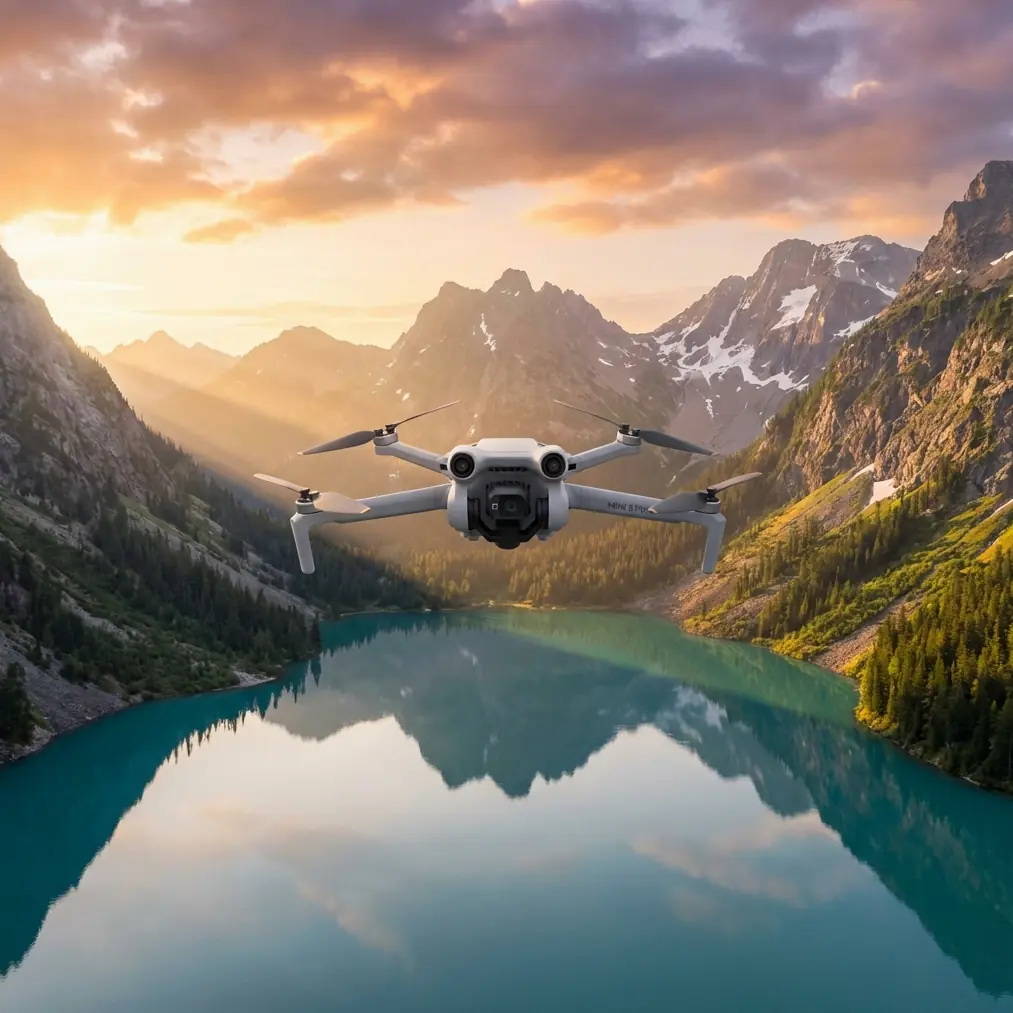
Mini 5 Pro Field Report: Filming Chongqing’s Pink Muhly by the Lake Without Losing Range or Color
META: A field-style Mini 5 Pro article on filming seasonal flower landscapes like Feiran Lake in Chongqing, with practical advice on obstacle avoidance, ActiveTrack, D-Log, Hyperlapse, and antenna positioning for reliable range in dusty roadside conditions.
I’m Jessica Brown, and if you want to understand what the Mini 5 Pro is really for, skip the studio spec talk and go straight to a place like Feiran Lake in Chongqing’s Shapingba District.
That location recently drew crowds because the pink muhly grass there reached full bloom. The visual recipe is almost unfairly photogenic: broad pink fields, green lake water, and blue-green hills wrapping the background. Add autumn sun and light wind, and the whole scene starts behaving like soft fabric. For a photographer, it’s a gift. For a drone pilot, it’s a test.
Not because the flight is extreme. Because scenes like this expose whether a compact drone can hold signal, protect highlights, track moving people cleanly, and navigate a crowded recreational space without turning a calm landscape job into a messy recovery exercise.
That is where the Mini 5 Pro conversation becomes useful.
Why this Chongqing scene matters for Mini 5 Pro users
The Feiran Lake bloom is not just “pretty scenery.” It represents a very specific type of mission profile that compact drones increasingly handle: public-facing landscape capture in mixed-use outdoor environments. You are not flying over an empty plateau. You are working around visitors, pathways, water, layered terrain, and constantly shifting texture from grass moving in the wind.
Two details from the Chongqing flower story are operationally significant.
First, the pink muhly was in peak bloom. That matters because peak bloom creates dense, low-contrast textures that can fool autofocus behavior, compression, and tracking systems. Fine flower plumes moving together can look beautiful to the eye while becoming mush or shimmer in footage if your camera profile and movement aren’t chosen carefully.
Second, the flower sea sat between lake water and surrounding green hills. That matters because water reflections and dark hillside contours create a wide contrast spread inside one frame. A drone that captures a pleasant straight-out-of-camera image in flat light may still struggle once bright lake highlights and shadowed slopes appear together in late afternoon. This is exactly where D-Log becomes more than a buzzword. It gives you room to hold the sparkle on the lake without letting the pink grass turn into clipped pastel blobs.
The real challenge: not distance, but clean signal discipline
The prompt around “delivering highways in dusty” points to a field reality many operators know well: you may be launching near roads, service lanes, or open roadside pull-offs where air is dry, visibility is decent, and signal conditions seem easy. Yet range falls apart sooner than expected.
That usually comes down to antenna discipline, not magic.
If you’re filming a destination like Feiran Lake from the edge of visitor circulation or from a roadside approach, your first responsibility is line of sight. Hills, stands of trees, parked vehicles, sign structures, and even your own body position can degrade signal before raw distance becomes the issue.
Antenna positioning advice that actually helps
The simplest mistake is pointing the controller antennas at the aircraft like laser sights. That is usually the wrong orientation. For strongest link quality, you generally want the broadside of the antenna pattern facing the drone, not the tip aimed at it. In plain terms, keep the antenna faces presented toward the aircraft’s position rather than stabbing the sky with them.
In a place like Chongqing’s lakeside flower zone, this matters because the visual temptation is to lift, rotate, and walk while watching the scene instead of maintaining signal geometry. Don’t do that casually.
A better field rhythm looks like this:
- Set your standing position before takeoff.
- Identify where the hills could block low-altitude return paths.
- Keep the drone out in front of the antenna faces, not off your shoulder.
- If you reposition, stop and re-square your body and controller to the aircraft.
- Avoid letting cars, railings, or metallic structures sit directly between you and the drone.
Dusty roadside operations add another wrinkle. Fine dust is less about radio absorption and more about pilot behavior. Operators often lower altitude to stay under wind, then drift behind embankments or roadside vegetation. Signal drops because terrain cuts the path, not because the drone is “weak.” The Mini 5 Pro will feel far more reliable when you treat antenna alignment as a live flight input rather than an afterthought.
Obstacle avoidance matters differently around flower tourism sites
People hear “obstacle avoidance” and picture dense forests or urban inspection corridors. But a site like Feiran Lake reveals another use case: managing low-altitude cinematic work where the hazards are subtle.
Tall grasses, lakeside edges, decorative fencing, small footbridges, and wandering visitors create a layered flight environment. The obstacles are not always large enough to be obvious from the pilot’s perspective. A compact drone with good sensing buys margin when you are executing lateral slides over pink bloom bands or backing away to reveal the lake and hills in one move.
That margin is especially valuable when the audience in the frame is part of the story. The original report noted that many residents and tourists came to view, photograph, and enjoy the site. That means crowd-aware flying. In practical terms, obstacle avoidance is not there to encourage reckless proximity. It supports smoother route planning in spaces where people may pause, stop unexpectedly, or drift into a path you expected to remain clear.
When I’m working a flower landscape with foot traffic, I use obstacle avoidance as a layer of insurance, but I still build shots that don’t depend on it saving me. The Mini 5 Pro should let you maintain that conservative approach while still making compact, fluid moves.
ActiveTrack and subject tracking: useful, but only if you choose the subject wisely
A location like this tempts pilots to track people walking through the pink fields. Sometimes that works. Sometimes it fails because the grass itself is moving and the color palette is too uniform.
Subject tracking is strongest when the subject has clear separation from the environment. Along Feiran Lake, a person on a path near the waterline may track more reliably than a person swallowed by soft pink plumes. If you insist on tracking inside the densest bloom, expect occasional ambiguity, especially in gusty conditions where the entire scene seems alive.
That is where ActiveTrack becomes less about automation and more about shot design.
Use it when:
- your subject is on a defined path,
- the background layers are visually distinct,
- and your reveal includes the lake or hill contours for separation.
Avoid relying on it when:
- your subject blends tonally into the flowers,
- the wind is pushing the grass in multiple directions,
- or the route passes under overhanging branches or near poles and signs.
There is a discipline to using subject tracking in public landscapes. The drone should support your visual plan, not invent one for you.
QuickShots and Hyperlapse in a flower landscape
QuickShots are often dismissed by experienced operators, but that misses the point. In a transient seasonal scene, they can be efficient for collecting safe, repeatable social edits before the light changes.
At Feiran Lake, where the pink bloom, green water, and surrounding hills create a naturally layered composition, a few automated motion patterns can establish geography quickly. A clean pullback or orbit can show why the site attracted so many visitors. That’s useful for tourism boards, local attractions, venue promotion, and small creative teams that need multiple deliverables from one battery cycle.
Hyperlapse is even more interesting here.
Pink muhly moves with the breeze in a way that creates a soft pulse across the frame. Add visitor movement along paths and changing sun angle over the lake, and suddenly the location has temporal texture, not just color. A carefully planned Hyperlapse can show the site “breathing.” But this only works if your route is clean and your stabilization holds. Any unnecessary yaw corrections become obvious once time is compressed.
For Mini 5 Pro users, the takeaway is simple: don’t reserve Hyperlapse for skylines. Seasonal public landscapes may be where it feels most alive.
D-Log is the difference between “nice” and professional footage
The visual trap at Feiran Lake is oversaturation. Pink muhly already feels dreamy to the eye. If you push straight into aggressive contrast and color, the flowers can lose detail and the scene starts looking synthetic.
D-Log gives you room to be gentler.
This matters specifically because the source setting includes three competing color zones:
- pink bloom in the foreground,
- green lake water,
- and darker green hills in the distance.
That combination can break lesser workflows. If you expose too hot for the flowers, lake highlights feel brittle. If you protect the water too hard, the hills can crush into a flat mass. If you overcompensate in post, the pink blooms become cartoonish.
A log workflow lets you preserve the delicate tonal roll-off that makes this kind of scene believable. My preference in a landscape like this is to grade for texture first, not color intensity. Keep separation in the flower plumes. Let the lake sit naturally. Then shape the hills so they frame the bloom without swallowing it.
When viewers say a drone image feels “expensive,” this is usually part of what they mean.
Dusty highway-style operating habits that carry over to leisure landscapes
Even though Feiran Lake is a recreational setting, the reader scenario around dusty highway delivery environments is worth addressing because the field habits transfer directly.
If you’ve been launching near roads or utility access areas, bring that discipline with you:
1. Protect your takeoff and landing zone
Dust and loose grit can affect gimbal cleanliness and image quality faster than many pilots expect. Use a stable launch surface when possible, especially if your access point is a roadside layby rather than manicured ground.
2. Gain altitude before committing to distance
In mixed terrain, low-level outbound flights are where signal confidence goes to die. A bit more altitude can preserve line of sight over shrubs, railings, and contour changes.
3. Don’t chase the frame at the expense of link quality
The flower sea may pull you laterally along the shoreline. If your controller orientation degrades while you walk, stop, realign, then continue.
4. Expect public movement
At tourist sites, your clean launch area may not stay clean. Build recovery paths that account for people drifting in after takeoff.
These are not glamorous skills, but they are the difference between a smooth Mini 5 Pro session and a day ruined by a preventable interruption.
A practical shot plan for this exact type of location
If I were sent to Feiran Lake with the Mini 5 Pro for a half-day assignment, I’d structure it like this:
Start high enough to establish the relationship between the pink muhly, the lake, and the enclosing hills. That is the signature of the site, and it comes directly from the scene described in the Chongqing report.
Then move lower for texture passes where the flowers fill most of the frame and the wind reveals movement across the bloom surface.
Next, capture controlled tracking shots of visitors on defined paths rather than trying to skim aggressively through dense floral sections.
After that, gather one or two QuickShots for editorial flexibility.
Finally, reserve a quiet period for Hyperlapse once the light becomes directional and visitor movement creates gentle flow across the scene.
If you want to compare field setups or ask about a compact filming workflow for locations like this, send your route details here: https://wa.me/85255379740
What the Mini 5 Pro should prove in a place like this
A drone does not become useful because it can fly far on paper. It becomes useful when it handles a scene with competing demands: delicate subject matter, mixed terrain, changing public movement, broad dynamic range, and the need for dependable control from less-than-perfect launch points.
The Feiran Lake pink muhly bloom is a strong test because it looks soft and easy while demanding precision. The flowers are seasonal. The crowds are variable. The lake and hills create depth but also exposure challenges. The visual magic depends on restraint, not brute-force saturation or flashy movement.
That’s why the Mini 5 Pro story is best told in the field. Around a real landscape. Around real operational choices like antenna orientation, obstacle-aware route planning, and deciding when ActiveTrack serves the shot and when manual control is better.
A compact drone that can render that pink flower sea faithfully, preserve the green of the lake, maintain a stable link from a practical launch point, and move safely around a public scenic area is not just convenient. It is genuinely capable.
And that is the standard that matters.
Ready for your own Mini 5 Pro? Contact our team for expert consultation.