
Mini 5 Pro Field Report: Coastal Highway Workflows, Travel
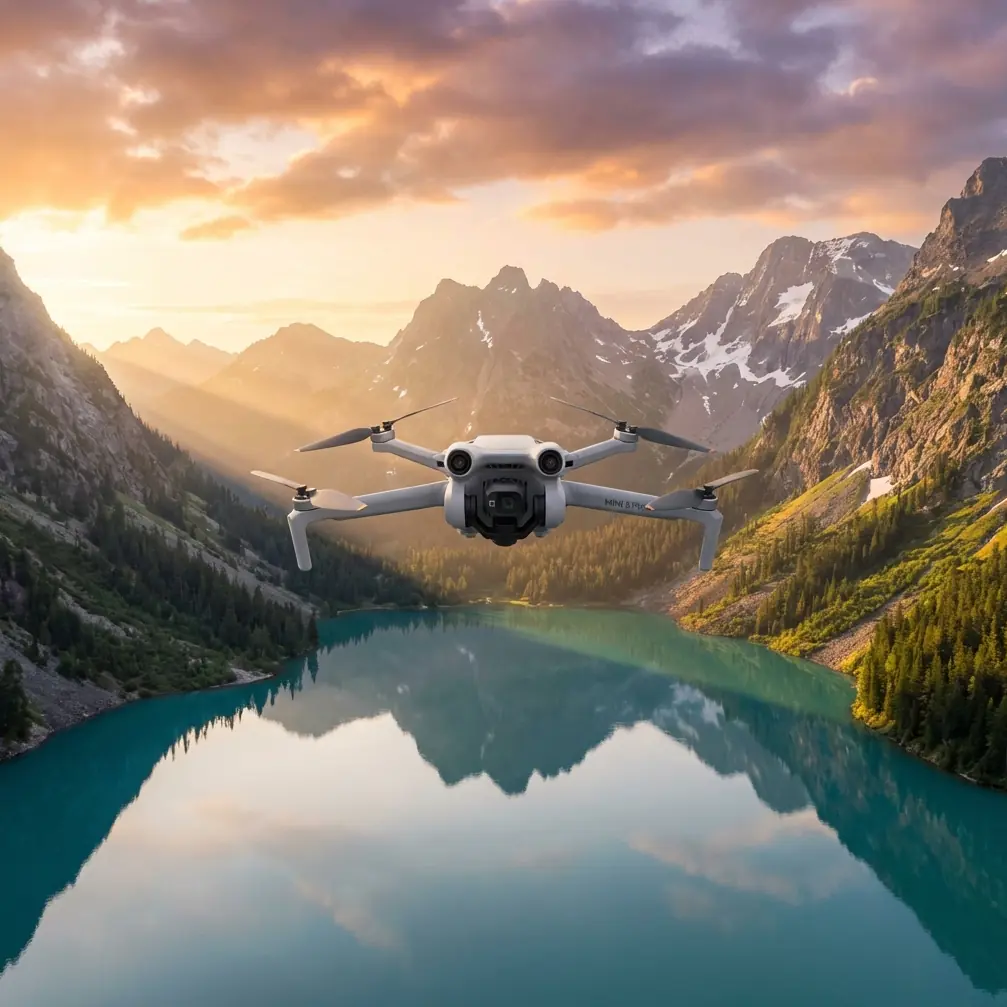
Mini 5 Pro Field Report: Coastal Highway Workflows, Travel-Ready Size, and the Antenna Habits That Actually Matter
META: A field-tested Mini 5 Pro article for coastal highway documentation, covering portability, obstacle avoidance, ActiveTrack, D-Log, Hyperlapse, and antenna positioning for stronger range in real-world drone operations.
When people talk about compact drones, they usually stop at convenience. That misses the operational point.
The real value of a small aircraft like the Mini 5 Pro is not just that it fits into a bag. It is that a drone small enough to travel anywhere changes how often teams will actually deploy it. That matters for coastal highway work, where conditions shift fast, access can be awkward, and the best flight window often appears without much warning. A machine that is easy to bring, easy to launch, and capable enough to gather usable footage can become part of the job instead of a special-event tool.
That idea is not new. Back in early 2018, one industry piece was already noting two trends that shaped the consumer and prosumer drone market: drone technology was becoming more mature, and aircraft were shrinking to the point where they could be tucked into a bag. It also framed that shift around travel habits, pointing out that people were no longer satisfied with taking the same kind of trip photos during their limited holiday breaks. Those observations still matter now, especially when you look at the Mini 5 Pro through a working field lens rather than a hobby lens.
I have been thinking about that while planning and flying along coastal highway corridors. Not glamorous cinematic sorties. Actual utility work: road-edge condition checks, progress visuals, drainage observation after weather, embankment documentation, and repeatable imagery for stakeholder updates. In that environment, the Mini 5 Pro makes sense for reasons that have less to do with hype and more to do with deployment discipline.
Why bag-sized still matters in highway operations
The 2018 article’s most practical point was also the simplest: drones had become small enough to carry in a bag. On paper, that sounds like an old consumer talking point. In the field, it is a workflow advantage.
A coastal highway team may have to cover long stretches with uneven pull-off spots, wind exposure, salt in the air, and tight schedules between traffic patterns or weather shifts. A larger aircraft can deliver stronger endurance or heavier sensors, but it also increases setup friction. Cases get bigger. Launch planning gets fussier. Personnel become more hesitant to “just grab the drone” for a short capture session.
The Mini 5 Pro changes that behavior. If the aircraft, batteries, controller, landing pad, filters, and spare props live in one compact shoulder setup, operators are more likely to deploy it for a 12-minute verification flight instead of postponing the task. That is how useful datasets get built: not from one dramatic mission, but from frequent, low-friction flights.
That same portability also works when the user is moving between civil work and travel documentation. The 2018 reference tied drone adoption to leisure travel during a year with four short holidays and one long holiday still ahead. The broader message was that drones had become practical enough to accompany normal trips. The Mini 5 Pro inherits that logic. A platform that can move from a weekday roadside inspection to a weekend coastal route capture without changing your packing strategy tends to get more airtime, and more airtime usually means a more skilled operator.
Mature technology means less babysitting, more usable output
Another detail from the reference piece deserves more respect than it gets: drone technology was described as becoming increasingly mature. That phrasing was simple, but operationally it points to the threshold where drones stop being gadgets and start becoming reliable image-collection tools.
For Mini 5 Pro users, maturity shows up in how support features work together.
Obstacle avoidance is the obvious one. Along a coastal highway, your hazards are not just buildings. You may be threading past sign gantries, utility poles, slopes, retaining structures, vegetation, and occasional roadside furniture that looks far more distant on screen than it is in real airspace. Obstacle sensing reduces the pilot’s cognitive load, especially when repositioning laterally for an oblique look at pavement edges or drainage channels.
Subject tracking, whether you think of it through ActiveTrack logic or a similar follow framework, matters in a different way. For civilian road work, the useful subject is not always a vehicle. It can be a survey team walking a shoulder, a maintenance vehicle moving slowly through a section, or a repeatable framing reference when documenting corridor progress. The point is consistency. Tracking tools make it easier to hold composition while the operator stays focused on airspace, terrain, and wind.
Then there are capture modes people often dismiss as “content creator” features. QuickShots and Hyperlapse are not just for social posts. A short orbital or pull-away sequence can establish context around a highway interchange far faster than a static frame. A Hyperlapse taken from a fixed perspective can reveal traffic rhythm, cloud movement affecting visibility, or the pace of staged work along a route. If the Mini 5 Pro includes these modes with solid stability, they become documentation shortcuts, not gimmicks.
D-Log deserves a mention too. Coastal environments are contrast traps. You can have bright water reflections, pale concrete, dark asphalt, and shadow under barriers all in the same scene. A flatter profile gives you more room to normalize the image later so road surface detail and environmental context survive the grade. For organizations producing periodic reports, that consistency helps more than people realize.
The antenna mistake that quietly ruins coastal range
Now to the part most pilots only learn after a few frustrating flights: antenna positioning.
This is one of those basics that sounds too elementary to matter, right up until your signal quality drops for no apparent reason over a perfectly open stretch of road. In coastal highway work, that problem gets amplified because many operators assume open space equals easy transmission. Not always.
The first rule is simple: do not point the antenna tips directly at the drone if your controller uses directional geometry where the broadside provides the stronger signal pattern. In practical terms, you usually want the flat faces or sides of the antenna alignment oriented toward the aircraft, not the ends. That single adjustment can make a measurable difference in link stability.
The second rule is to keep the controller relationship dynamic. If the drone travels down a highway corridor, your body and controller angle need to follow that movement. Many pilots launch well, then unconsciously relax their hands and let the controller drift downward. Signal quality suffers before they notice the aircraft has moved into a less favorable angle.
The third rule matters especially near the coast: maintain line of sight that is not just legally compliant but radio sensible. Guardrails, parked service vehicles, embankments, roadside signs, and even your own position on the lee side of a slope can interfere more than expected. Salt air itself is not the main villain in most short-range operations; bad orientation and partial obstruction usually are.
My field habit is straightforward:
- launch with the antennas already aligned for the planned route direction
- pivot my torso, not just my wrists, as the drone tracks laterally
- avoid standing directly behind large metal objects or vehicles
- climb enough to clear minor roadside clutter before pushing out
- pause and re-orient before assuming any weak-signal warning is a system issue
If you need a quick visual briefing on setup habits before a roadside job, I usually suggest sending your mission scenario here: message our flight support desk. It is faster than trying to troubleshoot signal behavior after you are already on location.
Coastal highway flying is about restraint, not spectacle
The Mini 5 Pro’s portability invites spontaneity, which is useful. But coastal highway operations reward restraint.
Wind near sea-facing roads can shift abruptly around cuttings, bridge sections, barriers, and elevated embankments. The safest and most productive method is to treat every shot as a task with a purpose. If you are documenting erosion near the shoulder, decide in advance whether you need top-down reference, shallow oblique detail, or a longer contextual reveal. If you are checking drainage outfalls after weather, think about sun angle and reflective glare before launch. If you are tracking maintenance progress, lock in repeatable positions and headings so future comparisons are meaningful.
This is where the small form factor and mature flight assistance of the Mini 5 Pro complement each other. You can get in quickly, use obstacle avoidance and tracking support where appropriate, capture the sequence, and land before the conditions deteriorate. The aircraft becomes a precision notebook rather than a toy in the sky.
From holiday flying to professional repeatability
That old 2018 travel-focused observation still carries a lesson. The article framed drones as a way to restore excitement to travel photography when standard camera shots had become repetitive. Behind that consumer sentiment was a deeper industry reality: once drones became compact, affordable, and mature enough, they stopped being occasional novelties and started fitting into normal life.
The same pattern explains why the Mini 5 Pro is relevant to today’s civilian work. When a tool is easy to carry and easy to trust, it gets used more often. Increased use improves pilot judgment. Better judgment improves capture quality. Better capture quality makes the data more useful for planning, reporting, and communication.
For coastal highway teams, that can mean:
- more frequent visual records after storms
- quicker verification of minor defects before dispatching larger crews
- cleaner progress timelines for stakeholders
- better environmental context for drainage, slope, and shoulder observations
- safer stand-off imaging where walking access is limited or undesirable
The point is not that the Mini 5 Pro replaces larger enterprise systems. It does not need to. Its strength is filling the gap between “too small to matter” and “too cumbersome to deploy.” That middle ground is where a lot of real work lives.
What I would prioritize on a Mini 5 Pro mission plan
If I were building a standard operating workflow around this aircraft for coastal highway use, I would prioritize five things.
First, portability discipline. Keep the kit truly grab-and-go. The whole benefit of a bag-sized drone disappears if accessories become a mess.
Second, antenna awareness. Train this until it becomes automatic. Pilots often spend more time comparing specs than practicing controller orientation, even though orientation has immediate impact on real-world link quality.
Third, shot purpose. Use QuickShots, Hyperlapse, and tracking modes only when they answer a documentation need. Fancy movement without reporting value wastes battery and attention.
Fourth, color strategy. If conditions are high contrast, use D-Log or the most flexible profile available when the deliverable requires post-processing consistency.
Fifth, environmental humility. Coastal roads can look forgiving from a map and feel complicated once the wind starts bouncing off terrain and structures. Fly lower-risk profiles first, then expand.
The bigger takeaway
A lot of articles about compact drones chase the wrong headline. They focus on novelty, or they flatten everything into generic “best features” language. The more interesting story is the one hinted at years ago when the market first noticed two things happening at once: drones were maturing, and they were shrinking.
That combination is exactly why the Mini 5 Pro matters for modern field users.
A mature aircraft gives you flight confidence, support tools, and image options that can produce consistent output. A small aircraft gets carried, launched, and used. Put those together in a coastal highway workflow, and you get something more valuable than convenience. You get repeatable aerial access with very little friction.
And if you fly it with proper antenna discipline, sensible route planning, and a clear capture objective, the Mini 5 Pro stops being a travel-friendly gadget and starts acting like what many crews actually need: a lightweight airborne documentation platform that is ready when the road, weather, and schedule finally line up.
Ready for your own Mini 5 Pro? Contact our team for expert consultation.