
Mini 5 Pro in Forest Low Light: A Field Case Study on Safer
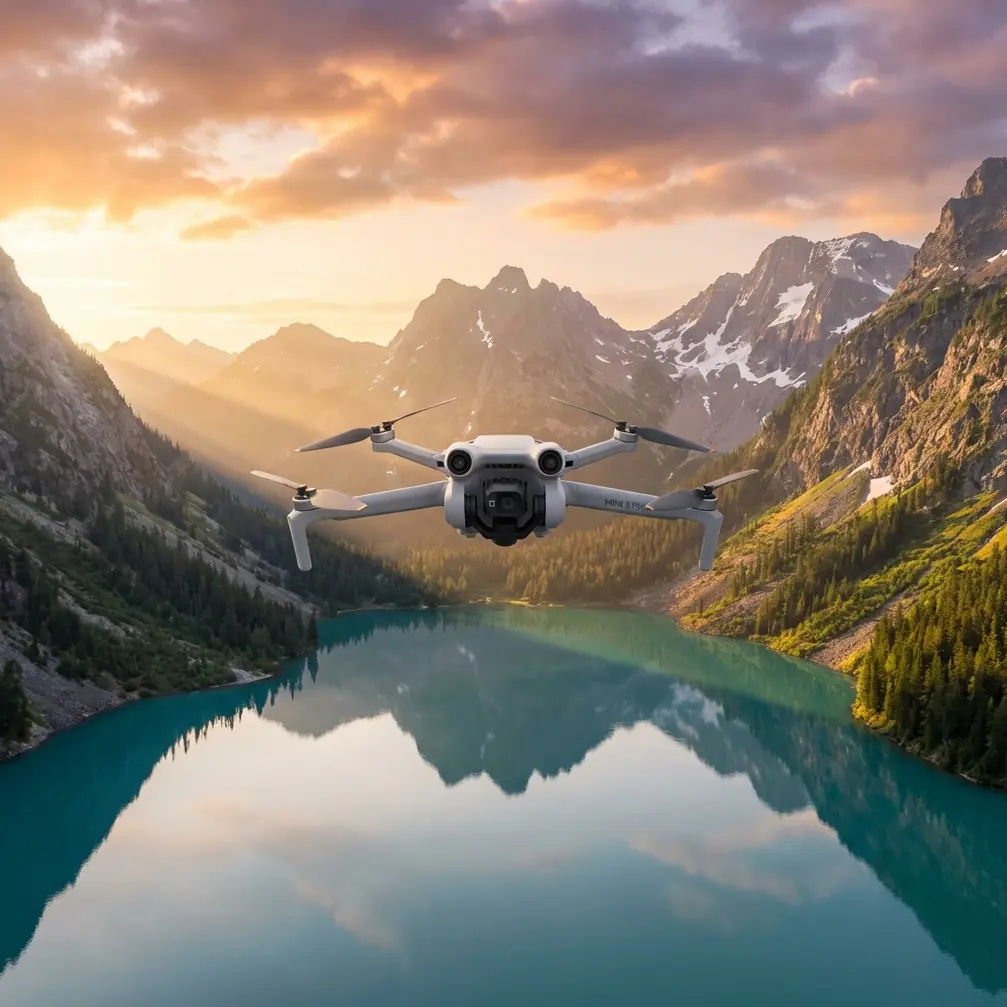
Mini 5 Pro in Forest Low Light: A Field Case Study on Safer Deliveries Under Canopy
META: Practical Mini 5 Pro case study for forest deliveries in low light, covering obstacle avoidance, ActiveTrack, D-Log workflow, QuickShots limits, and battery management in dense trees.
I’ve spent enough hours flying small drones under tree cover to know that spec sheets stop being useful the moment the canopy closes in. Forest work changes the rules. Light drops early, depth perception gets messy, trunks hide behind branches until they don’t, and battery estimates that looked comfortable at takeoff start shrinking faster than expected on the trip back.
That is exactly where the Mini 5 Pro conversation becomes interesting.
There is no recent news cycle to react to here, so the better approach is a practical one: what actually matters if you are using a Mini 5 Pro-style platform for low-light forest delivery work? Not scenic flying. Not broad consumer advice. A very specific mission profile: carrying out controlled runs into wooded areas where visibility is uneven, GPS quality can fluctuate, and the margin for error gets thinner with every minute of fading light.
This case study is built around that scenario.
The mission profile that exposes weak habits
A forest delivery flight sounds simple until you break it into phases. Launch is usually the easy part. You begin from a clearing, a trail edge, or a logging road with enough sky view for a stable takeoff. The trouble starts on ingress. As the aircraft moves toward denser cover, the environment becomes visually busy and operationally deceptive.
Branches at different distances compress into one dark mass. Openings between trees look wider on screen than they really are. Moist air, shade, and low-angle light can flatten contrast so badly that obstacles appear late. If you are relying too heavily on automation, that is where poor decisions happen.
For a Mini 5 Pro, two capabilities matter immediately in this setting: obstacle avoidance and subject tracking through systems like ActiveTrack. Not because they can take over the flight, but because they can reduce workload when used with discipline.
That distinction matters. In forest low light, obstacle avoidance is a support layer, not a permission slip.
When branches are thin, irregular, and partially obscured by leaves, any avoidance system has a harder job. Under brighter, open conditions, sensing has more visual information to work with. Under a dark canopy, the drone may still detect major objects well enough to slow or reroute, but the pilot should assume degraded confidence rather than perfect awareness. Operationally, that means you do not push speed just because sensors are available. You fly slower than feels necessary, and you leave larger lateral margins than you would in open terrain.
The same caution applies to ActiveTrack. Subject tracking is useful in a forest only when the route is already known to be clean and the tracked subject stays in a relatively open corridor such as a trail, service road, or cut line. In mixed light with overhanging limbs, ActiveTrack is best treated as a controlled tool for short sections, not an all-mission mode. Its real value is reducing stick workload during predictable movement so the pilot can pay more attention to environment and battery state.
What low light changes on the Mini 5 Pro
People tend to talk about low light as a camera issue. For delivery work in forests, it is first a flight issue.
Yes, image quality matters. If you are capturing reference footage, incident documentation, route verification, or post-flight analysis, D-Log is genuinely useful. A flatter profile preserves more flexibility when the scene includes bright gaps in the canopy and deep shadow on the forest floor. That dynamic range spread is common in woodland operations, especially in late afternoon or overcast conditions. With D-Log, you have a better chance of holding detail in both the sky breaks and the dark undergrowth during grading.
But the operational significance is bigger than aesthetics. Good footage helps you review route choices, identify where branch clearance was tighter than expected, and spot patterns in your own flying. I have used graded low-light forest clips not for cinematic output but for debriefs. You can see where exposure changes hid obstacles, where yaw inputs became too abrupt, and where a return corridor was narrower than it looked live.
QuickShots and Hyperlapse, on the other hand, sit in a different category. They are attractive features, and in the right environment they can be useful for documenting a site or producing orientation footage. In forest delivery work at dusk or under canopy, they are not core tools. QuickShots automate motion, and automated motion around trees is exactly where discipline matters most. Hyperlapse can help with site monitoring from a safe hover zone or above the tree line, but inside a constrained wooded corridor it should not be the default choice.
That is one of the most practical distinctions I would make for any Mini 5 Pro pilot: know which “smart” modes help the mission and which ones merely add movement.
A real battery lesson from the field
The most valuable habit I ever picked up for wooded low-light flights was not about camera settings. It was battery discipline, and I learned it the hard way.
On paper, a return looked comfortable. In reality, the outbound leg had been slightly downhill through a valley opening with clean air and a mild tailwind. The return was the opposite: climbing, colder, darker, and pointed into a corridor that required slower, more careful inputs. Battery percentage did not drain in a straight line. It dropped gently at first, then started stepping down faster once I was forced to reduce speed and make small corrections between trunks.
That flight ended safely, but the lesson stayed with me. In forests, I no longer think of battery as “minutes remaining.” I think in terms of committed reserve before crossing a decision point.
My rule now is simple: if I am entering denser tree cover in low light, I want a hard return buffer that feels excessive at takeoff. For many pilots, a useful starting discipline is planning the turnaround while you still have at least 30 percent more battery than your open-field instincts would suggest. Not because the Mini 5 Pro is inefficient, but because forests create hidden costs: slower airspeed, more braking, more hovering to verify clearances, more conservative route choices, and more visual checks when light quality falls apart.
Another field tip that has paid for itself many times: warm the battery before launch when conditions are cold, then avoid sitting at idle too long while you decide on framing or route. Small aircraft are sensitive to conditions, and low light often arrives with cooler air. A battery that starts its mission already below its best operating comfort zone is a battery that may not behave the way your last daytime flight taught you to expect.
I also recommend mentally separating “delivery complete” from “mission complete.” In forest operations, those are not the same event. The drop or handoff is only halftime. The real test is the climb-out and return through a route that now looks darker, flatter, and narrower than it did five minutes earlier.
Why obstacle avoidance still needs a pilot’s judgment
Obstacle avoidance sounds straightforward until you fly near saplings, dead limbs, and partial cover. Forest geometry is messy. A drone may identify the trunk but not interpret the thin branch network the way a cautious human would. Or it may slow at the right moment but leave you with a poor escape angle if you entered too aggressively.
That is why route design matters as much as sensor capability.
With a Mini 5 Pro, the safest forest delivery pattern is usually the least cinematic one: fly higher during transit where possible, descend only when the route and target area are visually confirmed, and keep your exit path cleaner than your entry path. If there is a wider corridor that adds a little distance but dramatically improves clearance, take it. Battery planning should already account for that choice.
This is also where subject tracking can be misunderstood. ActiveTrack can be useful for following a person moving along a trail, especially when your hands are already busy balancing framing, clearance, and position. But under canopy, you need to ask a harder question: if tracking momentarily loses confidence, what airspace has the drone been given to solve the problem? If the answer is “not much,” manual control is the better tool.
I tell pilots to think of ActiveTrack in the woods as a limited-use assistant for pre-cleared paths, not a substitute for route supervision.
The camera workflow that helps after the flight
If your Mini 5 Pro mission includes documentation, low-light forest footage rewards a disciplined capture workflow. D-Log is useful because wooded scenes often contain extreme tonal separation: pale sky through branch gaps, deep green-black ground cover, reflective wet leaves, and dark bark. Standard profiles can force an ugly compromise in those conditions.
The practical benefit of D-Log is not abstract image latitude. It is post-flight visibility into decision quality. You can recover detail from shadowed sections of the path and better judge whether your chosen corridor was genuinely safe or just looked safe on a bright screen in the field.
If you need motion references, record short, deliberate clips at key points instead of leaning on automated sequences. A five- to ten-second controlled hover clip at the route entrance, target area, and return corridor is often more valuable than any dramatic QuickShot. It gives you hard visual evidence of light level, clearance, and ground features.
Hyperlapse remains useful only when the job includes environmental context. From a safe position above the canopy edge, it can show fog movement, shifting light, or the way a trailhead darkens over time. For tactical flying inside the trees, it is mostly a distraction.
A practical forest setup mindset
When I prepare a Mini 5 Pro for this kind of work, I build the mission around risk compression.
That means simpler moves. Fewer mode changes. Shorter decision chains.
I want obstacle avoidance active, but I do not want to fly in a way that depends on it. I want ActiveTrack available, but only for short, predictable sections. I want D-Log recording if the footage matters later. I do not want QuickShots anywhere near a dense corridor. And I treat every battery percentage point after the midpoint as more valuable than the same point before it.
If you are developing your own workflow for wooded delivery runs, the fastest way to improve is to debrief every flight honestly. Where did you slow unexpectedly? Where did branch contrast disappear? At what battery level did you first start thinking about the return rather than the task? Those answers tell you more than any marketing claim ever will.
And if you want to compare notes on route planning or low-light canopy technique, I’m happy to swap field observations through this direct chat link.
What matters most for Mini 5 Pro forest deliveries
The Mini 5 Pro is most useful in forests when you respect its intelligence without pretending it is infallible. The core features people talk about—obstacle avoidance, ActiveTrack, D-Log, QuickShots, Hyperlapse—do not carry equal value in this mission profile.
Two stand out for operational significance.
First, obstacle avoidance matters because it buys time. In low light under canopy, time is safety. A fraction of a second to slow, stop, or reassess can prevent a rushed correction into a second obstacle. But that only works if your speed and route leave room for the system to help.
Second, battery management matters because forest flights consume confidence faster than they consume distance. You are not just powering motors. You are paying for caution, reduced speed, stop-and-check decisions, and the ugly truth that the return often becomes harder as the light gets worse. That is why my strongest field recommendation remains simple: turn earlier than your instincts say, especially on the first run into a new wooded area.
That one decision has saved more flights for me than any software feature.
Ready for your own Mini 5 Pro? Contact our team for expert consultation.