
Mini 5 Pro at Altitude: A Wildlife Case Study in Thin Air
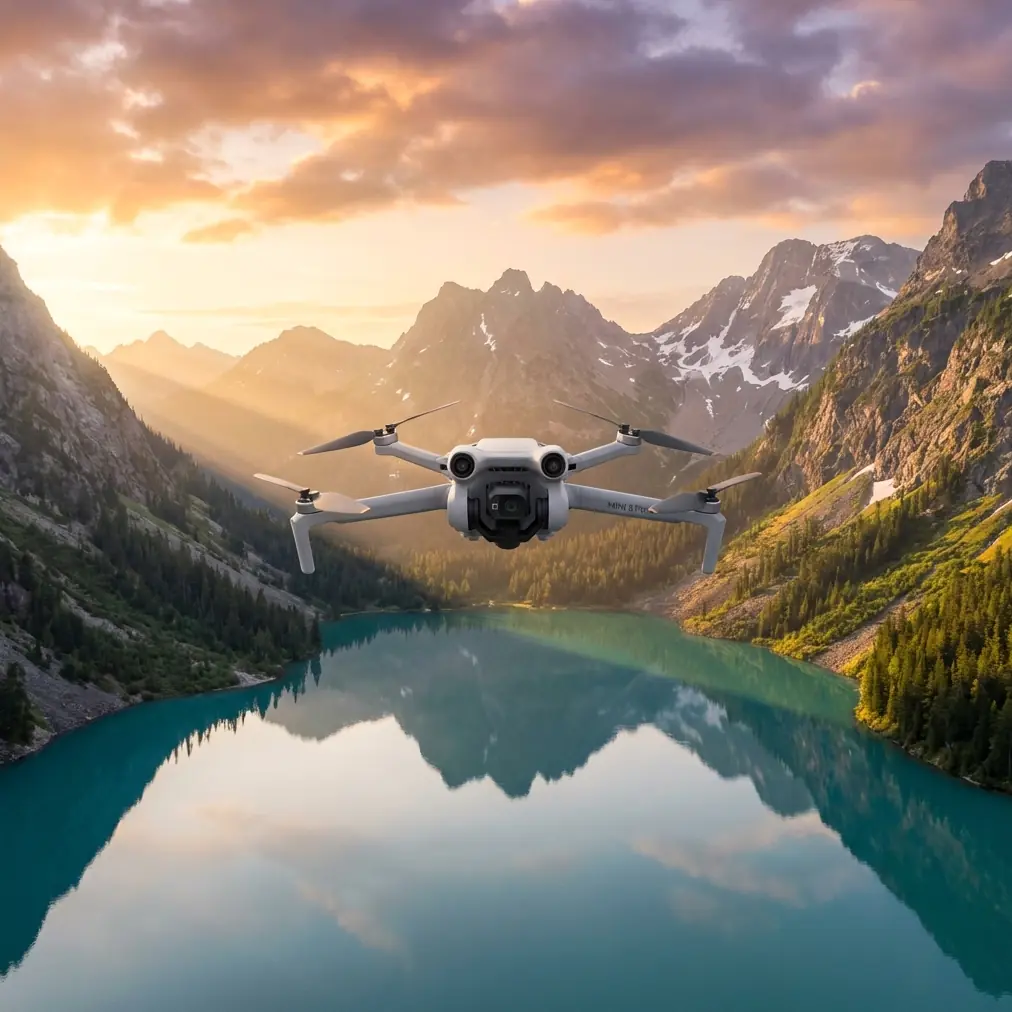
Mini 5 Pro at Altitude: A Wildlife Case Study in Thin Air, Fast Light, and Tight Margins
META: A field-tested Mini 5 Pro case study for high-altitude wildlife filming, covering obstacle avoidance, ActiveTrack, D-Log, Hyperlapse, and what matters when air gets thin.
High-altitude wildlife filming sounds romantic until you are actually there: cold fingers, unstable wind, glare off snow, and an animal that gives you maybe 12 seconds before it disappears behind rock. That is where the conversation around the Mini 5 Pro gets interesting. Not in a spec sheet vacuum, but in the field, where aircraft behavior, camera latitude, and tracking reliability decide whether you come home with a usable sequence or a few shaky seconds and a drained battery.
I’ve been looking at the Mini 5 Pro through that lens: not as a generic sub-250g drone for casual travel clips, but as a tool for creators trying to capture wildlife in high altitude where the operating envelope shrinks fast. If that is your use case, the real question is not whether the drone is “good.” The real question is whether it stays predictable when lift drops, subjects move unpredictably, and the light changes by the minute.
This is where the Mini 5 Pro appears to separate itself from many lightweight competitors. A lot of compact drones can produce attractive footage in calm, lowland conditions. Fewer maintain control confidence when the air is thinner and the pilot has only a narrow window to frame a moving subject without pushing too close. In that environment, obstacle sensing and subject tracking are not convenience features. They are margin.
The field scenario: one ridge, one herd, one chance
Let’s ground this in a realistic shoot. You are at elevation before sunrise, set up on a ridgeline, waiting for a small herd of mountain ungulates to move from shadow into first light. You cannot hike down and reposition without losing them. You also cannot fly aggressively because terrain is irregular, wind curls over the slope, and the animals are already alert.
The Mini 5 Pro makes sense here for one reason above all: access. A larger aircraft may offer more power, but not every wildlife shooter wants to carry a heavier platform, larger batteries, and a bulkier controller several miles uphill. The appeal of a Mini-class aircraft is obvious once the hike starts. But portability is only useful if the aircraft remains capable after launch.
At altitude, every gram matters and every correction costs energy. Thin air means propellers have less to bite into. Gusts can feel harsher because recovery takes more effort. That is why obstacle avoidance on a small drone deserves more respect than it usually gets. On paper, it sounds like a safety layer. In practice, on a mountainside, it can keep your attention where it belongs: reading animal movement and terrain lines, not overcorrecting every approach.
If the Mini 5 Pro delivers robust obstacle avoidance in a compact frame, that changes the way you can work a scene. You can maintain a cleaner lateral move along uneven rock faces without feeling like every second is a collision gamble. You still need disciplined flying. No system replaces judgment around wildlife or mountain conditions. But the difference between “possible” and “repeatable” often comes down to how much cognitive load the aircraft removes.
Why ActiveTrack matters more in wildlife than in travel content
Subject tracking gets oversold in marketing and underspecified in real-world discussion. For wildlife, it matters differently than it does for following a cyclist on an open trail. Animals do not move for the camera. They stop abruptly, bunch together, cross behind brush, and alter direction without pattern. If a drone loses the subject every time the contrast drops or the background gets complex, the feature becomes decorative.
That is why ActiveTrack, if well implemented on the Mini 5 Pro, is operationally significant. It can help hold composition when you are trying to keep distance from the animal rather than chase it. That distinction matters. Ethical wildlife filming at altitude is often less about pursuit and more about maintaining a respectful, stable offset while the subject moves naturally through terrain.
Imagine a side-profile tracking pass of a single animal traversing a snow-dusted slope. The terrain behind it alternates between dark stone and bright snow. Exposure shifts quickly. The subject may partially disappear behind outcroppings. A reliable tracking system lets the pilot concentrate on altitude separation, foreground layers, and line of travel instead of constantly rebuilding framing. That directly improves both safety and shot quality.
Compared with some lightweight competitors, this is where the Mini 5 Pro concept has the potential to excel. Many compact drones can lock onto obvious subjects in clean backgrounds. Fewer can maintain confidence when the scene is visually messy and the operator is deliberately giving the subject space. For wildlife creators, that reliability is more valuable than flashy automated moves you may never use.
D-Log is not just for colorists
High altitude brings some of the hardest light a small camera will face. Snow patches, pale rock, deep shadows, and sudden sun breaks can force a tiny sensor into ugly compromises. One moment the animal is backlit and rimmed beautifully. The next, the scene turns harsh and flat, and your highlights are one stop from clipping.
This is where D-Log becomes more than a buzzword. In a wildlife workflow, a flatter profile can preserve highlight detail in bright alpine conditions and keep enough shadow information for recovery when the subject passes through uneven light. That matters because you often do not get a second pass. You cannot ask a wild animal to repeat an entrance into the frame because your standard profile baked in too much contrast.
A lot of pilots underuse log capture on compact drones because it adds work in post. Fair point. But for high-altitude wildlife, the trade is often worth it. You are dealing with extreme tonal separation. A D-Log workflow gives you a better chance of balancing the brightness of snow, sky, and coat texture without the footage falling apart. If the Mini 5 Pro retains good color flexibility in these scenes, it becomes a much more serious storytelling tool than the “small travel drone” label suggests.
And there is another advantage: consistency across changing conditions. In the mountains, a sequence can move from blue pre-dawn shade to direct sun in minutes. A flatter profile gives you more room to match clips shot under different light without obvious jumps in contrast and saturation. For wildlife projects, continuity matters. One broken-looking cut can cheapen an otherwise exceptional sequence.
QuickShots and Hyperlapse are useful, but only in the right windows
QuickShots and Hyperlapse are often treated as lifestyle features, something for social clips and scenic reveals. That framing misses their real value in a mountain wildlife context. Used sparingly, they can provide environmental context before or after the animal action.
A Hyperlapse from a fixed safe position can show weather moving over a ridgeline or shadow lines crossing a basin, which helps explain the habitat and the timing of animal movement. That is not decoration. It gives the viewer spatial understanding and turns isolated wildlife clips into a coherent field story.
QuickShots are trickier. Around wildlife, automated moves must be used conservatively and never in a way that pressures the subject. But for non-animal setup shots, such as a reveal of the valley, camp position, or approach route, they can save time when your hands are cold and the light is changing fast. The Mini 5 Pro benefits if those modes are fast to initiate and easy to abort. In the mountains, hesitation is expensive. So is complexity.
Still, if I had to rank the operational value stack for this use case, QuickShots sit well below obstacle avoidance, ActiveTrack, and D-Log. Nice to have, yes. Mission critical, no.
The real competitor comparison
The easiest mistake in this segment is comparing mini drones by headline specs while ignoring how they are actually used. For high-altitude wildlife, the Mini 5 Pro would likely excel over many rivals not because of one dramatic figure, but because of how several systems combine.
A competitor may offer a compact body and decent image quality, but weaker obstacle sensing narrows your confidence around broken terrain. Another may advertise smart tracking, but if it loses the subject against patchy snow or brush, the feature stops being relevant. Another may produce pleasing standard color, but without a strong log option, harsh alpine light becomes harder to manage in post.
That is the point. Wildlife work in the mountains is cumulative. You need the aircraft to be portable enough to carry, stable enough to place, smart enough to reduce pilot load, and flexible enough in its image pipeline to survive ugly light. The Mini 5 Pro is strongest, in this framing, when viewed as a balanced field platform rather than a toy-sized camera drone.
If you are comparing options and want a practical second opinion on setup choices, field workflow, or mountain shooting strategy, you can message our flight team here.
What the shoot actually looks like when the system works
On a successful morning, the process is almost boring. That is a good sign.
You launch from a position with clear sightlines and conservative separation from the animals. The Mini 5 Pro climbs cleanly, settles into a hover without hunting, and gives you enough visual confidence to assess wind behavior before you commit. You identify a likely movement corridor. Rather than diving in, you hold an offset and let the subject enter the shot.
ActiveTrack helps preserve framing as the animal moves diagonally across the slope. Obstacle avoidance gives you more freedom to maintain the line without obsessing over every rock edge in the periphery. You expose to protect highlights because snow and sky can get bright quickly. D-Log keeps the contrast manageable for grading later.
Then the animal pauses. That is often the best moment. The strongest wildlife footage is not always motion-heavy. A still subject looking into weather with the terrain opening behind it can carry more editorial value than a dramatic chase-like move. A stable small drone excels here if it can hover with discipline and avoid micro-corrections that make the frame feel nervous.
Later, once the animals are gone, you use Hyperlapse to capture cloud movement spilling over the ridge. That single sequence can become the bridge shot that makes the entire piece feel intentional rather than assembled from disconnected clips.
Limitations that still matter
No compact drone escapes physics. High altitude reduces performance margins, period. Battery planning becomes stricter. Wind judgment becomes non-negotiable. Sensor size still places limits on low-light flexibility and noise control. And no tracking mode should be trusted blindly around wildlife or terrain.
That is why the Mini 5 Pro should be evaluated honestly. Its promise for this use case is not that it erases the difficulty of mountain flying. It is that it may give experienced pilots more usable margin inside a very demanding environment.
That margin can be the difference between aborting early and completing a clean sequence. For a creator hiking into thin air with a lightweight kit, that is not a minor advantage. It is the entire reason to choose this class of aircraft.
Final take
The Mini 5 Pro makes the most sense for high-altitude wildlife shooters when you stop thinking about it as a miniature all-rounder and start thinking about it as a precision tool for narrow windows. Obstacle avoidance matters because terrain in the mountains is unforgiving. ActiveTrack matters because wildlife rarely moves predictably. D-Log matters because alpine light can break small-camera footage in seconds. Hyperlapse and QuickShots matter when they are used to support the story, not distract from it.
That combination is where this model appears poised to outperform many lightweight competitors. Not through noise, but through composure.
And composure is exactly what you need when the air is thin, the subject is distant, and the shot will not happen twice.
Ready for your own Mini 5 Pro? Contact our team for expert consultation.