
Mini 5 Pro in Vineyard Heat and Cold: A Technical Review
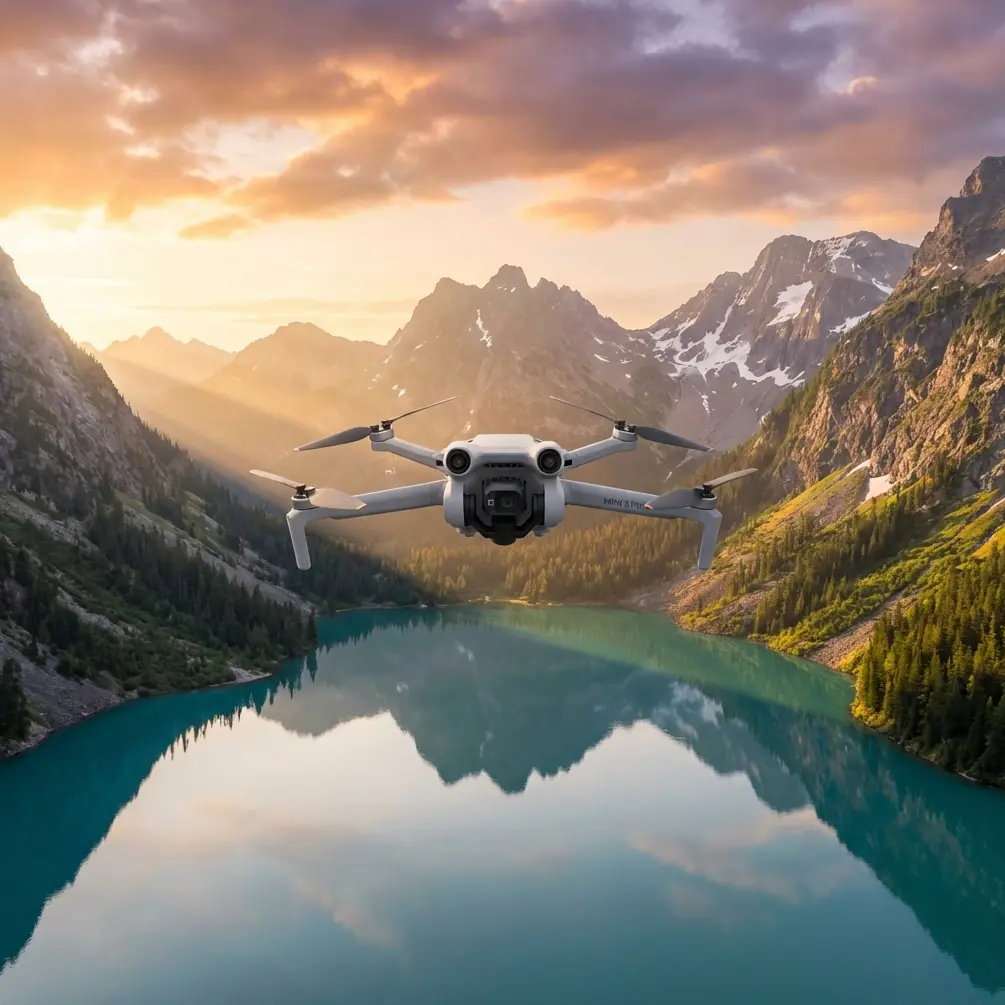
Mini 5 Pro in Vineyard Heat and Cold: A Technical Review for Cinematic Field Work
META: Expert Mini 5 Pro review for vineyard filming in extreme temperatures, with cinematic tracking, gimbal technique, obstacle avoidance, D-Log workflow, and real-world shooting strategy.
By Chris Park
Vineyards look calm from the road. They are not calm from the air.
Rows repeat until perspective starts playing tricks. Light bounces off leaves in hard midday sun, then collapses into low-contrast blue tones before dawn. In extreme temperatures, the aircraft is only part of the challenge. The other half is whether you can still produce controlled, emotionally readable footage when GPS quality shifts near terrain, signal gets unreliable around narrow passages, and the shot itself demands more than simply flying straight.
That is the lens through which I would evaluate the Mini 5 Pro.
This is not a generic “small drone for travel” discussion. For vineyard work, especially when you are trying to create film-grade movement rather than hobby footage, the useful question is whether the Mini 5 Pro can execute the core aerial shot families reliably: tracking, rotation, dive-style descents, pass-throughs, and locked hover compositions. Those are the categories that matter because they determine whether the drone can tell the story of a working estate rather than just record it.
The real standard isn’t image quality alone
One of the most useful ideas from older film aerial practice is still true now: the quality of the shot depends as much on camera control as flight control. In classic two-operator aerial production, the pilot and the gimbal operator have separate roles. The pilot manages direction and stability. The camera operator decides what the audience feels.
That distinction matters when assessing the Mini 5 Pro because many solo operators assume automation replaces that coordination. It doesn’t. Features like ActiveTrack, subject tracking, QuickShots, and obstacle avoidance reduce workload, but they do not replace shot design. In a vineyard, that difference shows up immediately.
Take a tracking shot of a utility vehicle moving between vine rows at sunrise. The aircraft may be capable of following the subject automatically, but if the framing drifts too centered and flat, the result feels like surveillance rather than cinema. A strong shot needs deliberate composition: keeping the subject in a meaningful part of the frame, preserving row geometry, and controlling speed so the vines stretch perspective without turning into visual noise.
The source material behind this article makes a sharp point on this: tracking shots are the ones directors want most, and they demand close coordination between flight path and camera placement. Operationally, that means a Mini 5 Pro user should treat ActiveTrack as an assistant, not an author. Use it to hold subject continuity while you refine altitude, lateral offset, and gimbal pitch to maintain emotion in the image.
Why vineyards expose weak flying habits
Vineyards are deceptively technical environments for small drones.
They are open enough to encourage confidence, but structured enough to punish sloppy movement. Repeating lines exaggerate yaw inconsistency. Sloped terrain makes altitude judgment harder than it looks on screen. Trellis systems, wires, trees on row edges, and occasional service roads create intermittent obstacle patterns rather than obvious barriers.
This is where obstacle avoidance on the Mini 5 Pro becomes operationally significant. Not because it lets you fly carelessly, but because it gives you a better margin when performing low lateral tracking or angled reveals through imperfect terrain. In extreme temperatures, that safety margin matters even more. Heat can tempt pilots into rushing takes to limit battery stress. Cold can make hands stiff and reaction timing less precise. A drone that helps you maintain spatial awareness supports consistency under pressure.
Still, no avoidance system changes the oldest aerial truth: narrow transitions are where confidence goes to die.
The source text discusses pass-through shots in canyons, valleys, and tunnels, noting that GPS signals in those areas are often poor enough that pilots may have to switch to manual control, with even the possibility of losing connection. That lesson translates directly to vineyard production. Think service sheds, tree-lined entrances, pergola sections, stone corridors near tasting facilities, or rows pinched by terrain. These are exactly the places where signal behavior can become less predictable and where automated confidence can mislead newer operators.
A particularly practical detail from the source is the suggestion that a pass-through route should be roughly three times wider than the aircraft. That is old-school advice, but it remains smart. Even if the Mini 5 Pro is compact and carries modern sensing, row-end entries and decorative estate architecture often look wider on the monitor than they are in real space. The “three times aircraft width” rule is a useful sanity check before attempting dramatic fly-throughs for promotional content.
Locked hover shots are underrated in vineyard storytelling
Every drone owner wants motion. Estates often need restraint.
One of the strongest applications for a Mini 5 Pro in vineyard documentation is the controlled fixed-position shot: hovering in place while the camera reframes across harvest activity, irrigation patterns, workers moving through rows, or fog lifting off a hillside parcel. The source material emphasizes how multi-rotor aircraft became especially suitable for stable and sustained fixed-point aerial work thanks to GPS-assisted hovering. That is not a glamorous detail, but for agricultural visuals it is one of the most valuable.
Why? Because fixed hover footage is where operational discipline shows.
If you are documenting vine health conditions across blocks or creating a branded estate sequence that needs to feel composed rather than flashy, a steady aerial lockoff does more than a restless orbit. It lets the geometry of the vineyard do the storytelling. The camera can pan or tilt into a new frame while the aircraft remains spatially anchored. That separation between platform stability and camera motion is what creates calm, premium-looking footage.
In hot conditions, this also has a practical benefit: less aggressive flight means lower thermal strain during the shot. In cold conditions, it reduces the amount of abrupt stick input required, which can help maintain smoother footage when your control feel is slightly degraded.
Rotation and descent shots: easy to overdo, hard to perfect
The source article notes that rotational aerial shots are often easier to execute than other moves, especially when the aircraft climbs or descends steadily while the gimbal rotates at a consistent pace. That assessment is dead right. These shots are common because they look sophisticated quickly. They are also common because they are one of the fastest ways to make a vineyard promo feel generic if the operator leans on them too often.
For the Mini 5 Pro, the smarter use of this move is selective. A slow rise above a central estate building with vines radiating outward can work beautifully if your yaw rate and gimbal motion are disciplined. The goal is not spin for its own sake. The goal is to reveal spatial relationships: tasting room to block layout, road to hillside, workers to scale.
Hyperlapse deserves a place here as well. In vineyard environments, it can turn changing light, drifting fog, or shadow movement across rows into something visually rich. But Hyperlapse is only as good as your start point. If the aircraft drifts into a composition with weak row alignment, the final clip looks messy no matter how clever the interval mode is. The Mini 5 Pro’s job is to provide stability and repeatability; your job is to establish geometry worth compressing in time.
D-Log matters more in vineyards than many operators expect
Vineyards in extreme temperatures usually come with extreme contrast. Summer sun on pale soil, reflective leaves, dark row gaps, bright sky, and shaded tasting structures can all sit in one frame. Winter or dawn conditions can do the opposite: low-angle light, cool cast, compressed midtones, and sudden specular highlights from frost or irrigation moisture.
This is where D-Log becomes more than a buzzword. If the Mini 5 Pro offers a solid log workflow, it gives the operator more room to preserve highlight detail in skies and maintain texture in shadowed rows without forcing an overly baked look in-camera. That extra latitude is useful not just for stylized edits but for consistency across a full estate shoot, where one block may be captured in golden light and another under harsher overhead conditions.
Operationally, this changes how you shoot. It encourages disciplined exposure choices rather than relying on standard profiles to look “finished” immediately. For vineyard brands that want a coherent visual identity across seasons, that is a serious advantage.
A third-party accessory that actually helps
Most accessories in drone culture solve imaginary problems. A high-quality variable ND filter set is not one of them.
For vineyard work in temperature extremes, a third-party ND kit can materially improve Mini 5 Pro footage. In hot, bright conditions, it helps maintain more natural shutter behavior for tracking shots and slower reveals, avoiding the brittle, hyper-sharp motion that small sensors can produce under intense sun. In colder, clearer conditions, it can keep wide sky highlights from dominating your exposure strategy.
If I were outfitting a Mini 5 Pro specifically for vineyard capture, an ND filter set would rank above many cosmetic add-ons. I have seen more improvement in shot coherence from proper motion rendering than from most convenience accessories. The aircraft may be small, but the audience still sees unnatural movement immediately.
The hidden challenge: signal confidence versus real-world terrain
There is another lesson embedded in the source material that deserves more attention. It points out that some locations with visually dramatic pass-through potential have very poor GPS performance and may force pilots into manual handling. That is not just a warning for canyon flyers. It is a reminder that confidence built in open parks does not transfer automatically to operational landscapes.
Vineyards can include ridges, tree buffers, retaining walls, metal outbuildings, and narrow access roads. A Mini 5 Pro pilot working in those conditions should build the shot in layers. First: high-altitude scouting pass. Second: conservative rehearsal. Third: final low pass only after verifying wind behavior, signal stability, and visual references near the route. If the shot starts to depend on luck, the setup is wrong.
That philosophy is far more valuable than any feature checklist.
Where QuickShots fit — and where they don’t
QuickShots have a place in vineyard production, but mostly as efficient support material rather than hero footage.
An orbit around a lone tree at the edge of a parcel, a pull-back from a tasting terrace, or a reveal over a crest can be useful in a mixed edit. The issue is predictability. Automated moves tend to produce familiar visual rhythms, and vineyard brands often benefit from footage that feels site-specific rather than template-driven.
The Mini 5 Pro becomes more interesting when QuickShots are used for speed on secondary scenes, freeing time and battery for more carefully built manual or semi-assisted tracking shots. That is a workflow decision, not a menu preference.
Final assessment for Mini 5 Pro vineyard creators
If your intended use is filming vineyards in harsh summer heat, sharp morning cold, or fast-changing shoulder-season conditions, the Mini 5 Pro should be judged on control behavior, not spec-sheet theater.
Can it hold a fixed aerial composition with enough precision to let the landscape breathe? Can it help you track moving subjects through repetitive geometry without flattening the image? Can obstacle avoidance reduce risk in low-altitude row work without creating false confidence near tight estate structures? Can D-Log preserve enough tonal flexibility for high-contrast agricultural scenes? Those are the questions that matter.
The older production wisdom cited in the source still holds up remarkably well. Stable tracking is the shot everyone wants, but it only works when aircraft direction and camera intention stay synchronized. Fixed-point hovering remains one of the most effective ways to make multi-rotor platforms earn their keep. And when the route gets narrow, poor signal and overconfidence are still bigger threats than the aircraft’s published intelligence.
If you are planning a Mini 5 Pro setup for vineyard operations and want a practical recommendation on filters, shot planning, or hot-weather workflow, you can reach me through this direct field setup chat.
The Mini 5 Pro is at its best when treated as a compact aerial camera platform, not an autopilot miracle. In vineyards, that distinction shows up in every frame.
Ready for your own Mini 5 Pro? Contact our team for expert consultation.