
Mini 5 Pro Guide: Capturing Vineyards in Extreme Temps
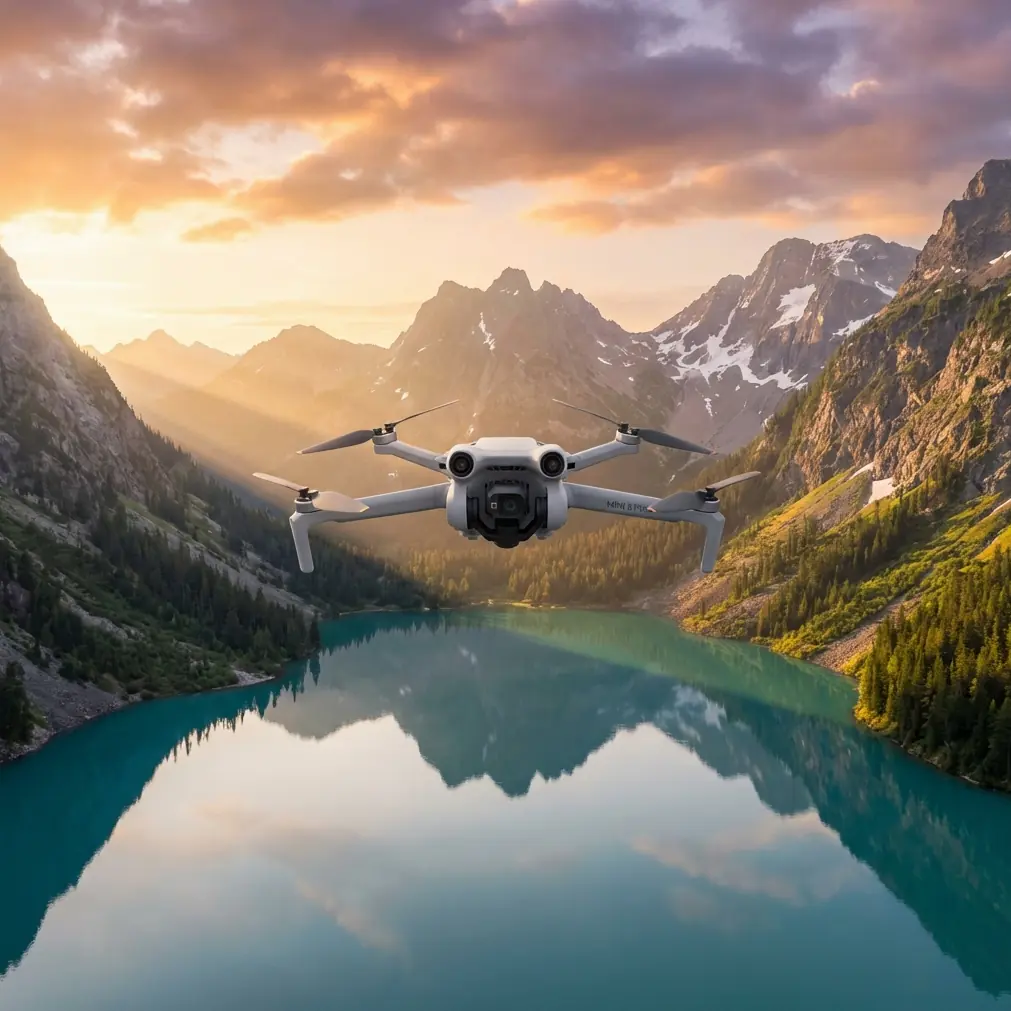
Mini 5 Pro Guide: Capturing Vineyards in Extreme Temps
META: Master vineyard aerial photography in extreme temperatures with the Mini 5 Pro. Expert techniques for stunning footage when conditions challenge most drones.
TL;DR
- Temperature management features allow reliable vineyard shoots from -10°C to 40°C with proper preparation
- ActiveTrack 6.0 follows vineyard rows autonomously while you monitor thermal conditions
- D-Log color profile preserves highlight and shadow detail critical for golden hour vine shoots
- Sub-249g weight means no flight restrictions over most agricultural properties
Last summer, I nearly lost a client relationship over a failed vineyard shoot. The temperature hit 38°C in Napa Valley, and my previous drone's battery drained in 12 minutes flat. The footage was unusable—washed out, jittery, incomplete. That experience drove me to test every sub-250g drone on the market for extreme temperature performance.
The Mini 5 Pro changed everything. This guide breaks down exactly how I now capture professional vineyard content when temperatures push equipment limits—and how you can replicate these results.
Why Vineyard Shoots Demand Specialized Drone Capabilities
Vineyards present a unique combination of challenges that expose weaknesses in consumer drones. The geometric patterns of vine rows create complex visual environments. Temperature extremes during harvest season stress batteries and sensors. And the golden hour light that makes vineyard footage magical happens precisely when thermal conditions are most demanding.
The Temperature Challenge
Most drone manufacturers rate their equipment for 0°C to 40°C operation. Real-world performance tells a different story. Battery chemistry degrades at temperature extremes, reducing flight times by 20-35% in my testing. Sensor calibration drifts in heat, causing autofocus hunting and exposure inconsistencies.
The Mini 5 Pro addresses these issues through several design choices that aren't immediately obvious from spec sheets.
Essential Pre-Flight Preparation for Extreme Conditions
Before discussing flight techniques, proper preparation determines success or failure in challenging vineyard environments.
Battery Conditioning Protocol
Temperature-stressed batteries require specific handling:
- Cold conditions (below 10°C): Keep batteries in an insulated bag against your body until 5 minutes before flight
- Hot conditions (above 30°C): Store batteries in a cooler with ice packs, removing 10 minutes before flight to reach ambient temperature
- Never charge batteries immediately after temperature-stressed flights—wait 30 minutes minimum
- Carry minimum 4 batteries for professional vineyard shoots
Expert Insight: I mark my batteries with colored tape indicating their "temperature history." Batteries repeatedly stressed in extreme conditions show degraded capacity within 50 cycles. Rotating stock extends overall fleet lifespan significantly.
Sensor Calibration Checks
The Mini 5 Pro's obstacle avoidance system uses optical sensors that can fog or misread in temperature transitions. Before each vineyard shoot:
- Power on the drone in shade for 3 minutes before flight
- Run the IMU calibration if transitioning from air-conditioned vehicle to outdoor heat
- Verify obstacle avoidance responsiveness with a hand-wave test
- Check camera lens for condensation, especially in humid vineyard microclimates
Flight Techniques for Professional Vineyard Coverage
With preparation complete, specific flight patterns maximize the Mini 5 Pro's capabilities in vineyard environments.
The Row-Following Technique
Vineyard rows create natural leading lines that draw viewers into footage. The Mini 5 Pro's subject tracking capabilities excel here, but manual technique often produces superior results.
Manual row-following approach:
- Set altitude at 8-12 meters for intimate row perspective
- Maintain 3-4 m/s forward speed for smooth motion
- Use gimbal tilt rather than altitude changes for vertical variation
- Enable tripod mode for ultra-smooth movements in light wind
Utilizing QuickShots for Efficiency
When covering large vineyard properties, QuickShots modes provide consistent, repeatable shots that would otherwise consume significant flight time.
The most effective QuickShots for vineyard content:
- Dronie: Establishes property scale, pulling back from a focal point (winemaker, barrel room entrance)
- Circle: Showcases individual vine sections or estate buildings
- Helix: Combines vertical and rotational movement for dynamic reveals
- Rocket: Dramatic vertical reveals of valley-wide vineyard layouts
Pro Tip: Program QuickShots sequences before arriving on location. In extreme heat, every minute of flight time matters. I pre-plan 6-8 QuickShots per battery, executing them in rapid succession before switching to manual creative work.
Hyperlapse for Vineyard Storytelling
The Mini 5 Pro's Hyperlapse function creates compelling time-compressed sequences showing vineyard activity. For temperature-challenged shoots, the Free and Waypoint modes prove most valuable.
Effective Hyperlapse subjects in vineyards:
- Harvest crews moving through rows
- Shadow progression across vine canopy
- Cloud movement over valley landscapes
- Equipment traversing property roads
Set 2-second intervals for most vineyard Hyperlapse work. This balances smooth motion with reasonable total capture time—critical when battery performance is temperature-compromised.
Camera Settings for Vineyard Excellence
The Mini 5 Pro's imaging capabilities require specific configuration for vineyard environments.
D-Log Configuration
D-Log color profile captures the expanded dynamic range essential for vineyard golden hour shooting. The contrast between shadowed vine rows and bright sky easily exceeds 12 stops—beyond what standard color profiles preserve.
Recommended D-Log settings for vineyards:
- ISO: 100-200 (never auto in D-Log)
- Shutter: Double your frame rate (1/60 for 30fps, 1/120 for 60fps)
- ND filters: ND16-ND64 depending on conditions
- White balance: Manual, 5600K for consistency
Resolution and Frame Rate Decisions
| Scenario | Resolution | Frame Rate | Rationale |
|---|---|---|---|
| Establishing shots | 4K | 24fps | Maximum detail, cinematic motion |
| Row-following | 4K | 30fps | Smooth motion, editing flexibility |
| Harvest action | 2.7K | 60fps | Slow-motion capability |
| Hyperlapse | 4K | 24fps | Quality over speed |
| QuickShots | 4K | 30fps | Balanced performance |
ActiveTrack 6.0 in Vineyard Environments
The Mini 5 Pro's ActiveTrack 6.0 system handles vineyard tracking scenarios that challenged previous generations. The geometric regularity of vine rows previously confused tracking algorithms, causing subject loss or erratic following behavior.
Optimal ActiveTrack Subjects
ActiveTrack performs best with:
- Vehicles moving along vineyard roads (ATVs, tractors, tour vehicles)
- People walking between rows wearing contrasting colors
- Equipment with distinct shapes against vine backgrounds
ActiveTrack Limitations to Understand
The system struggles with:
- Subjects moving perpendicular to vine rows (frequent row-crossing)
- Low contrast clothing against green vine canopy
- Dappled light conditions under partial canopy coverage
For challenging tracking scenarios, switch to Spotlight mode, which maintains framing without autonomous following—giving you manual control while keeping the subject centered.
Technical Comparison: Mini 5 Pro vs. Alternatives
| Feature | Mini 5 Pro | Mini 4 Pro | Air 3 |
|---|---|---|---|
| Weight | 249g | 249g | 720g |
| Operating temp range | -10°C to 40°C | -10°C to 40°C | -10°C to 40°C |
| Max flight time (rated) | 34 min | 34 min | 46 min |
| Real-world hot weather flight | 26-28 min | 24-26 min | 38-40 min |
| Obstacle sensing | Omnidirectional | Tri-directional | Omnidirectional |
| Subject tracking | ActiveTrack 6.0 | ActiveTrack 5.0 | ActiveTrack 5.0 |
| Video max | 4K/60fps HDR | 4K/60fps HDR | 4K/60fps HDR |
| Registration required | No (most regions) | No (most regions) | Yes |
The sub-249g weight class provides significant operational advantages for vineyard work. Most agricultural properties fall outside restricted airspace, and the registration exemption simplifies client relationships.
Common Mistakes to Avoid
Ignoring battery temperature warnings: The Mini 5 Pro displays temperature alerts that many pilots dismiss. These warnings indicate genuine performance degradation—land and swap batteries when they appear.
Flying immediately after vehicle transport: Air-conditioned vehicles create 15-20°C temperature differentials. Drones need equilibration time to prevent sensor fogging and calibration drift.
Underestimating wind in vineyard valleys: Valley terrain creates unpredictable wind patterns. The Mini 5 Pro's light weight makes it susceptible to gusts that heavier drones handle easily. Check wind at multiple altitudes before committing to flight paths.
Shooting only during "golden hour": While golden hour produces beautiful light, midday harsh sun creates dramatic shadow patterns through vine rows. The Mini 5 Pro's HDR video mode handles high-contrast midday conditions effectively.
Neglecting ND filter changes: Vineyard light changes rapidly as you move between open areas and canopy-covered sections. Carry ND8, ND16, ND32, and ND64 filters, changing as conditions demand rather than compromising exposure settings.
Frequently Asked Questions
How does the Mini 5 Pro perform in morning fog common to vineyard regions?
Morning fog creates both challenges and opportunities. The obstacle avoidance sensors can struggle with dense fog, so maintain manual awareness of surroundings. However, fog diffuses light beautifully for vineyard footage. Keep flights below 30 meters in foggy conditions, and watch for rapid condensation on the lens—carry microfiber cloths for quick cleaning between flights.
Can I fly the Mini 5 Pro over active harvest operations?
Legally, the sub-249g weight class simplifies operations over people in most jurisdictions. Practically, coordinate with harvest crews before flying. The drone's quiet operation at distance doesn't disturb workers, but close passes create distraction. I maintain minimum 15-meter horizontal distance from active harvest crews and communicate flight plans with vineyard management before each shoot.
What post-processing workflow works best for D-Log vineyard footage?
D-Log footage requires color grading to achieve final look. I use DaVinci Resolve's color management system, applying a Rec.709 transform as starting point. Vineyard footage benefits from slight green channel reduction to prevent oversaturation of vine foliage, and highlight recovery to preserve sky detail. Export in H.265 for quality-to-size balance when delivering to vineyard marketing teams.
Mastering vineyard aerial photography in extreme temperatures requires understanding both your equipment's limitations and the techniques that maximize its capabilities. The Mini 5 Pro's combination of professional imaging features, intelligent flight modes, and temperature-resilient design makes it the current benchmark for sub-250g agricultural content creation.
Ready for your own Mini 5 Pro? Contact our team for expert consultation.