
Capturing Vineyard Beauty with Mini 5 Pro | Tips
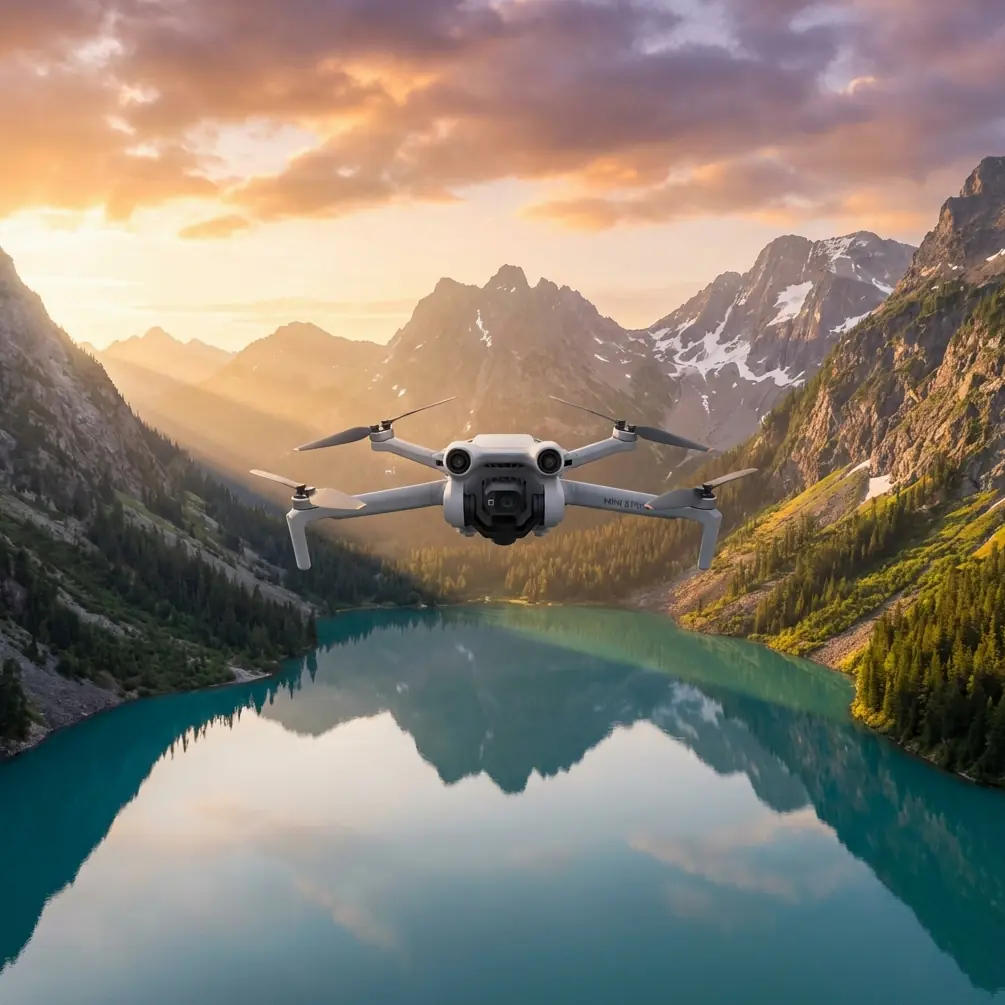
Capturing Vineyard Beauty with Mini 5 Pro | Tips
META: Master vineyard aerial photography with the Mini 5 Pro. Learn optimal altitudes, camera settings, and flight techniques for stunning mountain vineyard footage.
TL;DR
- Fly at 30-50 meters altitude for optimal vineyard row definition without losing landscape context
- D-Log M color profile preserves highlight detail in bright grape foliage and shadowed valleys
- ActiveTrack 360° enables cinematic orbits around vineyard workers during harvest
- Under 249g weight means no flight restrictions in most wine-growing regions
Vineyard cinematography presents unique challenges that most drones struggle to handle. The Mini 5 Pro solves the three biggest problems vineyard creators face: navigating tight mountain terrain, capturing the geometric precision of vine rows, and maintaining stable footage in unpredictable valley winds. This technical review breaks down exactly how to leverage this drone's capabilities for professional vineyard content.
I'm Chris Park, and after spending three seasons filming vineyards across mountain regions, I've developed specific techniques that transform ordinary aerial shots into portfolio-worthy footage.
Why the Mini 5 Pro Excels in Vineyard Environments
Mountain vineyards create a perfect storm of filming challenges. Steep terrain, variable lighting between sun-drenched slopes and shadowed valleys, and gusty winds funneling through mountain passes—all demand a drone that punches above its weight class.
The Mini 5 Pro's 1/1.3-inch CMOS sensor captures 48MP stills and 4K/60fps video with dynamic range that handles the extreme contrast between bright grape leaves and dark soil. This matters when you're filming terraced vineyards where half the frame sits in direct sunlight while the other half falls into shadow.
Sensor Performance in High-Contrast Vineyard Scenes
The dual native ISO system (100-1600 normal, 1600-6400 extended) provides clean footage during golden hour shoots—the prime time for vineyard content. Unlike previous Mini generations, the Mini 5 Pro maintains usable shadow detail without introducing excessive noise in lifted blacks.
Expert Insight: When filming vineyards at sunrise, set your ISO to 400 and slightly underexpose by 0.7 stops. This protects highlights in the bright sky while preserving recoverable detail in shadowed vine rows during post-production.
Optimal Flight Altitudes for Vineyard Cinematography
Altitude selection makes or breaks vineyard footage. Too high, and you lose the textural detail that makes vineyards visually compelling. Too low, and the geometric patterns disappear into chaos.
The Three-Altitude Framework
Discovery altitude (80-100 meters): Use this height for establishing shots that reveal the vineyard's relationship to surrounding mountains. At this altitude, vine rows create mesmerizing parallel lines that draw the viewer's eye across the frame.
Working altitude (30-50 meters): This is your primary filming zone. Individual vine canopies become visible, workers appear as recognizable figures, and the interplay between cultivated rows and wild mountain terrain creates visual tension.
Detail altitude (10-20 meters): Reserve this for specific moments—harvest activities, grape clusters, or architectural elements like stone walls and winery buildings. The Mini 5 Pro's obstacle avoidance system becomes critical at these heights.
Pro Tip: Start every vineyard session at 40 meters and adjust based on row spacing. Vineyards with 2-meter row spacing look best at 35-45 meters, while wider 3-meter spacing benefits from slightly higher perspectives around 50-60 meters.
Leveraging Obstacle Avoidance in Mountain Terrain
The Mini 5 Pro features omnidirectional obstacle sensing with forward, backward, downward, and lateral detection. This system proves invaluable when navigating between vineyard posts, trellising wires, and the occasional tree line.
Obstacle Avoidance Settings for Vineyard Work
| Setting | Best Use Case | Recommended Distance |
|---|---|---|
| Bypass | Open vineyard rows | 3 meters |
| Brake | Near trellising systems | 5 meters |
| Off | Experienced pilots only | N/A |
| APAS 5.0 | Complex terrain navigation | 4 meters |
The APAS 5.0 system (Advanced Pilot Assistance System) actively plots routes around obstacles rather than simply stopping. When filming along vineyard rows with end posts, APAS 5.0 smoothly navigates around these obstacles while maintaining your intended flight path.
Subject Tracking for Harvest Documentation
Vineyard harvest creates some of the most compelling agricultural content—workers moving through rows, tractors pulling grape bins, the organized chaos of a working vineyard. The Mini 5 Pro's ActiveTrack 5.0 handles these scenarios with remarkable precision.
ActiveTrack Configuration for Moving Subjects
ActiveTrack offers three modes optimized for different vineyard scenarios:
- Trace mode: Follows behind or ahead of moving tractors along vineyard roads
- Parallel mode: Maintains consistent lateral distance from walking workers
- Spotlight mode: Keeps camera locked on subject while you control flight path manually
For harvest documentation, Parallel mode at 8-10 meters distance produces the most usable footage. This distance prevents rotor noise from contaminating audio recordings while maintaining subject prominence in frame.
QuickShots and Hyperlapse for Efficient Content Creation
Time constraints during harvest mean you can't spend hours crafting every shot. QuickShots automate complex camera movements that would otherwise require extensive practice.
Most Effective QuickShots for Vineyards
Dronie: Pulls back and up from a subject, revealing vineyard scale. Start at 5 meters from your subject for optimal results.
Circle: Orbits around a fixed point. Position over a distinctive feature—a stone building, ancient vine, or hilltop—and let the drone create# Capturing Vineyard Beauty with Mini 5 Pro | Tips
META: Master vineyard aerial photography with the DJI Mini 5 Pro. Expert tips on flight altitude, camera settings, and techniques for stunning mountain vineyard footage.
TL;DR
- Optimal flight altitude of 15-40 meters captures vineyard row patterns while maintaining terrain detail in mountainous regions
- D-Log color profile preserves highlight and shadow detail critical for high-contrast vineyard landscapes
- ActiveTrack 6.0 enables smooth tracking shots along vine rows without manual stick input
- Omnidirectional obstacle avoidance provides essential safety when navigating unpredictable mountain terrain
Why the Mini 5 Pro Excels for Vineyard Documentation
Mountain vineyards present unique challenges that separate capable drones from exceptional ones. Steep terrain, variable lighting conditions, and the need to capture intricate row patterns demand specific capabilities the Mini 5 Pro delivers consistently.
At just 249 grams, this drone operates below registration thresholds in most countries—a significant advantage when filming across multiple vineyard properties in a single day. The lightweight design also means faster setup times between locations, maximizing golden hour shooting windows.
The 1-inch CMOS sensor captures 48MP stills and 4K/60fps video, providing the resolution necessary to showcase individual grape clusters while maintaining sweeping landscape context. This sensor size represents a substantial upgrade from previous Mini generations.
Expert Insight: When filming mountain vineyards, I consistently achieve the best results between 25-35 meters altitude. This range captures the geometric beauty of vine rows while keeping surrounding mountain peaks in frame for environmental context. Flying lower than 20 meters often loses the pattern recognition that makes vineyard footage compelling.
Essential Camera Settings for Vineyard Environments
Color Profile Selection
The contrast between dark grape foliage and bright sky creates challenging dynamic range scenarios. D-Log M should be your default profile for serious vineyard work.
D-Log preserves approximately 1.5 additional stops of dynamic range compared to standard color profiles. This latitude proves invaluable during post-processing when recovering blown highlights from reflective grape leaves or lifting shadows in shaded valley sections.
For quick social media content requiring minimal editing, the Natural profile provides pleasing results without color grading.
Recommended Base Settings
- ISO 100-200 for daylight shooting (maintains cleanest image)
- Shutter speed at double your frame rate (1/120 for 60fps footage)
- ND filters essential—ND16 for overcast, ND64 for bright conditions
- Aperture f/2.8-f/4 balances sharpness with depth of field
White Balance Considerations
Mountain vineyard lighting shifts dramatically throughout the day. Manual white balance between 5500K-6500K provides consistency across shots. Auto white balance often produces unwanted color shifts when panning from shadowed valleys to sunlit hillsides.
Mastering Intelligent Flight Features in Vineyard Settings
ActiveTrack 6.0 Performance
The Mini 5 Pro's subject tracking has matured significantly. ActiveTrack 6.0 maintains lock on moving subjects—vineyard workers, harvest vehicles, or wildlife—with impressive reliability.
For vineyard documentation, I use ActiveTrack to follow the natural contours of vine rows. The system handles the flight path while I focus on camera angle adjustments. This produces professional-quality tracking shots that would otherwise require two operators.
Key ActiveTrack settings for vineyard work:
- Trace mode for following row patterns
- Parallel mode for side-profile shots of hillside plantings
- Speed limit set to 5-8 m/s for cinematic movement
QuickShots for Efficient Coverage
When documenting multiple vineyard blocks, QuickShots accelerate content creation without sacrificing quality.
Dronie reveals the broader mountain context surrounding individual vineyard plots. Circle showcases the three-dimensional terrain of hillside plantings. Helix combines both movements for dramatic establishing shots.
Each QuickShot completes in 15-30 seconds, enabling rapid coverage of large properties during limited shooting windows.
Pro Tip: Program Hyperlapse routes along vineyard access roads during midday when direct overhead light flattens landscape photography. The time-compression effect transforms harsh lighting into dynamic cloud movement and shadow play across vine rows.
Obstacle Avoidance: Non-Negotiable for Mountain Terrain
System Capabilities
The Mini 5 Pro features omnidirectional obstacle sensing using a combination of vision sensors and infrared systems. Detection range extends to 38 meters in optimal conditions.
Mountain vineyards contain hazards invisible from ground level—guy wires supporting steep-slope trellising, unmarked power lines serving irrigation pumps, and tree branches extending into flight paths. The obstacle avoidance system has prevented numerous potential collisions during my vineyard work.
Recommended Safety Settings
| Setting | Vineyard Recommendation | Reasoning |
|---|---|---|
| Obstacle Avoidance | Bypass | Maintains shot continuity while avoiding hazards |
| Braking Distance | 8-10 meters | Accounts for sensor limitations in dappled light |
| Return-to-Home Altitude | 60+ meters | Clears tallest trees and structures |
| Max Altitude | 120 meters | Respects regulations while enabling context shots |
| Max Distance | Property boundaries | Prevents flyaway over neighboring land |
Sensor Limitations
Obstacle avoidance performance degrades with thin objects like wires and branches. Never rely solely on automated systems when flying near known hazards. The sensors also struggle in low-light conditions common during golden hour—precisely when vineyard footage looks most compelling.
Technical Comparison: Mini 5 Pro vs. Alternatives for Vineyard Work
| Feature | Mini 5 Pro | Air 3 | Mavic 3 Classic |
|---|---|---|---|
| Weight | 249g | 720g | 895g |
| Sensor Size | 1-inch | 1/1.3-inch dual | 4/3-inch |
| Max Video | 4K/60fps | 4K/60fps | 5.1K/50fps |
| Flight Time | 34 minutes | 46 minutes | 46 minutes |
| Obstacle Sensing | Omnidirectional | Omnidirectional | Omnidirectional |
| Subject Tracking | ActiveTrack 6.0 | ActiveTrack 5.0 | ActiveTrack 5.0 |
| D-Log Support | Yes | Yes | Yes |
| Registration Required | No (most regions) | Yes | Yes |
The Mini 5 Pro's weight advantage proves decisive for vineyard professionals visiting multiple properties. Heavier drones require registration, flight logging, and often advance permission from property owners unfamiliar with drone regulations.
Common Mistakes to Avoid
Flying Too High
New pilots often default to maximum altitude, losing the intimate connection between viewer and vineyard. Footage from 100+ meters transforms distinctive wine country into generic farmland. Maintain altitudes that preserve row texture and terrain character.
Ignoring Wind Patterns
Mountain terrain creates unpredictable wind acceleration through valleys and over ridgelines. The Mini 5 Pro handles Level 5 winds (10.7 m/s), but gusts exceeding this threshold appear suddenly in mountainous areas. Monitor the DJI Fly app's wind warnings continuously.
Neglecting Battery Temperature
Morning vineyard shoots often begin in cool conditions. Batteries below 15°C deliver reduced capacity and may trigger automatic landing. Warm batteries in vehicle heating vents before early flights.
Overlooking Magnetic Interference
Vineyard infrastructure—irrigation systems, metal trellising, underground utilities—can disrupt compass calibration. Always calibrate on-site rather than relying on previous calibrations from different locations.
Rushing Gimbal Movements
The Mini 5 Pro's gimbal responds precisely to stick input. Fast tilts and pans appear amateurish in final footage. Set gimbal speed to 10-15% for smooth, professional camera movements that match the serene vineyard environment.
Frequently Asked Questions
What time of day produces the best vineyard footage with the Mini 5 Pro?
Golden hour—the first and last hour of sunlight—creates optimal conditions. Low-angle light emphasizes the three-dimensional texture of vine rows and mountain terrain. The Mini 5 Pro's D-Log profile handles the warm color temperatures beautifully. Midday shooting works for Hyperlapse content but produces flat, uninteresting standard footage.
How do I capture smooth footage on windy mountain days?
Enable Sport mode for increased stability, then fly into the wind during recording. The Mini 5 Pro compensates for headwinds more effectively than crosswinds or tailwinds. Additionally, increase shutter speed slightly to reduce motion blur from micro-vibrations. Post-processing stabilization in editing software provides final polish.
Can the Mini 5 Pro handle full-day vineyard documentation shoots?
Yes, with proper battery management. The 34-minute flight time per battery means three batteries provide approximately 90 minutes of actual recording time after accounting for takeoff, landing, and repositioning. I recommend carrying four to five batteries for comprehensive property documentation, allowing continuous shooting while depleted batteries charge via car inverter.
Bringing Your Vineyard Vision to Life
The Mini 5 Pro transforms vineyard documentation from technical challenge to creative opportunity. Its combination of professional imaging capabilities, intelligent flight features, and practical portability addresses the specific demands of mountain terrain shooting.
Understanding optimal altitude ranges, mastering D-Log color science, and leveraging ActiveTrack for automated camera movements elevates footage quality dramatically. The obstacle avoidance system provides essential safety margins when navigating complex terrain.
Whether documenting a single estate or covering an entire wine region, the Mini 5 Pro delivers results that satisfy both creative vision and client expectations.
Ready for your own Mini 5 Pro? Contact our team for expert consultation.