
How to Capture Stunning Vineyard Footage with Mini 5 Pro
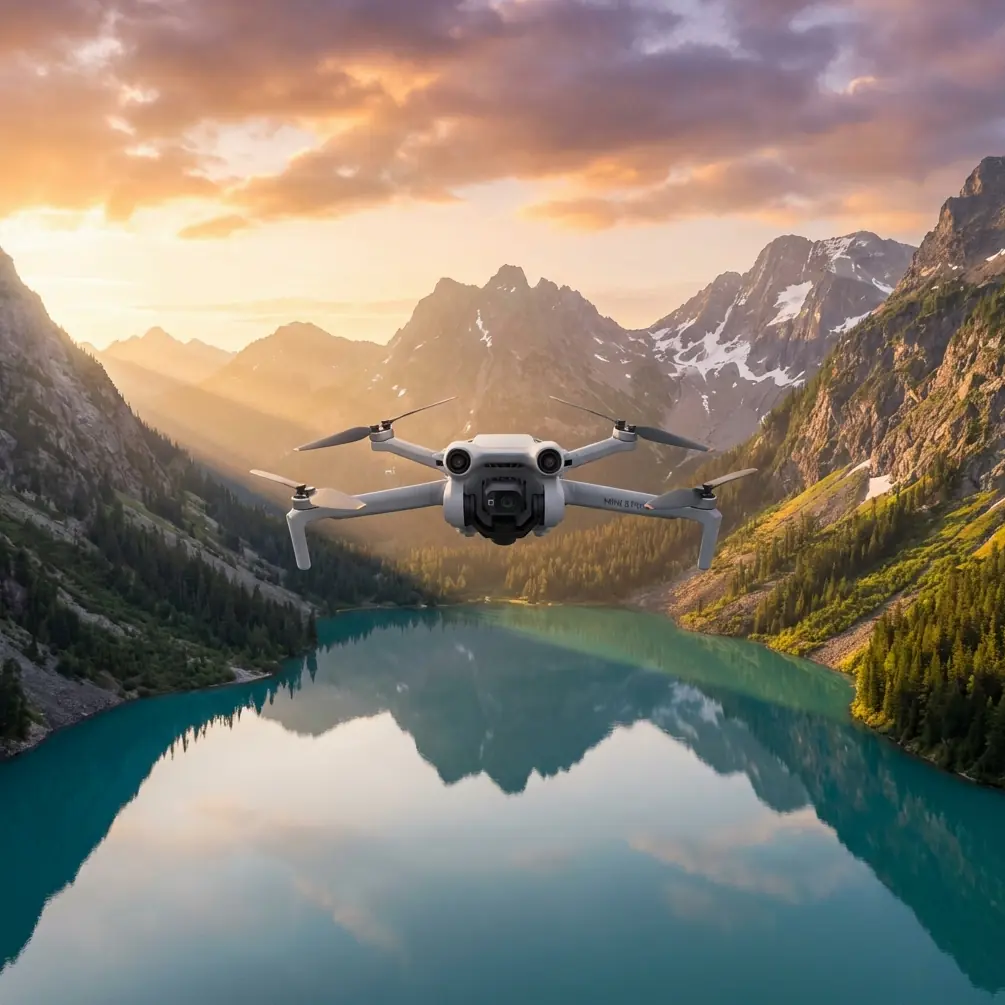
How to Capture Stunning Vineyard Footage with Mini 5 Pro
META: Master vineyard aerial photography with Mini 5 Pro. Learn expert techniques for complex terrain, battery management, and cinematic shots that showcase wine country.
TL;DR
- Obstacle avoidance sensors navigate vine rows and hillside terrain without manual intervention
- D-Log color profile preserves highlight and shadow detail in high-contrast vineyard lighting
- ActiveTrack 6.0 follows harvest vehicles and workers through winding paths automatically
- Battery rotation strategy extends flight sessions to capture golden hour completely
Vineyard photography presents unique challenges that ground most consumer drones. The Mini 5 Pro's 249-gram frame combined with professional-grade sensors makes it the first sub-250g aircraft capable of navigating complex agricultural terrain while delivering broadcast-quality footage.
This tutorial breaks down my field-tested workflow for capturing wine country aerials—from pre-flight planning through post-production color grading.
Understanding Vineyard Terrain Challenges
Wine regions rarely feature flat, open landscapes. Napa Valley, Tuscany, and Bordeaux share common obstacles: steep hillsides, dense vine canopies, and unpredictable wind corridors between rows.
The Mini 5 Pro addresses these challenges through its omnidirectional sensing system. Four wide-angle vision sensors detect obstacles in all directions simultaneously, creating a protective bubble around the aircraft.
Terrain Types You'll Encounter
Different vineyard layouts demand different flight approaches:
- Terraced hillsides: Require constant altitude adjustments and careful descent planning
- Valley floor plantings: Present wind tunnel effects between long, straight rows
- Mixed-use properties: Combine vines with trees, buildings, and water features
- Harvest-active zones: Include moving vehicles, workers, and temporary equipment
Each scenario benefits from the Mini 5 Pro's APAS 6.0 (Advanced Pilot Assistance System), which automatically routes around detected obstacles rather than simply stopping.
Pre-Flight Configuration for Agricultural Environments
Before launching in vineyard settings, adjust these critical settings to optimize performance.
Camera Settings for Wine Country
Vineyard footage demands specific camera configuration to handle extreme dynamic range. Morning fog, midday sun, and golden hour each present distinct challenges.
| Setting | Recommended Value | Reason |
|---|---|---|
| Color Profile | D-Log | Maximum dynamic range for grading |
| Resolution | 4K/60fps | Smooth slow-motion capability |
| Shutter Speed | 1/120s (for 60fps) | Double frame rate rule |
| ISO | 100-400 | Minimize noise in shadows |
| White Balance | Manual (5600K) | Consistent color across clips |
Pro Tip: Lock white balance manually before each flight session. Auto white balance shifts dramatically when flying from shaded vine rows into open sky, creating color matching nightmares in post-production.
Obstacle Avoidance Configuration
The default obstacle avoidance settings work well for casual flying but require adjustment for vineyard work.
Navigate to Settings > Safety > Obstacle Avoidance and configure:
- Avoidance Mode: Bypass (not Brake)
- Detection Distance: 8 meters minimum
- Downward Sensing: Always On
- Display Radar: Enabled
Bypass mode allows the aircraft to route around obstacles automatically rather than stopping mid-shot. This maintains smooth footage when unexpected branches or support wires appear in your flight path.
Essential Flight Patterns for Vineyard Coverage
Certain flight patterns consistently produce compelling vineyard footage. Master these five movements before attempting complex sequences.
The Row Reveal
Start positioned 15 meters above the end of a vine row, facing down the corridor. Fly forward slowly while simultaneously descending to 3 meters altitude. The perspective shift creates dramatic depth as rows stretch toward the horizon.
ActiveTrack enhances this shot when workers or vehicles occupy the row. Lock focus on your subject, then execute the descent—the Mini 5 Pro maintains framing automatically while you concentrate on altitude and speed.
The Hillside Sweep
Position the drone at the base of a terraced hillside, 50 meters from the slope. Execute a slow lateral movement while gradually gaining altitude. This reveals the full scope of terraced plantings in a single, sweeping motion.
Subject tracking proves invaluable here. Lock onto a distinctive feature—a stone wall, equipment shed, or unique vine formation—and the gimbal maintains focus throughout the movement.
The Harvest Chase
During active harvest, QuickShots modes capture dynamic footage with minimal pilot input. Dronie and Rocket modes work exceptionally well when locked onto harvest vehicles.
Position the Mini 5 Pro 10 meters behind a moving tractor or ATV. Initiate Dronie mode—the aircraft automatically retreats and gains altitude while keeping the vehicle centered. The resulting footage shows the vehicle's path through the vineyard with expanding context.
Battery Management: A Field-Tested Strategy
Here's a technique that transformed my vineyard shoots: I never fly a battery below 30% remaining capacity in agricultural settings.
This conservative threshold exists for practical reasons. Vineyard terrain often places you hundreds of meters from your launch point when capturing hillside footage. Return-to-home at 20% leaves minimal margin for wind resistance or obstacle avoidance maneuvers during the return flight.
The Three-Battery Rotation
Bring minimum three batteries to any vineyard session. While one flies, keep a second warming in your pocket (cold batteries underperform) and a third charging in your vehicle.
This rotation enables continuous coverage through golden hour—the 45-minute window when vineyard footage looks most compelling.
Hyperlapse modes demand particular battery awareness. A single Hyperlapse sequence can consume 40% battery capacity depending on duration and movement distance. Plan these shots for fresh batteries only.
Expert Insight: Morning fog burns off unpredictably in wine country. I keep one fully charged battery reserved specifically for fog conditions. When mist begins lifting—often a 10-minute window—I launch immediately with that dedicated battery rather than scrambling to swap mid-session.
Color Grading D-Log Vineyard Footage
D-Log footage appears flat and desaturated directly from the camera. This is intentional—the profile preserves maximum information for post-production adjustment.
Basic D-Log Correction Workflow
- Add contrast: Increase contrast by +25 to +35 as starting point
- Set white point: Adjust highlights until brightest areas reach 95% luminance
- Set black point: Lower shadows until darkest areas hit 5% luminance
- Boost saturation: Increase by +15 to +25 depending on scene
- Fine-tune greens: Vineyard foliage often requires hue shift toward yellow-green
The Mini 5 Pro's 1-inch sensor captures sufficient color data for aggressive grading without introducing banding or noise in gradient areas like sky transitions.
Common Mistakes to Avoid
Flying too high over vineyards. Altitude above 30 meters loses the intimate connection with the landscape. Vineyard footage gains impact from proximity—the texture of leaves, the geometry of rows, the human scale of workers.
Ignoring wind patterns. Valleys create predictable wind acceleration between hillsides. Check wind direction before flying into narrow corridors, and always maintain enough battery for a headwind return.
Shooting only in auto exposure. The Mini 5 Pro's auto exposure responds to sky brightness, underexposing vineyard details. Lock exposure on the vines themselves before including sky in your frame.
Neglecting vertical content. Social platforms prioritize vertical video. Rotate your shots mentally—many vineyard compositions work beautifully in 9:16 aspect ratio. The Mini 5 Pro's 4K resolution provides cropping flexibility in post.
Forgetting audio considerations. While the Mini 5 Pro captures no usable audio, plan for sound design. Note ambient sounds during your shoot—wind through vines, distant tractors, birdsong—and source matching audio for your edit.
Frequently Asked Questions
Can the Mini 5 Pro fly between vine rows safely?
The omnidirectional obstacle avoidance system detects vine canopies and support structures reliably in good lighting conditions. Maintain minimum 2-meter clearance from foliage and avoid row-level flight during low-light periods when sensors perform less accurately. APAS 6.0 routes around detected obstacles automatically when set to Bypass mode.
What's the best time of day for vineyard aerial photography?
Golden hour—the 45 minutes after sunrise and 45 minutes before sunset—produces the most compelling vineyard footage. Low-angle sunlight creates long shadows that emphasize row patterns and terrain contours. Midday shooting works for documentary purposes but lacks the dimensional quality that makes wine country footage memorable.
How does ActiveTrack perform with slow-moving harvest equipment?
ActiveTrack 6.0 excels with agricultural vehicles. The system maintains lock on tractors, ATVs, and even walking workers through complex terrain transitions. Set tracking sensitivity to "Standard" rather than "Aggressive" for harvest equipment—the slower response produces smoother footage matching the deliberate pace of vineyard work.
Ready for your own Mini 5 Pro? Contact our team for expert consultation.