
Mini 5 Pro Guide for Capturing High-Altitude Venues
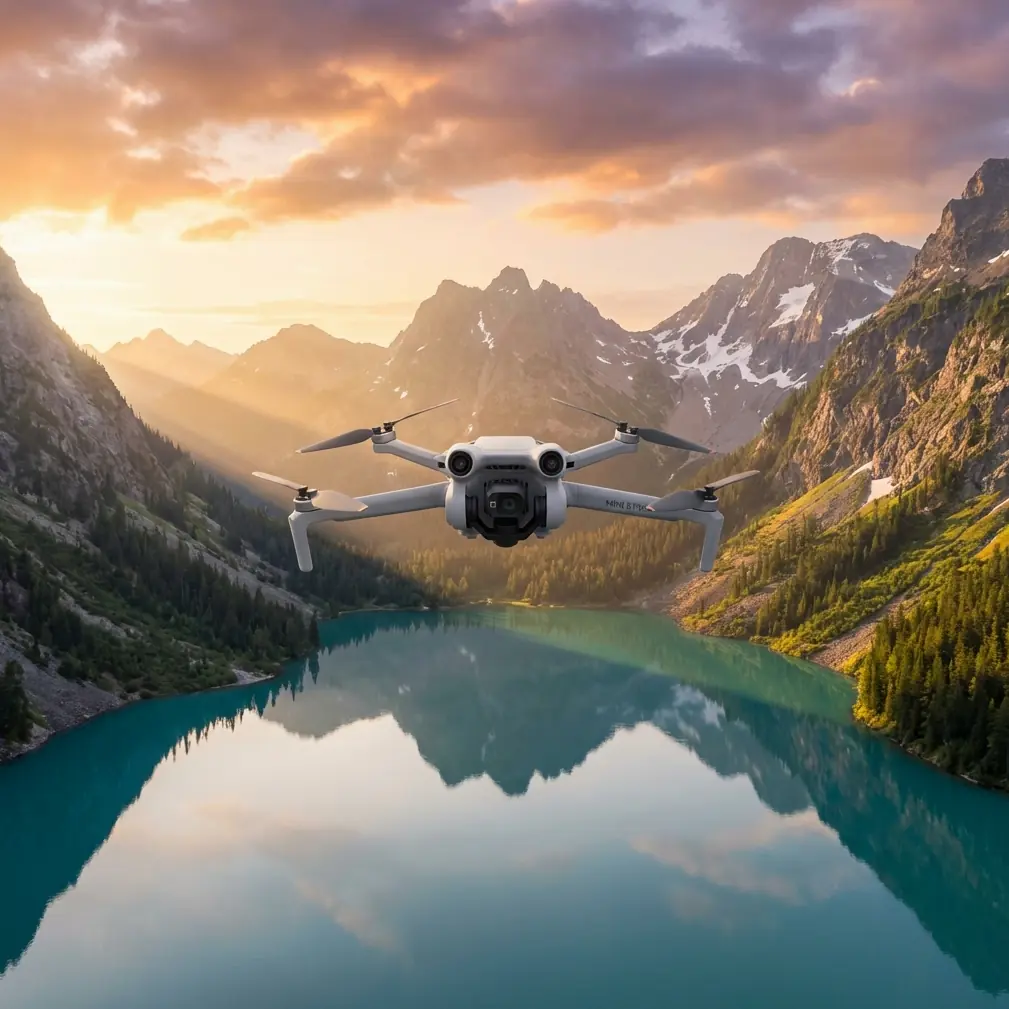
Mini 5 Pro Guide for Capturing High-Altitude Venues: What Professional Pipeline Drone Specs Teach Us in the Field
META: Learn how to use Mini 5 Pro for high-altitude venue capture with practical flight strategy inspired by professional drone specs, imaging payload logic, and real-world obstacle navigation.
High-altitude venue work exposes every weak point in a drone workflow.
Thin air reduces lift. Wind arrives in layers. Light changes fast, especially when a venue sits near ridgelines or plateau terrain. And once you start shooting event grounds, mountain resorts, amphitheaters, retreat centers, or remote hospitality properties, you realize the real challenge is not just getting a beautiful wide shot. It is getting stable, repeatable footage and usable detail without wasting battery or losing orientation.
That is where a close reading of professional airframe logic becomes surprisingly useful for Mini 5 Pro pilots.
I have been looking at a pipeline drone solution document centered on the iFly D1, a professional electric multirotor used for inspection-oriented missions. On paper, it has very little to do with a compact creator drone. It is an 8 kg class aircraft with a 3 kg payload capacity, a 70-minute endurance figure, a 10 km control radius, and operation up to 4000 m altitude. It carries serious imaging gear, including a standard Sony A7R and optional visible-light, infrared, oblique, and hyperspectral sensors. That is a different league.
But the operating lessons transfer cleanly to Mini 5 Pro users who need to capture venues in high-altitude environments.
The key idea is simple: if industrial drone teams design around altitude, wind, setup speed, sensor choice, and visual confirmation, then venue creators should too. The aircraft may be smaller. The discipline should not be.
Why the iFly D1 matters to a Mini 5 Pro shooter
The iFly D1 document is built around pipeline applications, yet two details stand out immediately for venue capture.
First, the aircraft is rated for flight at 4000 m. That number matters because altitude is not an abstract specification. It changes how propellers bite the air, how quickly a drone needs to correct in gusts, and how much confidence you can place in long hover shots. If your venue sits in a highland valley or on a mountain shoulder, the challenge is not merely “can the drone go up there?” The challenge is whether the aircraft can hold a consistent line while you compose and track movement on the ground.
Second, the iFly D1 is designed for 6-level wind resistance and can still be controlled in light rain. I am not suggesting anyone treat a Mini 5 Pro like an industrial inspection platform. That would be bad field practice. What matters is the mindset behind those specs: professional operators assume weather friction, not weather perfection. For venue capture, that means planning shots that are less exposed to crosswind, using terrain as a wind break, and choosing camera moves that still look intentional when the air is unstable.
A creator drone at altitude benefits from professional habits far more than from wishful flying.
Start with the venue, not the drone
When pilots talk about “capturing venues,” they often jump straight into camera settings. At sea level, that sometimes works. At altitude, it is backwards.
You should first break the venue into three operational layers:
- Approach layer — where you launch, recover, and establish line of sight
- Structural layer — buildings, entry roads, terraces, stage roofs, towers, cables, tree lines
- Context layer — mountains, valley drop-offs, skyline, weather movement, foot traffic
The iFly D1 has vertical takeoff and landing, a 10-minute setup time, and detachable arms for fast field deployment. Those are not glamorous brochure details. Operationally, they tell you something important: serious field teams value setup discipline because terrain and weather do not wait.
With a Mini 5 Pro, your setup may be much faster, but the principle is identical. Before powering up, decide:
- where your safest low-wind launch point is
- what your emergency descent corridor looks like
- which parts of the venue are likely to disrupt GPS, visual orientation, or obstacle sensing
- whether your hero shot requires altitude, or simply better angle management
At mountain venues, I often see pilots launch from the most scenic cliff edge. That is usually the worst choice. The better move is a flatter, more sheltered spot with clean recovery space. If you need the cliff reveal, fly to it after a stable systems check.
A wildlife encounter that changed how I frame obstacle avoidance
One of the best reminders I have had about venue flying did not come from architecture. It came from wildlife.
During a dawn scouting pass near a hillside event property, a pair of large birds lifted out of a tree line just as I started a slow lateral reveal. They were not aggressive, just suddenly present and moving across my intended line. The smart response was not to “outfly” them. I paused, climbed slightly, and let the route reset before resuming from a wider angle.
This is where the Mini 5 Pro’s obstacle avoidance and subject-awareness logic become more than convenience features. In venue work, sensors are often discussed in terms of walls, poles, or facades. Real locations are messier. Birds, drifting banners, temporary rigging, utility lines, and moving service vehicles all introduce variables that a static shot list does not capture.
The iFly D1 reference includes an optional ADS-B airspace awareness system, which tells you how industrial operators think: more situational awareness equals fewer surprises. On a Mini 5 Pro, you may not be carrying that class of airspace hardware, but the philosophy still applies. Use every onboard awareness tool available. Let obstacle avoidance protect the aircraft, but let your own route planning avoid the need for abrupt intervention in the first place.
How to plan high-altitude venue shots with Mini 5 Pro
A practical workflow works better than a gear argument. Here is the method I recommend.
1. Open with a low-energy reconnaissance pass
Do not begin with your final cinematic move. Begin with a short, efficient scouting circuit.
At altitude, wind can vary dramatically between launch point and working height. A low-energy pass helps you identify:
- gust patterns on exposed corners
- reflective surfaces that may affect visual perception
- crowds or staff movement zones
- birds nesting in rooflines or trees
- where obstacle avoidance may trigger conservatively
The iFly D1’s 10 m/s flight speed is modest by industrial standards, which is revealing. Even professional work often prioritizes controlled, stable data capture over aggressive transit. That same thinking improves Mini 5 Pro results. Smooth shots beat hurried ones, especially when you need clean lines around architecture.
2. Build one venue story in three heights
Most venue footage feels repetitive because pilots collect ten versions of the same mid-altitude orbit. Instead, divide coverage into three distinct height bands:
- Low height: approach roads, signage, garden layouts, entry paths
- Mid height: facades, terraces, seating geometry, stage or courtyard relationships
- High height: topographic context, ridge position, valley scale, access roads and parking logic
The iFly D1 can carry a Sony A7R as standard. That matters because professional mission design assumes there is value in both broad overview and recoverable detail. You should think the same way with Mini 5 Pro framing. Each height band should answer a different question about the venue rather than merely changing altitude for variety.
3. Use ActiveTrack selectively, not constantly
ActiveTrack is useful when the venue story includes moving subjects: a shuttle arriving, guests walking a path, maintenance carts, golfers, cyclists, or staff preparing an outdoor setup. But at high altitude, subject tracking can become less predictable when the background is layered with rock faces, trees, or uneven shadows.
The better approach is to use ActiveTrack in constrained, pre-validated corridors. Test first. Then commit.
For example:
- a tracking shot along a mountain driveway
- a follow on a terrace edge with strong separation
- a reveal behind landscaping that opens onto the venue
Do not force subject tracking into congested airspace just because the feature exists.
Why zoom logic from the iCam-V2 is relevant even if Mini 5 Pro is not carrying it
The same reference document describes the iCam-V2, a professional visible-light gimbal payload with 18x optical zoom, 1920×1080 at 30 fps, three-axis stabilization, 0.03° control precision, and focus acquisition under 1 second. For venue creators, the significance is not that you need an industrial zoom block. It is that professional aerial imaging values stand-off distance.
That changes how you should think about high-altitude venue capture.
At exposed locations, the temptation is to push the drone closer to facades for detail. Often the better move is to hold a safer, cleaner position and compose with discipline. Stand-off shooting reduces the risk of unstable close-proximity corrections near roofs, trees, tension wires, and lighting structures. It also gives obstacle avoidance more room to work naturally.
If you want cinematic compression, combine distance with intentional movement rather than forcing a close pass through clutter.
QuickShots and Hyperlapse: where they actually help
QuickShots are useful for generating clean social cutaways fast, but they work best after you have manually validated the airspace around the venue. At altitude, an automatic move launched too casually can drift from “efficient” into “avoidable problem.”
Use QuickShots when:
- the venue has clear separation from trees and towers
- the move is easy to recover visually
- wind is steady rather than turbulent
Hyperlapse is especially effective at mountain or plateau venues because weather and shadows visibly animate the landscape. But do not make the venue disappear inside the scenery. Anchor the composition around one structural element: a lodge roofline, amphitheater bowl, courtyard, or ridgeline deck.
That gives the time-lapse a commercial purpose rather than turning it into generic mountain footage.
D-Log for difficult contrast at elevation
High-altitude venues often produce harsh contrast. Bright cloud edges, pale stone, dark evergreens, reflective roofs, and long morning shadows can sit in the same frame.
This is where D-Log becomes operationally useful, not just fashionable. If your Mini 5 Pro supports a flatter profile, use it when the venue scene has broad tonal separation and you expect to grade carefully afterward. The professional imaging logic in the iFly document reinforces the same point indirectly: inspection platforms are built around getting usable visual information under varied conditions. Venue work should respect that same standard. Pretty footage is nice. Flexible footage is better.
If your delivery timeline is short, split your mission:
- capture hero passes in D-Log
- capture fast-turn social clips in a more direct profile
That keeps post manageable.
High-altitude battery discipline is mostly about restraint
The iFly D1’s 70-minute endurance sounds luxurious compared with compact drones, but the more relevant lesson is that professionals still design around margin. They do not spend all available flight time proving that the specification is real.
Mini 5 Pro pilots should adopt the same posture:
- avoid long uphill return legs late in the battery cycle
- keep extra reserve for gust response
- do not repeat the same orbit because it felt cinematic the first time
- land before you need to land
High-altitude work punishes ego quickly.
A practical shot list for venue creators
If I were capturing a high-altitude venue with a Mini 5 Pro tomorrow, my core list would look like this:
- Sheltered takeoff and hover check
- Low-altitude perimeter scan
- Straight-in approach showing access route
- Mid-height lateral reveal of the main structure
- Elevated pullback showing venue in terrain context
- Controlled orbit only if wind allows smooth radius
- Short ActiveTrack segment with a vehicle or walking subject
- Stand-off detail pass for terraces, seating, or facade texture
- Hyperlapse locked to one defining architectural anchor
- Final safety-first return before conditions shift
If you are planning a mountain property shoot and want a second set of eyes on route logic, this direct field planning chat is the cleanest way to compare notes before launch.
The larger lesson from an industrial drone document
A pipeline drone solution is not a buyer’s guide for Mini 5 Pro users. That is exactly why it is useful.
The iFly D1’s carbon-fiber airframe, 3 kg payload capacity, detachable structure, weather tolerance, high-altitude ceiling, and sensor flexibility all point to one truth: aerial results improve when the aircraft is treated as part of a mission system, not a flying camera with props.
Mini 5 Pro pilots capturing venues at elevation should borrow that mindset.
Think in terms of setup time. Airspace awareness. Sensor trust. Stand-off composition. Height-banded storytelling. Conservative battery management. Planned automation instead of casual automation. And above all, respect for the environment the venue sits inside.
Beautiful footage usually comes after good operational judgment, not before.
Ready for your own Mini 5 Pro? Contact our team for expert consultation.