
Mini 5 Pro Solar Farm Photography at Altitude
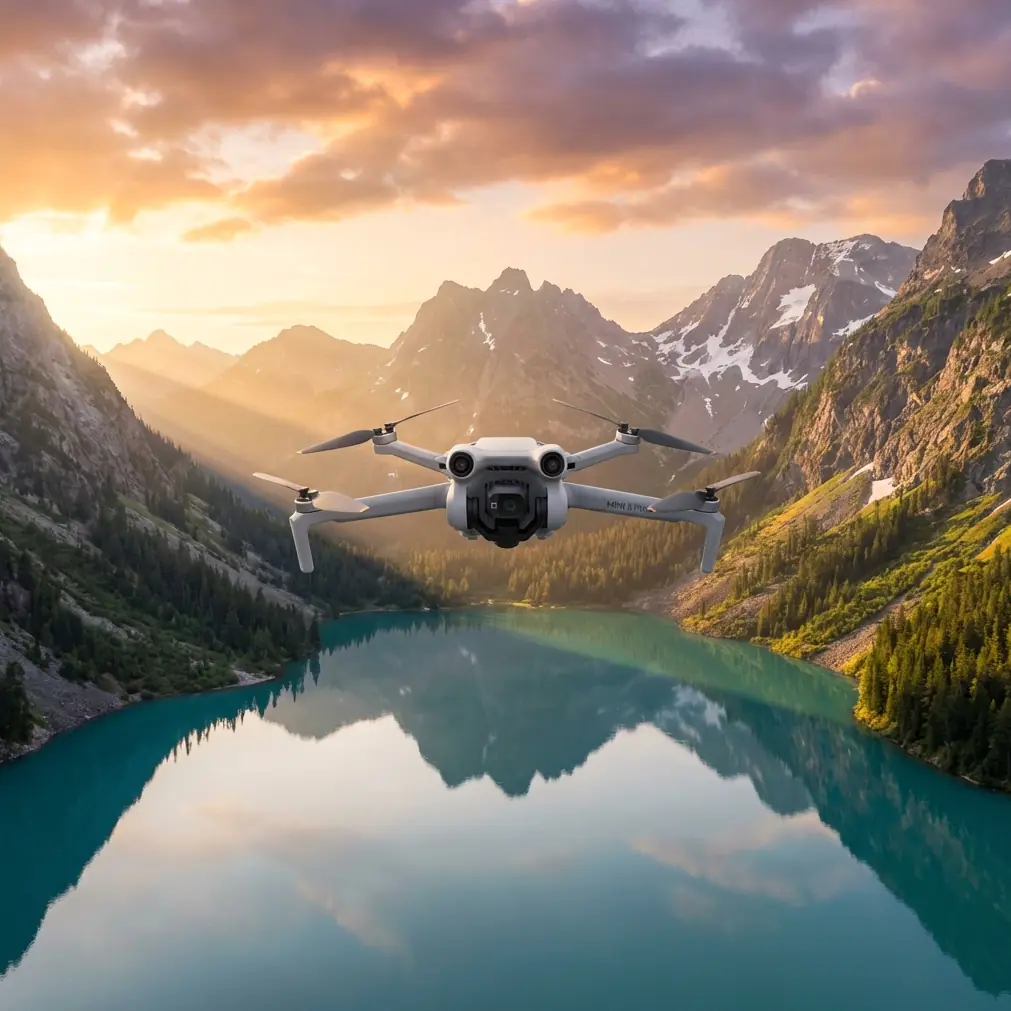
Mini 5 Pro Solar Farm Photography at Altitude
META: Learn how photographer Jessica Brown uses the Mini 5 Pro to capture stunning solar farm imagery at high altitude with pro techniques and settings.
TL;DR
- Pre-flight sensor cleaning is essential before every high-altitude solar farm mission to ensure obstacle avoidance and safety systems function flawlessly
- D-Log color profile preserves critical shadow and highlight detail across thousands of reflective solar panels
- High-altitude operations above 3,000 feet demand specific camera settings, battery management, and flight planning strategies
- ActiveTrack and Hyperlapse modes transform standard solar farm documentation into compelling visual narratives
Field Report: Three Weeks Across Colorado's Solar Infrastructure
Solar farm photography breaks cameras and pilots alike. The combination of extreme reflectivity, repetitive geometric patterns, and high-altitude thin air creates a technical challenge that most drone operators underestimate until they're staring at blown-out footage on a laptop screen. I spent three weeks flying the Mini 5 Pro across seven solar installations in Colorado, ranging from 4,200 to 8,900 feet elevation, and this field report covers every lesson learned—including the one mistake that nearly cost me an entire day of footage.
My name is Jessica Brown, and I've been a commercial photographer specializing in renewable energy infrastructure for eight years. The Mini 5 Pro has become my primary tool for solar farm documentation, and this guide explains exactly why.
The Pre-Flight Cleaning Step That Saved My Mission
Here's something most pilots skip: cleaning every sensor on the aircraft before each flight. I'm not talking about a quick wipe of the camera lens. I'm talking about the obstacle avoidance sensors—all of them.
During my second day at a facility near Alamosa, Colorado, at 7,500 feet, I noticed the Mini 5 Pro was throwing erratic obstacle warnings over open terrain. The aircraft kept hesitating during what should have been smooth tracking passes. After landing, I discovered a thin film of dust and pollen coating the forward and downward vision sensors.
At solar farms, fine particulate dust is everywhere. It rises from access roads, collects on every surface, and invisibly degrades the obstacle avoidance system's performance. Here's my pre-flight cleaning protocol:
- Forward vision sensors: Microfiber cloth with a single breath of moisture, wiped in one direction
- Downward vision sensors: Compressed air first, then a gentle lens pen sweep
- Rear and lateral sensors: Same microfiber technique as forward sensors
- Camera lens: Lens pen followed by a rocket blower—never compressed air directly on the gimbal
- Propeller inspection: Check for dust accumulation on leading edges, which affects efficiency at altitude
Expert Insight: Obstacle avoidance sensors coated with even a microscopic dust layer can misread distances by 15-30% at high altitude, where thinner air already reduces sensor contrast performance. Clean sensors aren't optional—they're a safety requirement. I now carry a dedicated sensor cleaning kit separate from my camera gear.
This five-minute ritual became the single most important step in my workflow. Every subsequent flight operated with full obstacle avoidance confidence, which matters enormously when flying 15 feet above rows of panels worth hundreds of thousands in infrastructure.
Camera Settings for Solar Farm Photography at Altitude
The D-Log Advantage on Reflective Surfaces
Solar panels are essentially mirrors pointed at the sky. Standard color profiles clip highlights instantly, turning panels into featureless white rectangles. D-Log changed everything for my workflow.
Shooting in D-Log on the Mini 5 Pro captures approximately 2-3 additional stops of dynamic range compared to the Normal profile. Across a solar farm, that means:
- Panel surfaces retain texture and detail even under direct midday sun
- Shadow areas between panel rows preserve visible ground detail
- Sky gradients remain smooth without banding artifacts
- Post-production flexibility allows matching footage to client brand guidelines
At 8,900 feet—the highest installation I documented—the UV intensity increased contrast dramatically. D-Log handled this by compressing the tonal range into a manageable, gradable image.
My Specific Camera Configuration
| Parameter | Setting | Reason |
|---|---|---|
| Color Profile | D-Log | Maximum dynamic range for reflective surfaces |
| Resolution | 4K/30fps | Balance of detail and file management |
| Shutter Speed | 1/60s (double frame rate rule) | Natural motion blur for Hyperlapse sequences |
| ISO | 100-200 (manual) | Minimizes noise at altitude where light is abundant |
| White Balance | 5600K (manual) | Consistency across a full day of shooting |
| ND Filter | ND16-ND64 depending on time | Controls exposure without closing aperture |
| Photo Format | RAW | Essential for post-production latitude |
Pro Tip: At elevations above 6,000 feet, atmospheric haze decreases significantly, which sounds like good news but actually increases contrast beyond what most profiles handle well. Pair D-Log with an ND32 filter during golden hour—you'll retain those warm panel reflections without losing detail in the infrastructure beneath them.
Flight Patterns and Intelligent Features for Solar Documentation
Subject Tracking Across Panel Arrays
The Mini 5 Pro's ActiveTrack capability proved surprisingly effective for solar farm work, though not in the way most pilots use it. Instead of tracking a moving subject, I used ActiveTrack to lock onto maintenance vehicles moving along access roads between panel rows.
This created dynamic reveal shots where the camera follows a truck while the massive scale of the installation unfolds around it. The obstacle avoidance system worked in concert with ActiveTrack, allowing the aircraft to navigate around elevated transformer stations and weather monitoring equipment autonomously.
Key ActiveTrack settings for solar farms:
- Tracking speed: Set to Slow for cinematic movement
- Tracking distance: 30-50 feet lateral offset for wide context
- Altitude: Maintain 80-120 feet AGL for scale reference
- Obstacle avoidance: Set to Bypass mode rather than Brake
QuickShots for Client Deliverables
When clients need polished social media content alongside technical documentation, QuickShots delivers professional results with minimal effort. The modes I used most frequently:
- Dronie: Starting close to a central inverter station, pulling back to reveal the full array—clients love this for investor presentations
- Circle: Orbiting a single panel row at 40 feet creates an inspection-style shot that highlights installation quality
- Rocket: Straight vertical ascent from ground level to 300 feet showcasing the geometric patterns that make solar farms visually compelling
Hyperlapse Over Geometric Landscapes
This is where the Mini 5 Pro truly earned its place in my kit. Hyperlapse mode, flying a slow waypoint path across the entire length of a solar installation, compressed 45 minutes of flight into 20 seconds of mesmerizing footage.
The repetitive geometry of solar panels creates a natural visual rhythm that Hyperlapse amplifies. I programmed a path at 150 feet AGL, moving at 5 mph along the north-south axis of a 200-acre facility. The result was a single continuous shot that communicated scale more effectively than any static photograph could.
High-Altitude Battery and Performance Management
Thin air affects everything. At 8,900 feet, the Mini 5 Pro's propellers work harder to generate lift, which directly impacts battery performance and flight time.
| Altitude | Approx. Flight Time | Temperature Range | Battery Strategy |
|---|---|---|---|
| Sea level - 2,000 ft | ~34 minutes | 60-90°F | Standard operations |
| 2,000 - 5,000 ft | ~30 minutes | 50-85°F | Land at 25% battery |
| 5,000 - 8,000 ft | ~26 minutes | 40-75°F | Land at 30% battery |
| 8,000+ ft | ~22 minutes | 30-65°F | Land at 35% battery, pre-warm batteries |
I carried six batteries for each full-day shoot and kept unused batteries in an insulated cooler bag—not to cool them, but to maintain consistent temperature against the wild swings common at altitude. A battery at 68°F outperforms one at 45°F by a measurable margin in available flight time.
- Pre-warm batteries by running them in the aircraft for 60 seconds before takeoff
- Monitor voltage under load during the first 30 seconds of flight
- Avoid aggressive maneuvers during the first two minutes to let cells stabilize
- Plan shorter missions with more battery swaps rather than pushing limits
- Keep a flight log noting battery performance versus altitude and temperature
Common Mistakes to Avoid
Shooting in auto exposure over solar panels. The camera's metering system constantly hunts between the bright panel surfaces and dark ground between rows. Lock your exposure manually before takeoff and adjust only during planned hover breaks.
Ignoring compass calibration at new sites. Solar farms contain massive amounts of metal infrastructure—racking systems, inverters, underground cabling, transformer stations. Calibrate the compass at every new location, and do it at least 50 feet away from any metal structure.
Flying too low over panels. The temptation to get dramatic low-angle shots is real, but the downwash from the Mini 5 Pro's propellers at 10 feet or less can deposit dust onto panel surfaces. Facility managers will not invite you back. Maintain a minimum of 20 feet AGL over active panels.
Neglecting the sun angle. Solar panels create specular reflections that shift throughout the day. The best documentation footage happens during two windows: the first 90 minutes after sunrise and the last 90 minutes before sunset, when reflections are angled away from the camera at most flight altitudes.
Skipping ND filters. At high altitude with intense sunlight, your shutter speed will climb to 1/2000s or faster without filtration. This creates jittery, uncinematic video. An ND32 or ND64 filter is not optional for daytime solar farm work.
Frequently Asked Questions
Can the Mini 5 Pro reliably operate above 8,000 feet elevation?
Yes, but with documented performance reductions. Expect approximately 20-35% shorter flight times compared to sea level, reduced maximum ascent speed, and slightly less responsive handling due to thinner air. The aircraft's obstacle avoidance and subject tracking systems function normally at altitude, provided sensors are clean and firmware is updated. I successfully completed 23 flights above 7,500 feet during this project without a single performance-related incident.
What's the best shooting mode for solar farm inspection versus marketing content?
For technical inspection work, shoot 4K video at 30fps in D-Log with manual exposure, flying systematic grid patterns at 80-100 feet AGL. This provides the resolution and dynamic range needed to identify panel damage, soiling, or installation defects. For marketing and promotional content, switch between Hyperlapse for establishing shots, QuickShots for social media clips, and ActiveTrack for narrative sequences following ground crews or vehicles. Many clients need both, so I structure my shoot days with technical documentation in the morning and creative work in the afternoon.
How do solar farm environments affect obstacle avoidance performance?
Solar panels create unique challenges for vision-based obstacle avoidance. The highly reflective, uniform surfaces can confuse downward vision sensors, especially at midday when panels reflect maximum light upward toward the aircraft. I experienced occasional altitude-hold fluctuations when hovering directly over panel arrays at low altitude in bright conditions. The forward and lateral obstacle avoidance performed reliably around elevated structures like inverter stations and weather masts. My recommendation: always clean all sensors before flight, maintain at least 20 feet AGL over panels, and be prepared to switch to manual altitude control if the aircraft exhibits hunting behavior.
The Mini 5 Pro has fundamentally changed how I approach solar farm documentation. Its combination of portability, intelligent flight modes, and imaging capability in D-Log makes it the ideal tool for high-altitude renewable energy photography. Three weeks across Colorado's solar landscape proved that this aircraft punches well above its weight class—provided you respect the environment, clean your sensors, and plan for altitude.
Ready for your own Mini 5 Pro? Contact our team for expert consultation.