
Mini 5 Pro for High-Altitude Power Line Imaging
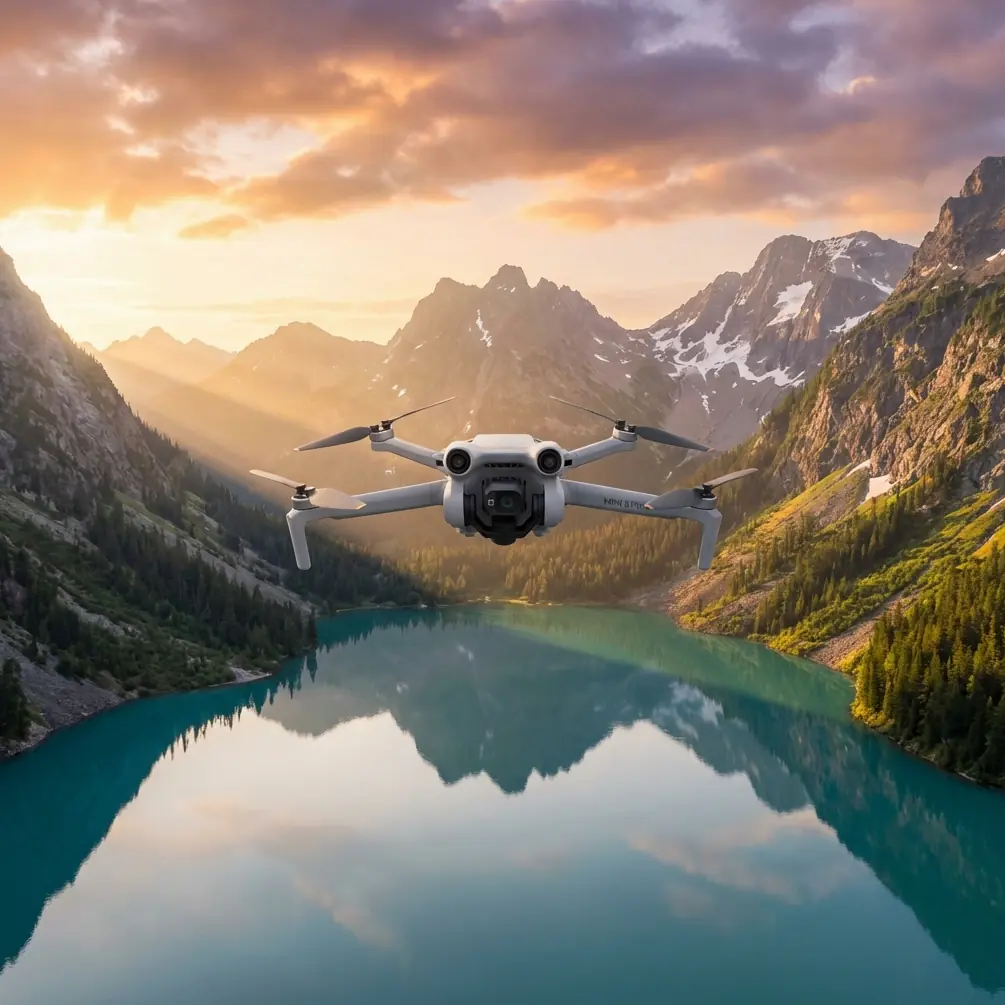
Mini 5 Pro for High-Altitude Power Line Imaging: A Field Case Study from a Photographer’s Perspective
META: A practical case study on using Mini 5 Pro for capturing power lines at high altitude, with insight on obstacle avoidance, ActiveTrack, D-Log, Hyperlapse, and why compact stability matters.
I spend a lot of time photographing places where the air feels thinner than usual and small mistakes become expensive. Mountain roads. Wind funnels. Ridgelines where utility infrastructure cuts through terrain that looks dramatic in a still image and unforgiving in real life. When the assignment is to capture power lines at high altitude, the drone matters less as a gadget and more as a working tool. That is where the Mini 5 Pro conversation gets interesting.
This is not really about whether a compact drone can fly. Most can. The real question is whether a small platform can produce useful, repeatable results in a difficult environment while reducing the workload on the pilot and camera operator. For this kind of job, the Mini 5 Pro stands out because it brings features normally associated with larger, less nimble aircraft into a lighter class that is easier to transport, faster to deploy, and less intrusive around infrastructure corridors.
I approached the Mini 5 Pro the way I judge any aerial imaging platform: can it help me return with a clean, editable set of files and a safe flight log after a demanding field day? For power line work in elevated terrain, that answer depends on a few specific capabilities: obstacle awareness, tracking consistency, image profile flexibility, and preprogrammed motion tools that save battery and concentration when the conditions are already taxing.
The assignment: documenting power lines above the tree line
A recent shooting scenario will sound familiar to anyone working with utility imagery. The brief was straightforward on paper: produce stills and short sequences showing power lines crossing a steep alpine section, with enough context for planners to understand slope, tower spacing, and surrounding vegetation. The challenge was that the site sat high enough for wind to shift abruptly, and the line route crossed mixed terrain with rocky outcrops, sparse conifers, and narrow service tracks.
That kind of environment exposes weaknesses quickly. A drone without reliable obstacle avoidance demands too much mental bandwidth when you are simultaneously monitoring cable paths, gusts, altitude, and framing. A camera without a flatter recording profile limits what you can recover in the highlights when sun hits galvanized hardware. A system without dependable subject tracking turns repeat passes into guesswork.
The Mini 5 Pro’s value starts here. It is not simply that it offers obstacle avoidance and ActiveTrack; it is that these features matter operationally when the target is a linear subject suspended through changing terrain.
Why obstacle avoidance matters more around power infrastructure than many pilots admit
A lot of drone discussions treat obstacle sensing as a convenience feature. In this use case, that is an undersell.
Power line imaging is deceptive because the obvious subject is not always the nearest risk. The towers are visible. Tree lines are visible. Terrain breaks are visible. What catches pilots out is the way the route pushes you into odd vectors, especially when repositioning for a side angle or backing off to show line geometry against the landscape. In high-altitude locations, wind can also nudge a small aircraft off the neat path you intended.
With Mini 5 Pro, obstacle avoidance is significant not because it replaces pilot judgment, but because it acts as a second layer when your attention is divided between navigation and image timing. Around infrastructure corridors, that second layer can be the difference between a controlled, methodical capture session and one where every movement feels tense.
Compared with many compact competitors that either simplify sensing or make tracking less dependable once the background becomes visually busy, the Mini 5 Pro is better suited to utility corridor work because it supports more confident close-proximity composition. That matters when you need to reveal conductor alignment, tower position, and terrain relationship in the same frame without flying a much larger aircraft.
ActiveTrack and subject tracking on a linear subject
Tracking a cyclist through a park is one thing. Tracking a section of power line or a tower approach in mountainous terrain is another. The subject is not a single person or vehicle with clear separation from the background. It is a set of repeating industrial forms against rock, sky, and trees.
This is where ActiveTrack becomes more than a marketing label. On the Mini 5 Pro, subject tracking helps maintain a consistent relationship to a chosen visual element while the pilot concentrates on route safety and altitude control. I found this especially useful when creating short reveal shots along a tower line where the camera needed to hold its relative framing rather than drift every time the aircraft adjusted for wind.
Operationally, that consistency saves batteries and reduces re-shoots. At elevation, you do not want to burn extra flight time repeating a pass because the composition wandered off axis halfway through. A small drone earns its keep by reducing waste, not by promising perfection.
There is also a less obvious advantage: smoother tracking data creates footage that is easier to match in post. If you are assembling a short project update or site overview film, clips with stable subject relationships cut together more cleanly. That is not a minor issue. Utility clients often care less about cinematic flair than about visual clarity and continuity.
D-Log is the quiet professional feature
If I had to pick one capability that separates a casual capture from a usable production file, it would be D-Log.
High-altitude power line shoots can produce brutal contrast. You may have reflective metal, pale sky, dark evergreen patches, and shadowed slope all in one frame. A standard profile can look punchy straight out of the drone, but that baked-in contrast becomes a liability the moment you try to preserve both sky detail and infrastructure texture.
D-Log gives the Mini 5 Pro a very practical edge. It provides more flexibility for balancing bright highlights with darker terrain during grading. For photographers and videographers working on utility documentation, that means tower structures remain readable, conductor lines do not vanish into glare as easily, and the landscape context can be kept natural instead of crushed or clipped.
This is one area where smaller drones often disappoint compared with larger professional platforms. The Mini 5 Pro narrows that gap. Not completely, because physics is still physics, but enough to make it a serious option for assignments where weight and mobility are priorities.
I would not describe D-Log as a luxury here. I would describe it as insurance. When cloud breaks shift quickly at altitude, you do not always get the same light twice.
QuickShots and Hyperlapse are not just for social clips
Power sector imaging has a reputation for being visually dry. That is often true because the work is approached as pure documentation. But there is room for communication-oriented footage that still serves a professional purpose. This is where QuickShots and Hyperlapse become more useful than many industry operators expect.
QuickShots can help create controlled introductory sequences that establish tower position, route direction, and terrain exposure without forcing the pilot to manually execute a complex movement in gusty conditions. Used carefully, they create a visual summary in seconds. Not flashy. Efficient.
Hyperlapse is even more interesting for high-altitude line work. If weather is shifting around a ridge or low cloud is moving through the corridor, a hyperlapse sequence can show how the environment affects visibility and site access over time. That is relevant in planning discussions. It also helps communicate why a route that seems simple on a map may be operationally awkward in the field.
The key is restraint. These modes are most effective when treated as structured capture tools rather than novelty features.
The portability advantage is bigger than spec sheets suggest
When people compare drones, they tend to focus on image numbers, flight times, and sensor categories. For mountain utility work, packability deserves equal weight.
A compact aircraft like Mini 5 Pro changes how you move across a site. You are more likely to carry it to a secondary viewpoint. More likely to redeploy after a short hike. More likely to run a fast weather window because setup feels manageable. Those practical gains often produce better imagery than a theoretically superior platform left in the case because the location is awkward.
This is where the Mini 5 Pro clearly excels against bulkier competitors. Larger drones may offer advantages in some conditions, but they create friction. More gear, more setup, more attention, more hesitation. A capable compact drone lowers that friction without stripping away the features professionals actually need, particularly obstacle avoidance, tracking assistance, and a log profile for grading.
That balance is the point.
A real workflow that worked
My field routine with the Mini 5 Pro on this kind of assignment is simple.
First, I use a safe stand-off position to assess wind behavior and line direction. Then I build a short sequence list: a wide establishing orbit or angled pass, a medium tracking shot along the corridor, detail stills of towers and conductor spans, and one environmental clip that shows elevation and weather movement. ActiveTrack and obstacle awareness reduce stress during those medium shots, where keeping a stable relationship to the infrastructure matters most.
For stills and footage likely to end up in a client-facing edit, I prefer D-Log because it gives me room later. For quick explanatory snippets, standard capture can be fine. If I want to explain terrain progression or the exposure of the route to changing weather, Hyperlapse becomes a practical storytelling tool rather than an aesthetic extra.
One lesson from repeated high-altitude work: the best drone is rarely the one with the longest spec sheet. It is the one that lets you complete the plan efficiently while preserving enough file quality to withstand professional review.
Where Mini 5 Pro beats many competitors
The strongest argument for Mini 5 Pro is not that it dominates every category. It is that it combines a hard-to-get mix of capabilities in one manageable package.
Many rivals in the compact class are easy to carry but less convincing in obstacle-rich environments. Others offer decent image output but make tracking feel fragile once the scene gets complicated. Some are fine for recreational landscape shooting but start to feel limited when the mission requires repeatable utility-focused framing and post-production flexibility.
Mini 5 Pro, by contrast, fits the field reality of this assignment. It is compact enough to reach difficult viewpoints, intelligent enough to help around terrain and infrastructure, and flexible enough in image capture to deliver files that can be graded properly. For a photographer or site documentarian working around power lines at elevation, that blend is unusually practical.
If you regularly work in similar environments and want to compare notes on flight planning or setup choices, you can message me here.
Final assessment from the field
The Mini 5 Pro makes sense for high-altitude power line capture because it respects the actual demands of the job. The obstacle avoidance system supports safer composition around complex terrain. ActiveTrack helps maintain usable framing on difficult linear subjects. D-Log preserves editing latitude when alpine light turns harsh. QuickShots and Hyperlapse, used intelligently, speed up communication-grade capture rather than clutter it.
That is why this drone deserves serious attention from photographers, utility contractors, inspectors, and visual documentation teams who need mobility without sacrificing too much control.
A drone in this class will never remove the need for judgment, route planning, or weather discipline. It should not. What it can do is reduce friction, improve consistency, and make high-value imagery more achievable in places where every minute of calm air counts. On that measure, the Mini 5 Pro is not just convenient. It is genuinely useful.
Ready for your own Mini 5 Pro? Contact our team for expert consultation.