
Mini 5 Pro for Coastal Power Line Work: What Spring Fire
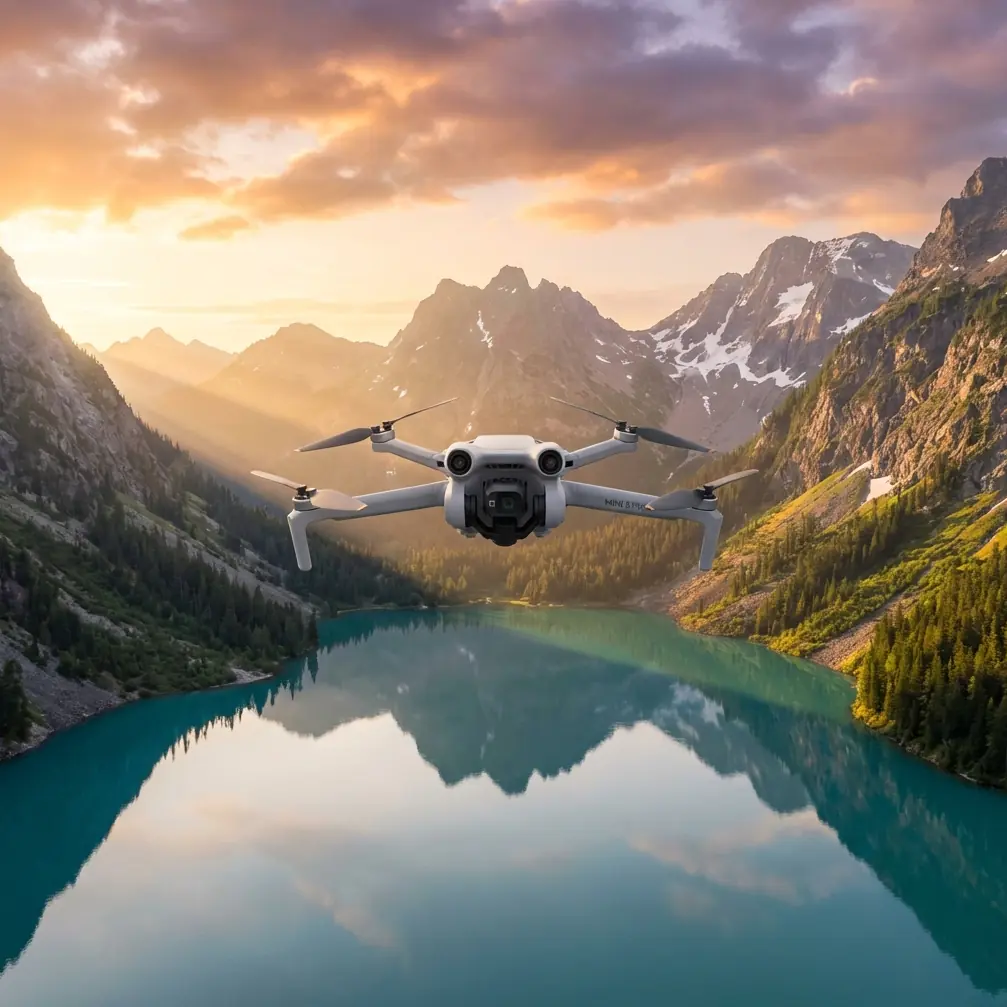
Mini 5 Pro for Coastal Power Line Work: What Spring Fire Patrols Reveal About Safer, Smarter Flight
META: A field-driven Mini 5 Pro tutorial for coastal power line capture, using real spring drone patrol lessons from infrared inspection, tower clearance checks, and air-ground coordination.
If you want to understand what actually matters in a drone for power line work near the coast, skip the marketing gloss and look at how drones are being used when the stakes are real. Two recent spring fire-prevention operations in China offer a clear window into that reality. In one case, utility crews in Liangshan used drone flight patrols together with infrared temperature measurement to inspect a 35 kV transmission corridor at tower No. 72 on the Yantang line in Meiyu Town, Yanyuan County on March 22. In another, forest protection teams in Licheng County used a combined model of foot patrols, aerial drone inspection, and backend coordination on March 24 to build what was described as an “air + ground + backend” protection grid.
Those details matter far beyond wildfire prevention. They map directly onto the kind of work many Mini 5 Pro users care about: capturing power lines in difficult environments, especially in coastal zones where wind, salt exposure, glare, vegetation growth, and constrained flight paths all combine to punish weak flight planning.
As a photographer, I look at this from two angles at once. First, what keeps the aircraft safe near sensitive infrastructure? Second, what helps you collect usable imagery without wasting battery cycles or forcing repeat passes? The Mini 5 Pro conversation gets interesting when you judge it through that lens rather than through a generic feature checklist.
Why these spring patrols matter for Mini 5 Pro pilots
The Liangshan operation was not just a drone in the sky grabbing a few overview shots. Crews were instructed to observe the distance between vegetation and the tower-line corridor while recording infrared temperature data at the same time. That tells you the mission had two layers: geometric clearance assessment and thermal anomaly detection.
For anyone filming or documenting coastal power lines, that is the right mental model. You are rarely collecting a “pretty” shot only. You are usually trying to capture at least one operational truth:
- Is vegetation encroaching on the corridor?
- Do insulators, hardware, or conductors show signs of abnormal heat?
- Is the route accessible for a ground crew if something changes?
- Can imagery from this flight support a later maintenance decision?
The second report reinforces this. Licheng’s forest patrol approach paired drone inspection with human patrols and backend support. That setup is worth studying because it shows the best drone workflow is not purely airborne. A drone extends vision. It does not replace field judgment. For Mini 5 Pro users working around coastal utility corridors, that means your strongest results usually come from structured flights, not improvisation.
The coastal challenge is different from inland inspection
Coastal power line capture adds a few complications that many casual drone reviews barely mention.
Wind is the obvious one. Over open shoreline, estuaries, salt marsh, or cliffside infrastructure, air can shift direction quickly and become turbulent around poles and towers. Salt haze and reflective water surfaces make exposure harder to manage. Vegetation growth may be dense and irregular. Access roads can be narrow or muddy. And if you are trying to document the relationship between lines and surrounding vegetation, the angle of view matters more than people think.
That is where the Mini 5 Pro earns its place if its real-world behavior matches what demanding operators need: stable positioning, reliable obstacle avoidance, controlled low-speed movement, and image profiles that hold detail in bright sky while preserving shadow information around the pole base or tree line.
In competitor comparisons, this is often where smaller drones start to fall apart. Some can produce sharp images in ideal weather but become less convincing once you ask them to creep sideways near a corridor edge, maintain composition in crosswind, or track a long route while preserving enough dynamic range for post work. For power line documentation, consistency beats spectacle.
A practical Mini 5 Pro flight method for coastal line capture
The Liangshan report gives us a useful framework: inspect line by line, span by span, tower by tower. That is a discipline, not a slogan. Here is how I would adapt that mindset for a Mini 5 Pro coastal mission.
1. Start with a corridor pass, not the hero shot
Before you attempt close compositions, make one slow establishing pass parallel to the line at a conservative offset. Your goal is to understand three things:
- vegetation proximity to the structure
- wind behavior around the tower
- whether there are birds, wires, or branch intrusions in your intended route
This is exactly why obstacle avoidance matters in a compact drone. Near coastal lines, the danger is not always the main conductor you can see. It may be a side branch, guy wire, or abrupt gust pushing the aircraft off line. A Mini 5 Pro that reads the environment well and reacts smoothly gives you more usable footage and fewer nerve-wracking corrections.
2. Build the mission around operational angles
The Liangshan crews were explicitly watching the distance between vegetation and the power infrastructure. For a photographer or inspection-oriented pilot, that means you should prioritize angles that preserve spatial relationships.
Use three shot types:
- a side-oblique angle showing tower, conductor path, and nearby vegetation in one frame
- a lower-angle reveal that clarifies vertical clearance
- a top-oblique shot to show the corridor footprint through brush or shoreline growth
This is where QuickShots can be tempting but limited. Automated moves are useful for broad context or presentation material, yet power line environments demand more control than a canned arc or pullback often provides. I would treat QuickShots as supplementary, not primary, for this kind of work.
3. Use D-Log when contrast gets ugly
Coastal scenes can be harsh. Bright sky, reflective water, pale utility hardware, and darker vegetation create a dynamic range problem fast. If the Mini 5 Pro gives you a robust D-Log option, use it for planned documentation passes where color correction matters. You want room to recover sky detail without crushing the lower half of the frame.
This becomes operationally significant when you need to show whether vegetation is actually close to the structure. If shadows block the tree line or trunk detail, the footage looks dramatic but says very little. D-Log is not just a cinematic extra here; it can preserve the visual evidence you flew out there to collect.
4. Reserve ActiveTrack for safe, peripheral use
The Licheng model of “air + ground + backend” patrol suggests a moving workflow rather than a static one. On a coastal access road, you may want the Mini 5 Pro to follow a vehicle or walking inspector to create continuity in the visual record. That is where ActiveTrack can be valuable.
But I would avoid relying on subject tracking in tight proximity to lines or towers. Use ActiveTrack when the subject is moving along an open path adjacent to the corridor, not under complicated overhead structure. The smarter move is to let subject tracking handle the transition between sites, then switch to deliberate manual framing when you reach the inspection zone.
That separation is one area where experienced pilots outperform casual creators. The feature is useful. The judgment about when not to use it is even more useful.
What the infrared detail tells us about drone expectations
One of the strongest facts in the Liangshan report is the pairing of drone patrol with infrared temperature recording. Even if your Mini 5 Pro configuration is primarily an imaging platform rather than a dedicated thermal unit, the lesson is still relevant: visual capture alone is often only half the story.
Thermal workflow changes how you think about a shot list. Instead of just “get the tower,” the mission becomes “get the tower and identify where a maintenance decision might emerge.” Overheating hardware, abnormal connector behavior, or stress points can hide in plain sight if you rely only on visible-light imagery.
That is where the Mini 5 Pro should be judged against competitors. A lot of small drones advertise cinematic tools first and operational precision second. For utility-adjacent coastal work, I would reverse that order. I care more about controlled hover, route repeatability, and image consistency than flashy movement presets. If one model gives you steadier framing near infrastructure and a cleaner file for analytical review, that model wins the day even if another has louder headline features.
Hyperlapse is useful, but not where most people use it
Hyperlapse gets treated like a social feature. For infrastructure storytelling, it can actually be a strong context tool if you use it with restraint. A coastal line route often runs through changing terrain: marsh edge, road crossing, tree belt, open bluff, substation perimeter. A carefully planned Hyperlapse segment can show how exposure risk changes along the corridor.
I would not use Hyperlapse near the tower itself. That is not where you want aggressive motion compression or route complexity. Use it between locations to establish geography, weather movement, and the scale of the corridor. Then cut to slower, more analytical inspection footage.
That balance helps your output feel professional rather than promotional. It also mirrors the real patrol logic from the source reports: broad coverage first, close verification second.
The real value of the “air + ground + backend” model
The second report may sound simple, but the phrase “air + ground + backend” is one of the most useful operational ideas in the whole dataset.
For Mini 5 Pro users capturing coastal power lines, here is what that should look like in practice:
- Air: the drone gathers overview, clearance, and route imagery
- Ground: a field observer watches line geometry, local wind, and safe positioning
- Backend: organized review of footage, location notes, and any anomaly flags
Most failed drone missions happen because pilots try to compress all three jobs into one person in one moment. The drone is airborne, the screen is bright, the wind is shifting, and note-taking disappears. Then later you realize the footage is beautiful but not organized enough to support the original purpose.
If you are building a repeatable workflow, even a simple checklist shared with a teammate is enough. I often recommend a field structure where one person handles aircraft control and image decisions while another logs tower reference points, weather changes, vegetation concerns, and any re-flight requirements. If you need a compact planning template for that, you can message me here: send a field workflow note.
How Mini 5 Pro stands out in this use case
For coastal power line capture, the Mini 5 Pro should not be judged as a toy-sized camera drone trying to imitate larger industrial systems. It should be judged on whether it closes the gap between portability and disciplined field work.
What makes it compelling in this scenario is not one isolated feature. It is the stack:
- obstacle avoidance reduces risk during offset corridor passes
- D-Log helps preserve evidence in high-contrast coastal light
- ActiveTrack supports movement between inspection points
- QuickShots can add broad context when the airspace is open
- Hyperlapse helps communicate corridor scale and environmental change
Against competitors, this package matters because smaller aircraft often force you to choose between ease of use and serious capture control. If the Mini 5 Pro can hold stable framing in coastal wind while giving you flexible log footage and dependable sensing, it lands in a very practical sweet spot. That is not hype. That is workflow efficiency.
And the news reports back that up indirectly. Real spring fire-prevention patrols are leaning on drones for detailed, repeatable, multi-layer inspection tasks. One mission tied drone imagery to infrared data around a specific 35 kV line and tower reference. Another built a structured protection system around aerial views, walking patrols, and coordinated review. Those are exactly the kinds of demands that expose whether a platform is merely convenient or genuinely useful.
Final field advice for your next coastal mission
If your assignment involves power lines near the coast, think like the Liangshan crews, not like a weekend reel creator.
Inspect the corridor deliberately. Capture the vegetation relationship clearly. Respect wind gradients around structures. Use your best color profile when contrast gets difficult. Let automation help only where it truly lowers workload. And whenever possible, pair the aircraft with a ground observer and a simple review process after landing.
The strongest drone results do not come from flying closer. They come from flying with a reason.
Ready for your own Mini 5 Pro? Contact our team for expert consultation.