
Mini 5 Pro in Windy Highway Conditions: What Smarter Air
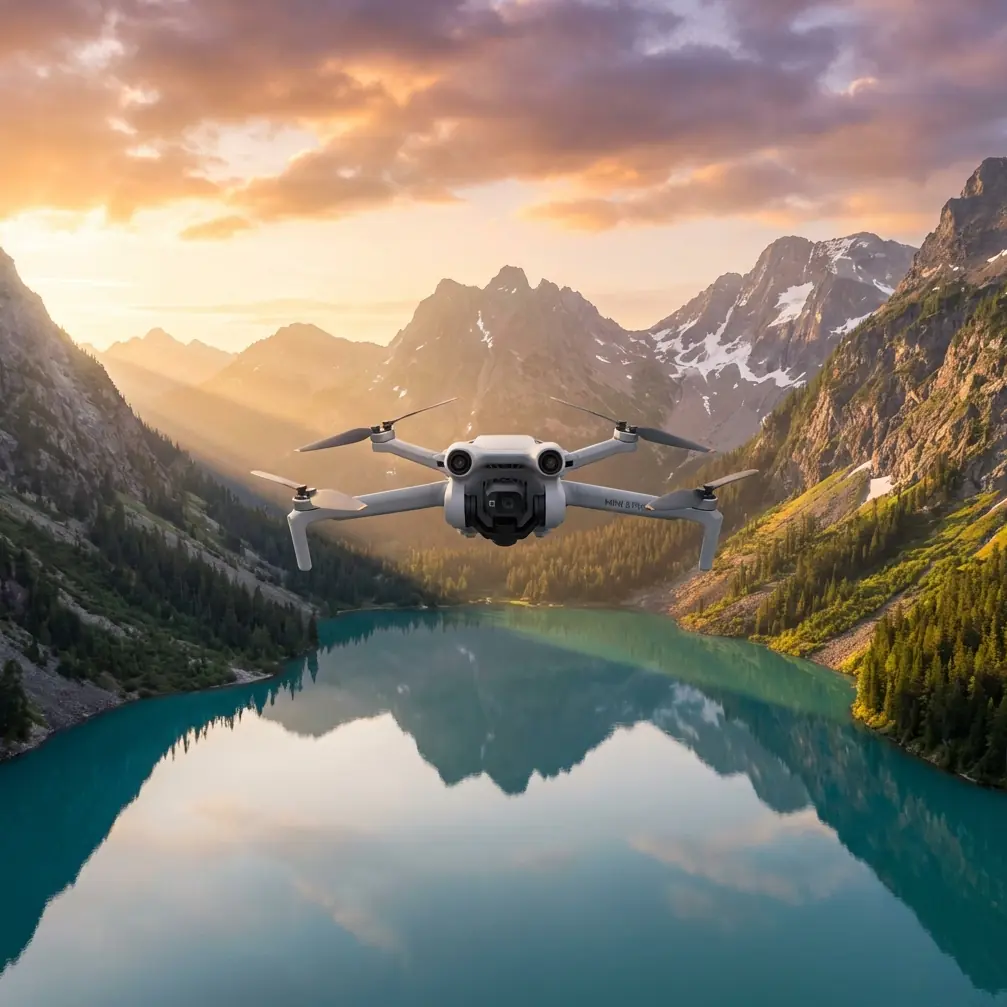
Mini 5 Pro in Windy Highway Conditions: What Smarter Air Support Really Looks Like
META: A practical expert look at how the Mini 5 Pro fits windy highway capture work, with antenna positioning advice, flight technique, and why the shift from helicopter-heavy thinking toward drone-led operations matters.
Wind changes everything on a highway shoot.
Not in theory. In practice. Open lanes create long wind corridors, overpasses generate turbulence, truck movement disturbs the air, and the visual scene itself pushes pilots toward bad decisions—usually flying higher, farther, and faster than the conditions justify. If you are planning to use the Mini 5 Pro for highway capture in gusty weather, the job is not just getting footage. The job is getting stable, usable footage without losing signal quality, wasting battery, or fighting the aircraft every second of the flight.
That is where the broader industry conversation becomes relevant.
A recent BBC-reported dispute around air support spending included Philip Wilkinson resigning from an air support board while arguing that less money should go to helicopters and more should go toward technology such as drones. Strip away the politics and one operational point stands out: for many observation and documentation tasks, the real question is no longer whether drones can contribute. It is whether organizations are still overcommitting expensive legacy air assets to work that smaller aircraft can now handle more efficiently.
That matters even for a product-focused discussion about the Mini 5 Pro.
Because highway capture is one of the clearest civilian examples of this shift. Documentation, progress imaging, route condition review, infrastructure checks, traffic pattern observation for planning, and visual records for contractors or consultants do not always call for a large airborne platform. They call for precision, quick deployment, repeatability, and the ability to work low and safely in constrained weather windows. In those scenarios, the Mini 5 Pro concept makes sense not because it replaces every larger aircraft, but because it aligns with the modern expectation of targeted, flexible air support.
And when the wind picks up, that alignment gets tested.
The real highway problem is not just wind speed
Pilots often think about wind as a single variable. Highway environments force you to treat it as a layered problem.
At road level, wind may feel manageable. Climb above barriers, signage, and embankments, and the aircraft can enter a stronger crossflow almost immediately. Fly near bridge approaches and the air becomes messy. Add moving vehicles and heat shimmer from pavement, and your image can start to feel less controlled even when the aircraft is technically holding position.
For Mini 5 Pro users, this has direct implications for how features like obstacle avoidance, ActiveTrack, subject tracking, QuickShots, Hyperlapse, and D-Log should be used.
The mistake is assuming those features eliminate the need for manual judgment. They do not. In windy highway work, they become tools that need tighter limits.
- Obstacle avoidance helps when working around gantries, poles, sound barriers, and bridge edges.
- ActiveTrack and subject tracking can be useful for following inspection vehicles or creating consistent moving perspectives, but in gusts, smooth tracking depends as much on route planning as on software.
- QuickShots can produce efficient establishing visuals, though they should be used selectively when lateral wind drift is evident.
- Hyperlapse can work for traffic-flow storytelling or project progress, but only when the aircraft can maintain a stable repeatable line.
- D-Log matters because highways often combine bright sky, reflective vehicle roofs, concrete, and dark underpass shadows in the same scene.
Those are not feature-box talking points. They matter operationally because windy conditions punish automation that is used casually.
Why the helicopter-versus-drone spending debate matters here
The BBC item was brief, but its significance is bigger than the headline. Wilkinson’s argument was that spending should shift away from aircraft and toward technology such as drones. For civilian readers, the key lesson is not about policing budgets. It is about air support philosophy.
If an organization wants clearer, more frequent, and more localized aerial documentation, smaller drone systems are often the smarter starting point. They can be deployed closer to the work, repositioned quickly, and used more often. That frequency is crucial on highway projects. A single large aerial operation may produce dramatic footage, but repeat captures across changing weather and construction stages often create more value.
This is exactly where a Mini 5 Pro-type workflow becomes attractive. You can plan a narrow mission objective—capture a bridge approach in crosswind, document lane markings near an interchange, create top-down progress frames for a resurfacing segment—and execute it with less operational overhead than legacy air support models.
The practical takeaway: windy highway capture should be approached like a targeted drone mission, not like a scaled-down version of a big-aircraft mindset.
Antenna positioning advice for maximum range in windy conditions
Range problems on highways are often self-inflicted.
Pilots blame interference, wind, or the aircraft when the real issue is controller orientation. If you want the best link quality with the Mini 5 Pro in open roadside environments, think less about “pointing the antennas at the drone” and more about presenting the broad side of the antenna pattern toward it. In plain terms: do not aim the antenna tips like laser pointers. Angle them so the flat face of the transmission pattern is oriented toward the aircraft’s position.
A few field-tested habits help:
1. Keep the controller chest-high, not down at your waist
Lower controller position often means your own body blocks part of the signal path, especially when the drone is low over a road corridor. Chest height improves line integrity.
2. Rotate your whole body as the aircraft moves
Do not just twist your wrists. On a long roadside pass, small changes in your stance can preserve a cleaner connection than constant last-second antenna fiddling.
3. Avoid standing beside large vehicles, guardrails, or steel structures
Highways are full of reflective surfaces. Metal barriers, parked trucks, and bridge framing can complicate signal behavior. Move a few meters if needed. That small relocation can make a surprising difference.
4. Use elevation wisely
A slightly raised operator position—an embankment, safe shoulder high point, or designated observation area—can improve line of sight. Not high enough to create risk. Just enough to reduce obstructions.
5. Do not chase maximum range in high wind
Maximum range is a poor target when gusts are working against your return leg. Better signal discipline is not about flying farther. It is about keeping control margin high while the aircraft still has energy to come home comfortably.
This is where experienced operators separate themselves. They treat transmission quality as part of flight planning, not as a problem to solve after the signal starts dropping.
How to build a Mini 5 Pro workflow for windy highway capture
A clean result starts before takeoff.
Define one primary shot objective
On windy days, trying to get everything in one flight usually produces mediocre footage and unnecessary battery drain. Choose the mission first.
Examples:
- a top-down lane alignment pass
- a diagonal reveal of an interchange
- a progress record of barrier installation
- a tracking sequence of a support vehicle along a controlled route
Once you know the one shot that matters most, the rest of the flight becomes easier to shape around conditions.
Fly the upwind leg first
This is basic but often ignored. If you begin by flying downwind because it looks easier, you may end up fighting the aircraft on the way back with lower battery reserves. In highway corridors, that return leg can feel much longer than expected. Starting upwind gives you a clearer picture of aircraft behavior before committing.
Lower altitude usually beats higher altitude
Many pilots climb when the image feels unstable. Often that makes things worse. Higher altitude can mean stronger and less predictable wind exposure, especially over open roadway. If the shot allows it, a lower line may deliver better stability and stronger visual depth from road markings, vehicles, and structure.
Use ActiveTrack with a short leash
Subject tracking on a highway can be excellent for controlled follow sequences, but don’t let the aircraft get too far out front in gusts. Keep the subject relationship tighter and the route simpler. Wind can widen turns and soften framing if the drone has too much space to manage.
Reserve QuickShots for calmer intervals
QuickShots are efficient, but they rely on predictable aircraft motion. In windy conditions, use them only after a short hover test and a gentle manual arc to judge how cleanly the aircraft is holding.
Capture in D-Log when contrast is harsh
Highways present ugly lighting extremes: reflective paint, dark asphalt, bright sky, and hard shadow under structures. D-Log gives you more room to normalize those elements in post. In changing wind, you may not get many retakes. Preserving image flexibility matters.
Obstacle avoidance is more useful on highways than many pilots expect
When people hear “highway shoot,” they often picture open space. The reality is clutter.
Light poles, overhead signs, cables near service roads, barrier walls, bridge trusses, and roadside vegetation can all intrude into flight paths—especially when wind drift pushes the aircraft sideways during a tracking move. Obstacle avoidance becomes valuable not because it makes the mission automatic, but because it adds a margin when turbulent air nudges the drone off the ideal line.
That said, obstacle avoidance should not be used as permission to squeeze through tight spaces in gusty weather. Its real value is in helping preserve a buffer when conditions are less than perfect.
The best windy-day footage often looks less ambitious
This is one of the hardest lessons for new operators to accept.
The best result may not be a long dramatic push over multiple lanes with a complex reveal and a turning finish. It may be a shorter, steadier pass with excellent horizon control, clean subject separation, and a composition that lets the road geometry tell the story.
On highways, viewers respond strongly to order: lane rhythm, traffic spacing, barrier lines, merge patterns, bridge symmetry. Windy conditions reward compositions that respect that structure instead of trying to overpower it.
Short sequences also make Hyperlapse planning more realistic. Rather than forcing a large route in unstable air, build a tighter interval sequence with a fixed framing idea—traffic compression at an on-ramp, construction staging progression, or shadow movement across a resurfacing zone.
A smarter drone-first mindset
The reference story about helicopter spending versus drones is useful because it reflects a larger operational truth. Many aerial tasks benefit more from responsive, repeatable drone deployment than from heavier, costlier air support habits. For civilian documentation and infrastructure-related work, that is not a future idea. It is already the practical baseline.
The Mini 5 Pro sits naturally inside that baseline when the pilot understands its strengths. It is not about forcing a small aircraft into every mission. It is about recognizing when compact deployment, intelligent imaging features, and disciplined control technique can deliver exactly the footage the job needs.
Highway capture in wind is one of those tests that exposes whether a pilot is thinking like a content collector or an air-support operator.
The content collector chases spectacle and distance.
The air-support operator studies wind direction, chooses a conservative line, manages antenna orientation, uses automation selectively, captures the essential angle first, and lands with margin.
That second mindset is why drones continue gaining ground in sectors that once defaulted to larger airborne platforms.
If you are refining a Mini 5 Pro setup for this kind of work and want to compare field tactics, transmission habits, or accessory choices for roadside operations, you can message here on WhatsApp.
The aircraft matters. The features matter. But on a windy highway assignment, discipline matters more. Obstacle avoidance helps protect your margins. ActiveTrack can save time if you keep it constrained. D-Log preserves recoverable detail in ugly high-contrast scenes. And antenna positioning—simple, often overlooked antenna positioning—can decide whether your signal feels calm and dependable or fragile and distracting.
That is what smarter air support looks like at the small-drone level: less drama, more control, and footage that is actually useful when the flight is over.
Ready for your own Mini 5 Pro? Contact our team for expert consultation.