
Mini 5 Pro in the Mountains: A Field Report
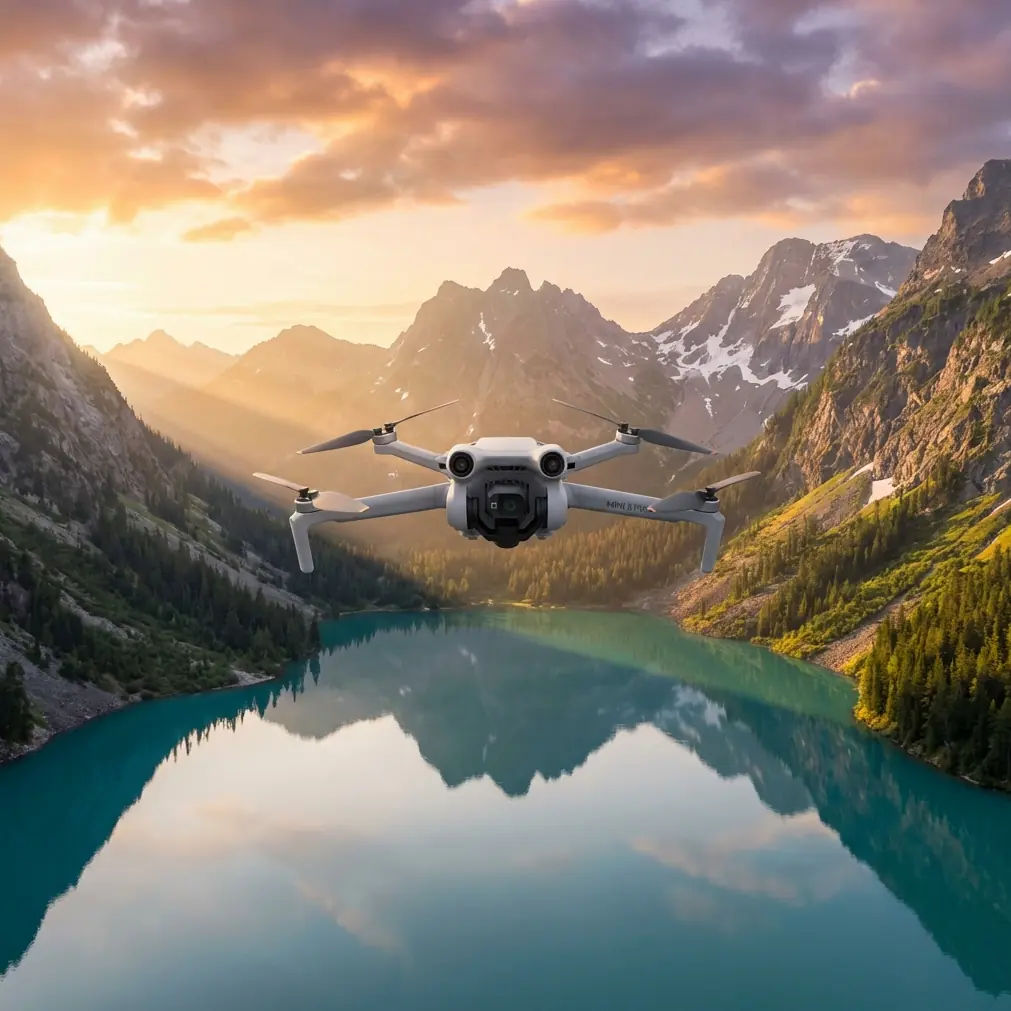
Mini 5 Pro in the Mountains: A Field Report for Construction Site Capture
META: A practical field report on using the Mini 5 Pro for mountain construction imaging, with real-world insight on obstacle avoidance, ActiveTrack, D-Log, Hyperlapse, and workflow choices that matter in steep terrain.
I approach mountain construction work differently than resort promos or scenic travel shoots. The terrain is less forgiving, the light changes faster, and the margin for error gets very small once you are dealing with ridgelines, cranes, haul roads, and crews moving through uneven ground. If the assignment is to document progress clearly and repeatedly, the aircraft matters less as a spec sheet and more as a tool that stays predictable when the site does not.
That is where the Mini 5 Pro conversation gets interesting.
There may not be a fresh news cycle around this aircraft right now, but for operators working in mountain environments, that is not a drawback. It creates space for a more useful question: how does the Mini 5 Pro fit into actual field documentation when the site sits on a slope, weather moves in quickly, and every flight needs to deliver information, not just pretty footage?
I have been looking at the Mini 5 Pro through that exact lens. Not as a hobby drone. Not as a lifestyle accessory. As a compact aerial platform for construction capture in places where access is awkward and visual consistency matters.
Why mountain construction exposes weak drones quickly
A flat suburban site is easy by comparison. You can establish repeatable orbits, maintain line of sight without much effort, and recover from minor positioning mistakes before they become real problems. In the mountains, the job changes.
Elevation shifts distort depth perception. Tree lines and rock faces interfere with clean approaches. Wind can roll over a ridge and hit the aircraft from a new angle halfway through a pass. Even basic progress imagery becomes harder because the “same shot” from last week may no longer be safe or even available if material piles, scaffolding, or temporary structures have changed.
In that setting, a small aircraft only succeeds if it combines three traits: reliable obstacle awareness, stable tracking behavior, and a color profile flexible enough to handle brutal contrast. The Mini 5 Pro stands out when those three pieces work together.
A lot of competing compact drones can do one or two of them reasonably well. Fewer make them feel coherent in the field.
Obstacle avoidance is not a bullet point here. It is a risk-control layer.
On a mountain construction site, obstacle avoidance stops being a convenience feature. It becomes a practical buffer between the operator and a very expensive mistake.
Consider a typical capture run: you are moving laterally across a slope to reveal a new retaining structure, with scrub trees on one side and temporary fencing on the other. If the drone drifts slightly while compensating for wind, you do not have much spare room. In these situations, obstacle avoidance earns its place because it helps preserve the shot and protects the workflow. A forced landing, damaged prop, or lost session can disrupt far more than a single clip. It can mean missing a weather window that will not return for days.
This is one area where the Mini 5 Pro has a meaningful edge over lighter-duty competitors that treat sensing as a backup rather than an active part of flight confidence. In steep terrain, you feel the difference. You can hold closer working lines with better discipline, especially when inspecting partially completed structures where vertical and lateral hazards overlap.
That does not replace pilot judgment, of course. It sharpens it. The aircraft gives you more room to execute the route you planned.
ActiveTrack matters more on sites than many people assume
Most people hear “subject tracking” and think athletes, cyclists, or travel content. On a construction site, ActiveTrack can be much more practical than flashy.
There are moments when following a moving truck, an excavator on a haul route, or a key access road tells the project story better than another high static overview. The challenge is that mountain sites are messy. Vehicles disappear behind spoil piles. Roads bend around terrain. The background is visually complex.
This is where the Mini 5 Pro’s tracking tools become operationally useful rather than decorative. If the aircraft can maintain a clean lock on the moving subject while handling terrain changes and surrounding obstacles, you can gather footage that explains logistics, access patterns, and project flow in a single pass. That is valuable for internal reporting, stakeholder communication, and visual progress archives.
Competitors often struggle here in one of two ways. Either the tracking is too hesitant and drops the subject once the environment gets cluttered, or it is too aggressive and produces movement that feels unstable when the route tightens. The Mini 5 Pro feels better balanced for professional documentation. It tracks with enough confidence to reduce pilot workload, but not so much that it turns the shot into something theatrical.
For mountain construction, that balance matters.
D-Log is not just for filmmakers
If you have ever shot a site at altitude, you already know how punishing the contrast can get. Snow patches on one ridge. dark evergreen sections on another. Reflective machinery. Harsh noon light bouncing off pale aggregate. Then a cloud rolls through and the scene changes again.
This is exactly why D-Log deserves more attention in the construction workflow.
A flatter profile gives you more room to recover highlight detail on bright surfaces while keeping enough information in shadowed cut slopes or under temporary structures. That flexibility is not about making the site look dramatic. It is about keeping the footage honest and readable. When a superintendent or project manager reviews aerials, they need to see grade lines, drainage paths, and material boundaries clearly. Overcooked contrast can bury that information.
The Mini 5 Pro’s value here is simple: it gives a small-form drone a more serious imaging posture. Some rivals in the same general class still produce footage that looks fine at first glance but starts to break apart once you try to correct uneven mountain light. If your deliverable includes both fast-turn clips and archive-worthy progress records, D-Log gives you a stronger starting point.
That is especially true when you are trying to keep weekly or monthly reports visually consistent across changing weather.
QuickShots and Hyperlapse are more useful than they sound
I am usually skeptical of automated capture modes when the brief is professional site documentation. But on a mountain build, QuickShots and Hyperlapse can play a legitimate role if used with intention.
QuickShots are handy when you need a fast, repeatable reveal from a constrained launch area. You may only have a few clear minutes before fog moves in or site activity changes. In that context, an automated pullback or orbit is not a gimmick. It is an efficient way to secure a clean establishing motion without overcomplicating the setup.
Hyperlapse can be even more useful. Construction in mountain terrain often happens in visually meaningful phases: shadows moving across a slope, fog lifting off a cut line, vehicle traffic increasing during a concrete pour, or crews advancing along a hillside access point. A controlled Hyperlapse sequence can communicate those shifts in a way stills cannot.
The Mini 5 Pro is well suited to this because its compact footprint makes it easier to deploy for short, opportunistic sessions. A larger aircraft can absolutely do the job, but it tends to demand more setup, more clear space, and more tolerance from the site around you. Mini-class systems win when the window is narrow.
Portability is not a luxury in mountain work
This point gets dismissed too often by people who evaluate drones from a desk.
On mountain assignments, portability is not about convenience. It is about whether you can actually reach the correct launch point with the rest of your kit. If you are hiking to a higher vantage above a road cut or climbing toward a stable overlook to maintain a better visual angle, every extra piece of bulk matters.
That is one of the strongest arguments in favor of the Mini 5 Pro versus larger competitors. You can carry it with batteries, filters, landing pad, and stills gear without turning a site walk into a burden. The practical result is that you are more likely to launch from the right place instead of the nearest easy place.
That difference shows in the footage. Better launch position usually means cleaner lines, safer routes, and less need to force the aircraft into awkward movement near obstacles.
How I would actually fly it on a mountain construction site
My first pass would not be cinematic. It would be structural.
I would start with a high overview to establish access roads, slope relationships, and the current footprint of active work. Then I would move into mid-level lateral passes aligned with the terrain rather than fighting it. After that, I would isolate a few operational stories: a retaining wall section, a drainage corridor, a crane position, or a moving equipment route using ActiveTrack if the path is predictable enough.
Once those essentials are covered, I would use one or two QuickShots only if they clarify scale. Not because the mode exists, but because a clean reveal can show the site’s elevation relationship better than a static wide shot. Hyperlapse comes last, typically for weather movement or a high-activity period.
For color, I would choose D-Log whenever I expect severe contrast or when the footage will join a longer-term archive. If the goal is same-day reference only, I might go with a more direct profile to shorten turnaround. The point is that the Mini 5 Pro gives you both options without feeling like you are compromising the aircraft’s core mission.
If you are planning similar field coverage and want to compare workflows, I’d share examples through this direct project chat.
Where the Mini 5 Pro clearly beats many competitors
The easiest way to explain the Mini 5 Pro’s advantage is this: it reduces compromise.
Some compact drones are easy to carry but become nervous around obstacles. Others track reasonably well but do not give enough image latitude once mountain light turns harsh. Some offer automated modes, yet those modes feel designed for casual content rather than disciplined repeat documentation.
The Mini 5 Pro, by contrast, makes those features feel connected to a serious field workflow. Obstacle avoidance supports tighter, safer route planning. ActiveTrack helps document movement without turning every pass into manual chase work. D-Log preserves image information when the scene is visually unforgiving. QuickShots and Hyperlapse can save a session when time, weather, or access are limited.
That combination is what makes it stand out.
Not because it promises perfection. Mountain work punishes overconfidence, and no drone changes that. But the Mini 5 Pro gives a solo operator or small media team a better chance of returning with footage that is both usable and repeatable.
The real test is consistency
Construction clients rarely judge a drone flight the way enthusiasts do. They are not asking whether the aircraft felt exciting. They want to know whether the visuals answer questions. Has the grade changed? How far has the access route progressed? Does the site read clearly against previous documentation? Can they use this material in reporting without apologizing for it?
That is the standard that matters.
The Mini 5 Pro earns its place when viewed through that standard. It is compact enough to bring anywhere, intelligent enough to help in obstacle-rich terrain, and flexible enough in image capture to cope with the ugly lighting conditions that define mountain work. For a photographer or site documentarian, that makes it less of a trendy pick and more of a dependable field tool.
And in this kind of terrain, dependable beats impressive every time.
Ready for your own Mini 5 Pro? Contact our team for expert consultation.