
Mini 5 Pro on Dusty Coastlines: What Actually Matters
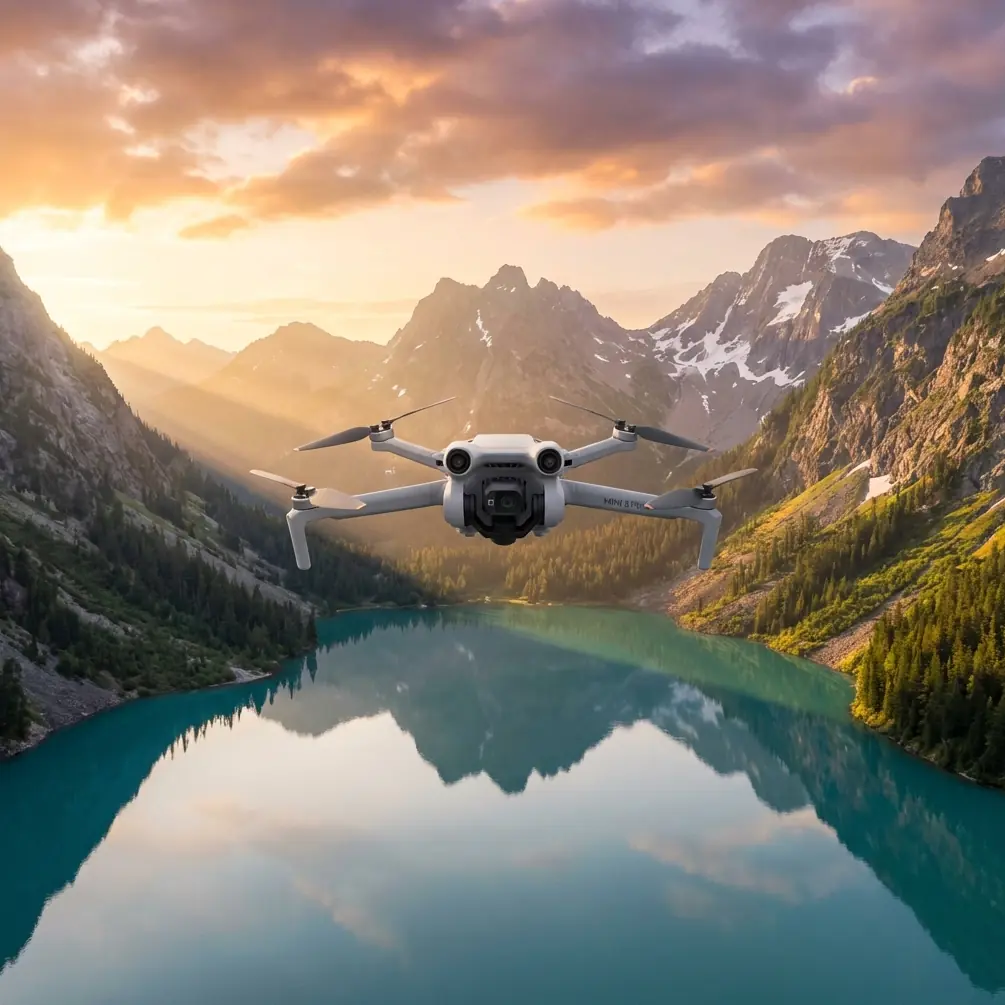
Mini 5 Pro on Dusty Coastlines: What Actually Matters for Inspection-Grade Flying
META: A technical review of Mini 5 Pro for dusty coastal operations, with practical insight on route planning, obstacle awareness, flight workflow, and why airspace discipline matters in real-world inspection and imaging missions.
I spend a lot of time around photographers who want small drones to behave like larger professional aircraft. That expectation usually collapses the moment the environment turns messy: crosswind off the water, salt in the air, dust coming off a coastal track, gulls cutting through frame, and uneven launch points that make every takeoff feel improvised.
That is why the most interesting way to look at the Mini 5 Pro is not as a travel gadget, but as a compact aircraft that has to earn trust in demanding field conditions.
For this review, I’m framing the Mini 5 Pro through a very specific lens: coastal capture in dusty conditions, especially where the operator needs repeatable footage, disciplined flight planning, and enough automation to reduce workload without encouraging sloppy habits. That perspective also aligns surprisingly well with one of the clearest lessons from formal UAV inspection guidance: good outcomes are built long before the motors start.
A technical guideline for unmanned helicopter power-line inspection lays this out with unusual clarity in section 6. It breaks the mission into three core parts: pre-flight preparation, flight inspection, and results processing. That structure matters even if you are flying a Mini 5 Pro for coastline imaging rather than transmission infrastructure. The aircraft may be smaller. The workflow should not be.
The real test of a compact drone is operational discipline
People often evaluate drones by headline features alone: obstacle avoidance, subject tracking, QuickShots, Hyperlapse, D-Log, ActiveTrack. Those tools matter, but they only show their value inside a disciplined operating method.
The reference material states that before power inspection work begins, each sortie route should be accurately planned by the ground-station operator based on the geographic environment of the line, with a flight-control operator responsible for supervision and checking. That is a very specific operational detail, and it has direct relevance to Mini 5 Pro users working coastlines.
Why? Because coastlines are visually seductive and operationally deceptive.
A beach ridge may look open from eye level, then reveal drifting sand plumes, power poles, rock outcrops, scrub, and sudden elevation changes once airborne. Accurate route planning is not bureaucracy. It is what separates clean repeatable capture from reactive stick work. On a Mini 5 Pro, this becomes especially important when using automated tools like ActiveTrack or QuickShots. Automation is most effective when the route envelope has already been thought through.
If I were planning a dusty coastal session with this aircraft, I would use the same logic described in that guideline’s section 6.5: define each flight segment around local geography first, then assign the shot logic. Not the other way around.
That means:
- identify launch and recovery points away from loose dust,
- note any vertical hazards near cliff edges or utility structures,
- segment flights into short, purpose-built passes,
- pre-decide which passes are manual, tracked, or cinematic automation.
The Mini 5 Pro’s value in this environment is not simply that it can automate movement. It is that it can reduce pilot workload when the route has already been shaped intelligently.
Dusty coastal flying exposes the difference between features and reliability
Dust is an underrated enemy of small-drone image work. In coastal zones, it rarely appears alone. It comes with salt, glare, and wind turbulence. That combination puts pressure on the whole mission chain: launch decision, sensor confidence, obstacle response, subject lock, and post-processing flexibility.
This is where a technical review has to be honest. Obstacle avoidance is not a magical shield. It is a workload-management layer. Along coastlines, especially in dusty haze or low-angle sun, obstacle sensing can be asked to interpret terrain textures that are visually inconsistent. That makes route planning even more valuable.
Still, on a Mini 5 Pro, strong obstacle awareness would be operationally significant for one simple reason: low-altitude shoreline work is full of surprise intrusions. In one flight scenario that sticks with me, I was tracking a runner along a scrub-lined coastal path when a gull dropped sharply across the intended line and another bird rose from the rocks below. The practical benefit of onboard sensing in moments like that is not cinematic polish. It is interruption management. The aircraft has a chance to hesitate, re-evaluate, or at minimum give the operator enough warning to break the shot safely instead of pressing into a conflict.
That kind of wildlife encounter is common in coastal work. It also reveals something many reviews ignore: the best drone feature is often the one that helps you abandon a shot cleanly.
ActiveTrack and subject tracking are only as good as the airspace thinking behind them
Mini-class drones get marketed around follow modes because they are visually easy to demonstrate. But if you are flying around beaches, harbors, or access roads, tracking performance should be discussed alongside airspace discipline.
The reference guidance specifically says that civil UAV operators must apply for airspace allocation and use in accordance with relevant regulations, accept flight activity management and air traffic services, and ensure flight safety. That is not an abstract legal note. It directly affects where and how a Mini 5 Pro can be used for coastline capture.
A lot of coastlines sit closer to sensitive airspace than pilots realize. Some are near transport corridors, low-altitude traffic zones, or airport-influenced areas. The same source also states that, without approval from the regional authority, UAV flights are prohibited within the airspace of civil transport airports, and temporary UAV airspace should avoid overlap with other manned civil aircraft operations.
Operationally, that means the Mini 5 Pro’s portability can become a trap. Because it is easy to carry, people assume it is easy to deploy anywhere. It is not. The lighter and more convenient the aircraft, the more the operator must resist casual decision-making.
Subject tracking is valuable on coastlines when following surfers from a safe standoff, documenting trail movement, or maintaining framing on a vehicle moving along a service road. But none of that matters if the mission starts in the wrong airspace or under poor approval discipline. The professional approach is simple: airspace first, shot logic second.
Why D-Log matters more on the coast than inland
Dusty coastlines are brutal on contrast. You can have bright reflective water, pale sand, dark rock, and haze sitting in the same frame. That is exactly where D-Log becomes more than a spec-sheet talking point.
If the Mini 5 Pro offers a useful log profile, its operational value is not just “more cinematic footage.” It is highlight survival and grading latitude under unstable light. Coastal dust can act like a moving diffusion layer. Two minutes later, the scene opens and the water becomes mirror-bright again. A flatter capture profile gives the editor a better chance of reconciling those swings without clipping the sea or crushing terrain texture.
This matters even more if the mission includes non-artistic outputs, such as location documentation, tourism asset capture, shoreline condition monitoring, or site-progress visuals. In those jobs, usable tonal detail often matters more than immediate punch.
The inspection guideline’s section 6.9 says outcome processing includes the collection, analysis, handling, and storage of flight data along with photos and video materials. That principle translates neatly here. A Mini 5 Pro is not just collecting pretty clips; it is generating visual data. D-Log strengthens the quality of that data when the environment is hard on exposure.
QuickShots and Hyperlapse are useful, but only after the core mission is done
I like cinematic automation. I use it. But in technical fieldwork or semi-structured content capture, it belongs at the end of the workflow, not the beginning.
Again, the source framework is helpful. It describes the mission as pre-flight preparation, flight execution, and results handling. That ordering is a corrective to how many operators use small drones. They arrive at a coastline, launch quickly, burn battery on QuickShots, then realize they have not completed the essential passes they actually came to collect.
With the Mini 5 Pro, QuickShots are best treated as efficient finishing tools after primary route work is complete. The same goes for Hyperlapse. Along coastlines, Hyperlapse can be especially strong for showing tidal movement, shifting surf lines, cloud motion, harbor activity, or the progression of dust haze across a bay. But because these modes consume time, battery, and concentration, they should sit inside a mission plan rather than define it.
A practical order for a dusty coastal session looks something like this:
- Confirm location legality and airspace status.
- Select a launch point with minimal dust disturbance.
- Fly short manual reconnaissance.
- Capture core documentary passes.
- Use ActiveTrack only where the route is already visually and aeronautically clean.
- Finish with QuickShots or Hyperlapse if battery, wind, and visibility still support them.
- Back up and review footage before leaving the site.
That is not glamorous. It is effective.
Training still matters, even with smart compact drones
One of the strongest lines in the source document is section 6.10: UAV inspection operators must be professionally trained and hold specific operating qualifications for the unmanned helicopter system. While the Mini 5 Pro belongs to a different class of aircraft, the underlying lesson is universal.
Compact drones have become easier to fly. They have not made judgment easier.
The operator still has to evaluate wind, terrain, reflected glare, dust contamination at takeoff, bird activity, route geometry, return path, and legal constraints. On coastlines, all of those inputs can shift quickly. A pilot who depends too heavily on automation often discovers that the aircraft is better at smoothing routine moments than solving abnormal ones.
That is why I view the Mini 5 Pro as a tool that rewards trained habits. If you already think in sorties, route envelopes, and post-flight data management, a compact intelligent drone becomes much more powerful. If you think only in terms of “getting the shot,” its smartest features can lull you into preventable mistakes.
A Mini 5 Pro review should talk about workflow, not just flight feel
The most useful thing I can say about the Mini 5 Pro for dusty coastal work is this: its ceiling is determined less by portability than by workflow maturity.
A good operator can use a small aircraft to produce clean, repeatable, commercially useful material in harsh visual environments. But that depends on adopting some of the same habits found in formal inspection operations:
- legal compliance before launch,
- approved airspace use where required,
- route planning based on terrain,
- defined roles and checks,
- structured collection of image and flight outputs.
Even the reference to GPS data collection in pre-flight preparation has a coastal parallel. For repeat visits to a shoreline, marina, erosion point, or tourism overlook, consistent location data improves shot matching and trend comparison over time. That is where a drone moves from casual camera platform to reliable field tool.
If you are using the Mini 5 Pro as Jessica Brown the photographer might—working coastlines for visual storytelling—the temptation is to let the scenery dictate the mission. My advice is the opposite. Build the mission so the scenery can be captured safely, repeatedly, and with enough technical discipline to survive real client expectations.
And if you need a second opinion on setting up a Mini 5 Pro workflow for coastal imaging, route logic, or capture planning, you can message a drone specialist here.
The Mini 5 Pro makes sense in this niche not because it is small, but because it can support serious habits in a small package. Obstacle awareness helps when birds or terrain break your intended path. ActiveTrack reduces manual burden when the route is already clean. D-Log gives coastal footage more post-production resilience. QuickShots and Hyperlapse expand output variety once the essential passes are secured.
That combination can be genuinely useful. Just do not confuse convenience with permission, or automation with preparation. The source material on inspection operations gets one thing exactly right: the flight is only one part of the job. The rest is what makes the result dependable.
Ready for your own Mini 5 Pro? Contact our team for expert consultation.